Muscle building comes down to two numbers: how much volume you accumulated last week, and whether you exceeded it this week. Hevy Pro’s volume charts track sets per muscle group across every session; Fitbod’s AI generates each workout specifically around which muscles are recovered and which still need stimulus. Users following AI-recommended workout generation improve estimated 1RM approximately 27% faster than manual-program users over a 12-week period, according to Jefit’s 2026 platform data. After testing 9 gym apps on Pixel 8 and Samsung Galaxy S24 running Android 15, I found four that serve intermediate gym-goers focused on hypertrophy - each covering a distinct part of the progressive overload tracking problem.
The critical insight from testing: muscle-building apps divide into two categories that serve different needs. Workout loggers (Hevy, JEFIT) track what you do with your own program; AI generators (Fitbod) create the program for you. Choosing the wrong category for your current level wastes months of training.
Who this is for: Gym-goers with 1-3 years of training experience who understand the basics of progressive overload, follow a push/pull/legs or similar split, and want to systematically track volume, frequency, and load across muscle groups. If you are still building your first consistent gym habit, the beginner gym apps guide covers your current stage more accurately.



What Muscle-Building Apps Need to Track
Progressive overload for hypertrophy requires more than logging sets and reps. Three specific data layers separate apps that serve intermediate lifters from apps that plateau beginners.
Volume Per Muscle Group Across Sessions
Research consistently shows hypertrophy responds to total weekly volume per muscle group: roughly 10-20 working sets per week for most muscles, distributed across 2-3 sessions. An app that shows only total workout volume - without breaking it down by muscle - cannot tell you whether your chest got 8 sets or 14 sets last week, or whether your rear delts consistently receive fewer sets than your front delts. Hevy Pro’s muscle group volume charts address this directly, showing frequency and volume distribution per muscle across your full training history.
Previous Session Data Before Every Set
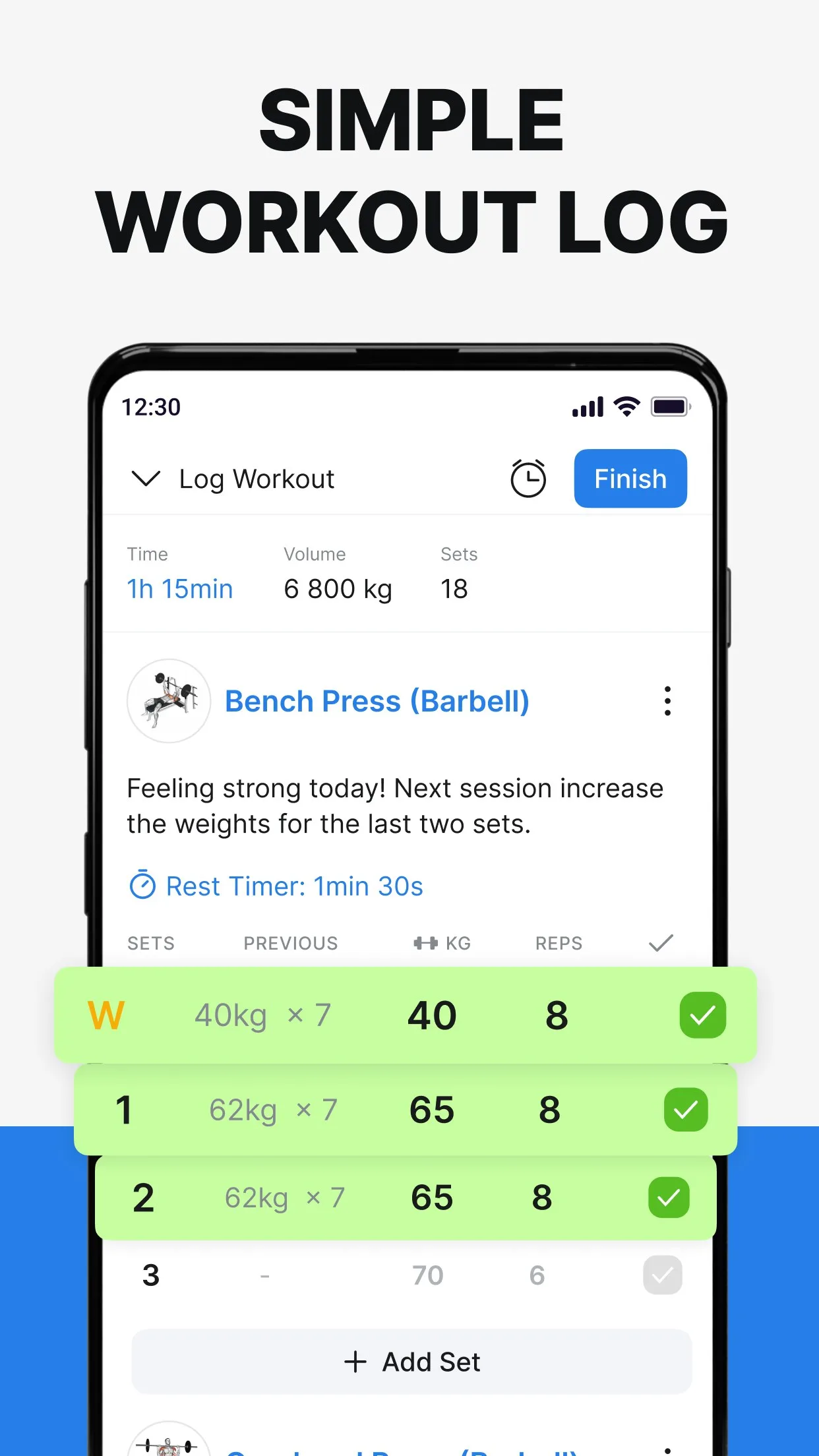
The most reliable progressive overload trigger is simple: lift more than last time. An app that buries your previous session data behind a tap or a separate screen creates friction that degrades execution quality in real gym conditions between sets. Hevy, JEFIT, and Fitbod all display previous session weight and reps prominently. This single feature is the primary reason experienced lifters choose one logging app over another - everything else is secondary.
Program Compliance Over Multiple Weeks
Hypertrophy programs like PPL, PHUL, and PHAT are designed around multi-week volume progression blocks. An app that shows whether you completed week 3 at the intended load, whether you hit your target rep ranges, and whether volume is trending up across the mesocycle gives you actionable compliance data rather than just a training diary. Boostcamp’s program-specific progression tracking handles this for structured programs; Hevy’s volume charts provide it for self-programmed splits.
Hevy - Best Logging App for Progressive Overload
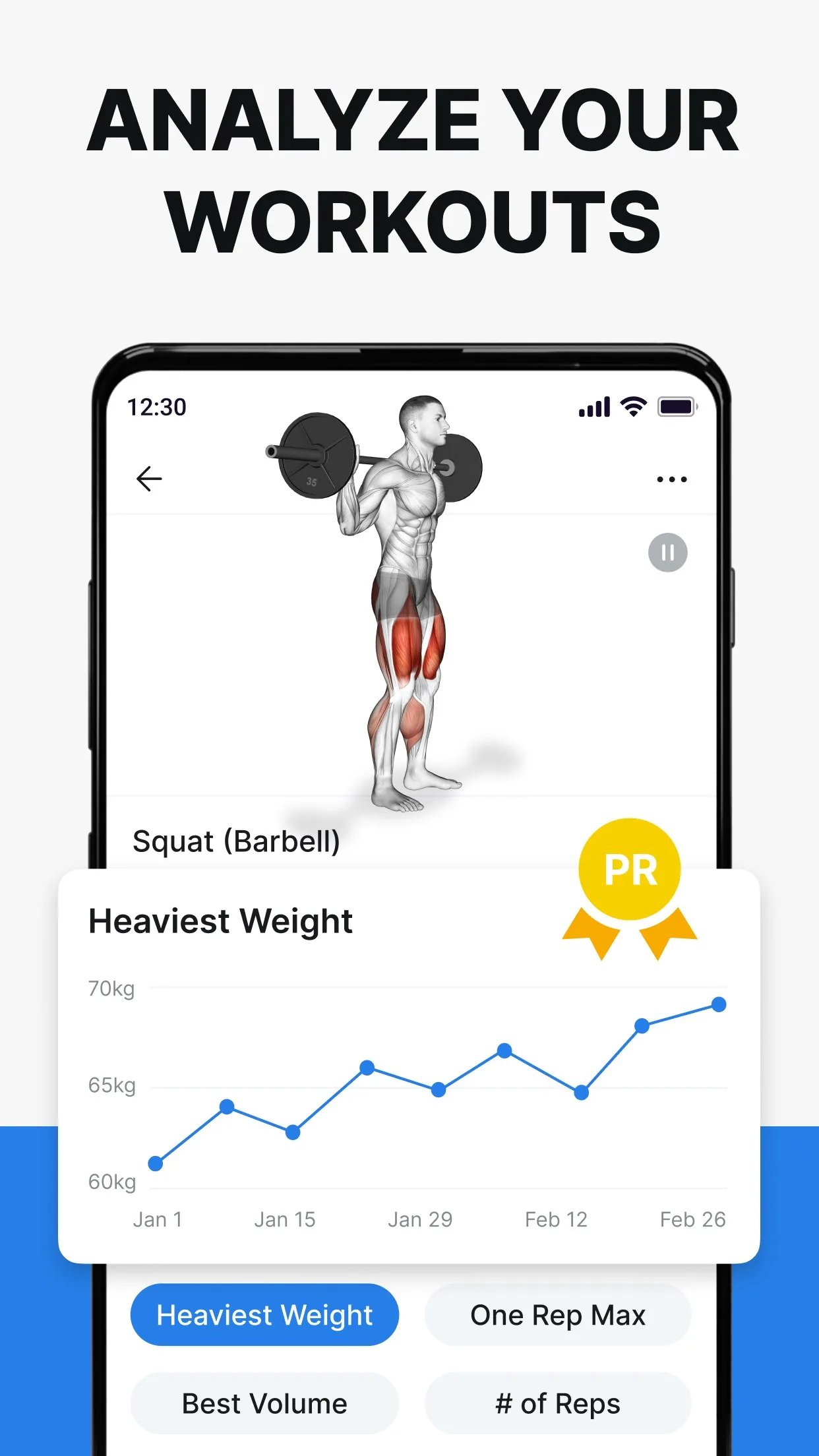
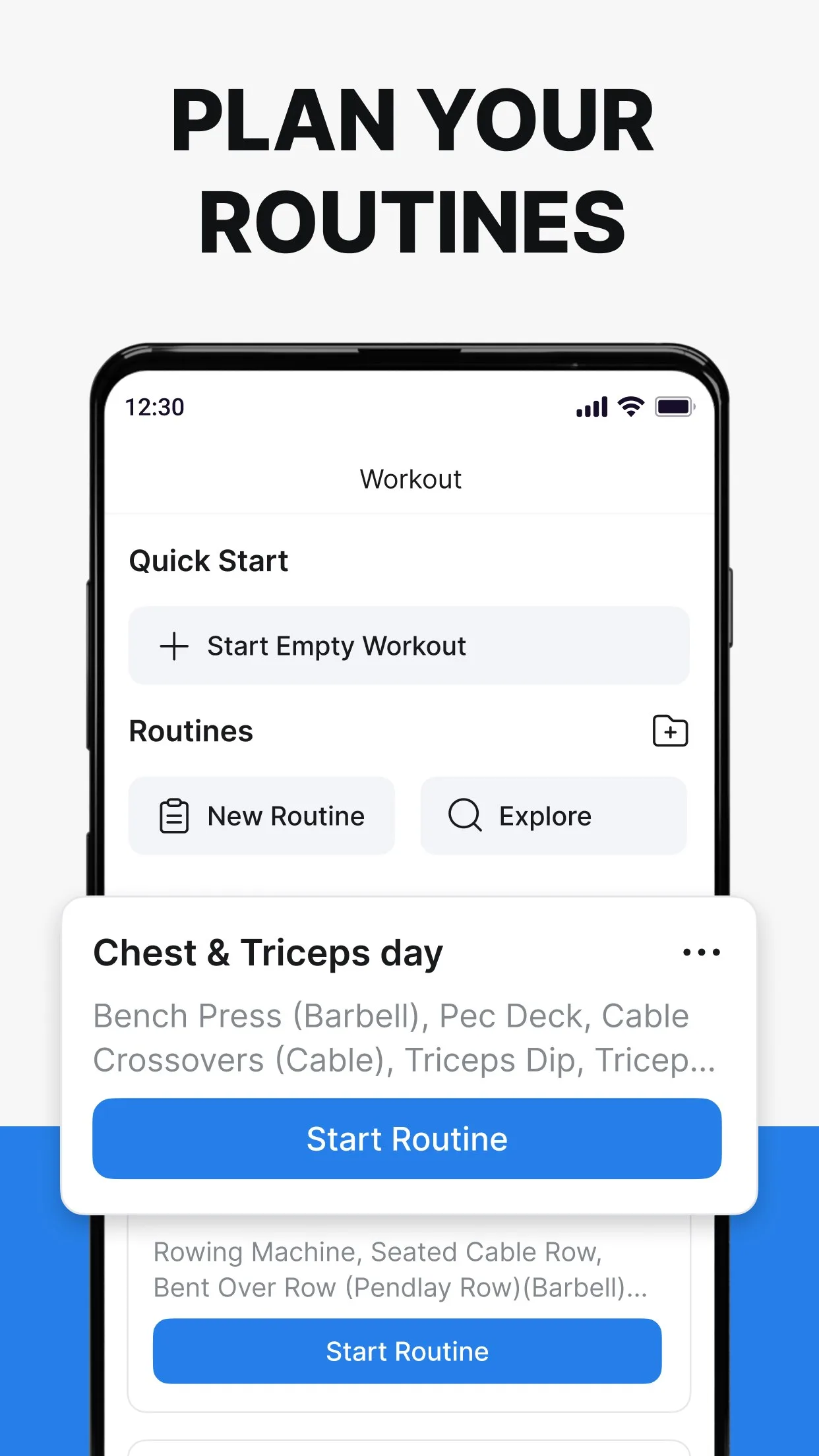
Hevy is the most widely used strength logging app for intermediate gym-goers, and the reason is straightforward: it makes progressive overload visible and social in a way no competitor matches at its price point. The Pro tier at $23.99 per year removes the 4-routine and 7-custom-exercise free tier caps and adds the muscle group volume analytics that make it genuinely useful for structured hypertrophy training.
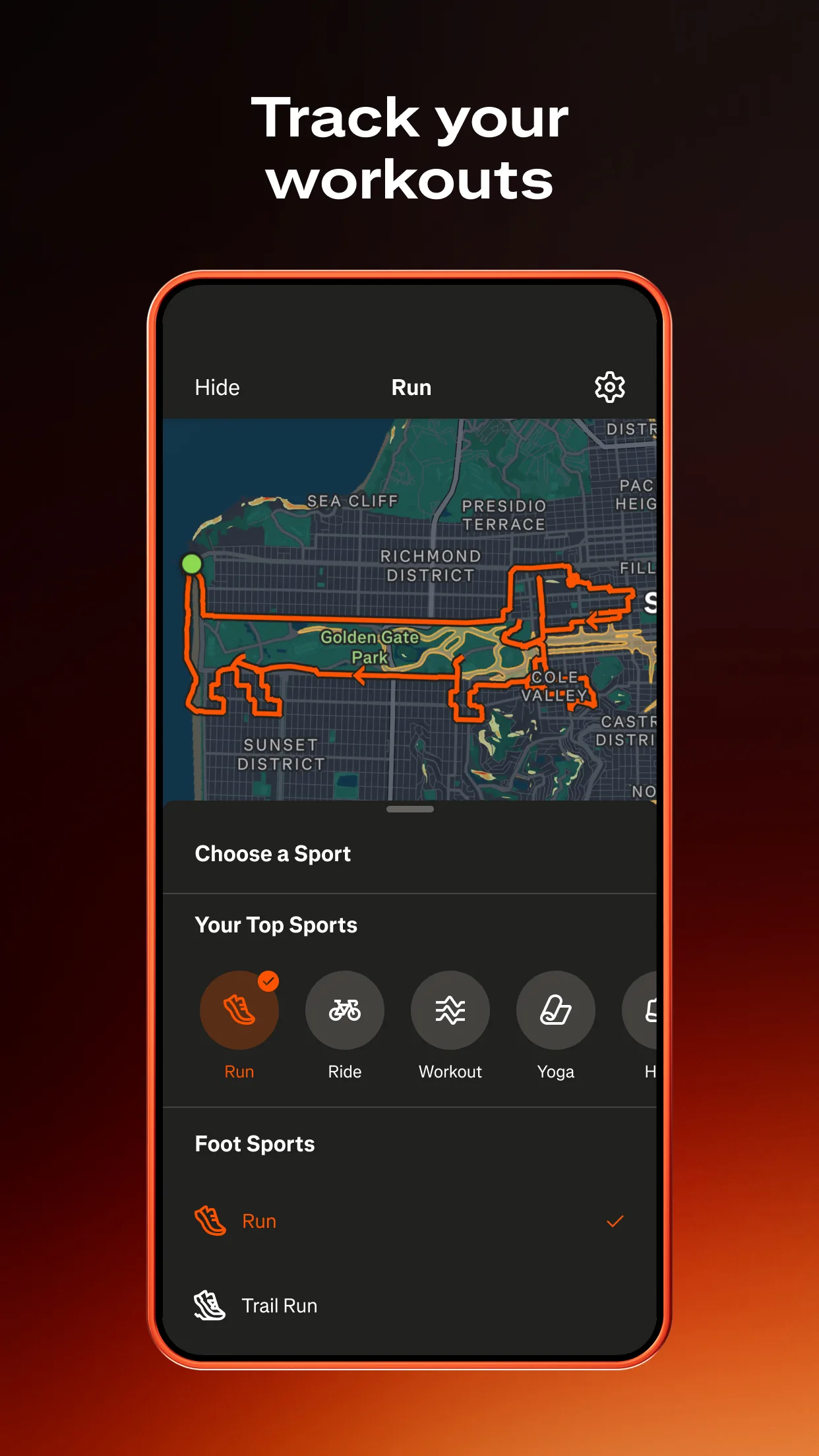
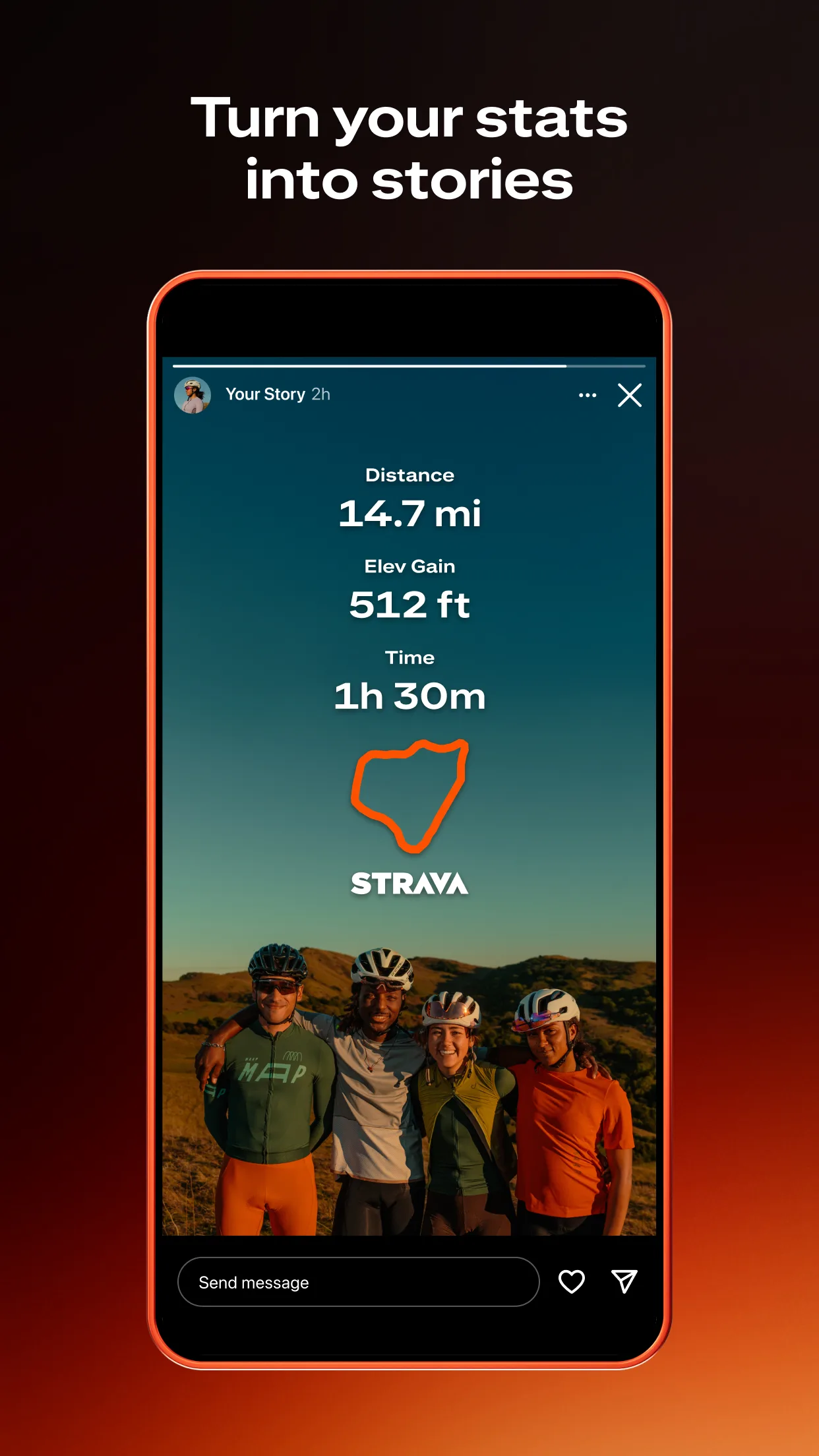
The 12 million athletes on Hevy generate a social workout feed that functions similarly to Strava for strength training. Following training partners, seeing their completed sessions, and receiving accountability comments creates genuine external motivation for the mid-training-block sessions that typically suffer from motivation drops. Community programs let you browse hypertrophy splits created by other users, including popular PPL, PHUL, and bro-split variations.
What Hevy does well
- Previous weight/reps display: shows your last session’s exact data before every set; the non-negotiable requirement for progressive overload tracking, executed without friction
- Muscle group volume charts: Pro tier shows weekly sets per muscle group across your training history; identifies which muscles are overtrained, undertrained, or balanced relative to your program design
- Social workout feed: follow training partners, see completed sessions, get accountability through likes and comments; uniquely motivating for intermediate lifters who benefit from visible peer training data
- Automatic PR detection with celebration notifications for any lift improvement
- Community program library with PPL, Upper-Lower, and bodybuilding splits created by other users
- Wear OS native app for logging sets directly from your watch between sets
- Pricing: Hevy Pro at $23.99 per year is the most affordable analytics upgrade in this category
Where Hevy falls short
Hevy’s social features, which are its primary differentiator, are also its primary drawback for privacy-conscious lifters who want no audience for their training. The community program library has inconsistent quality control - programs created by other users range from excellent to structurally problematic, with no editorial curation separating them. The Wear OS app has reported data-loss bugs when phone and watch disconnect mid-session, which is a serious issue for lifters who rely on wrist logging during crowded gym sessions.
Pricing: Free (4 routines, 7 custom exercises) / $23.99/year Pro / $74.99 Lifetime
Upgrade Hevy to Pro at $23.99 per year if you have confirmed the free tier serves your needs and the muscle group volume analytics would change your weekly training decisions. The volume charts become genuinely useful around the 8-12 week mark of a structured hypertrophy program when you need to know whether your posterior chain is keeping pace with your chest and shoulders.
Fitbod - Best AI Workout Generator for Variable Equipment
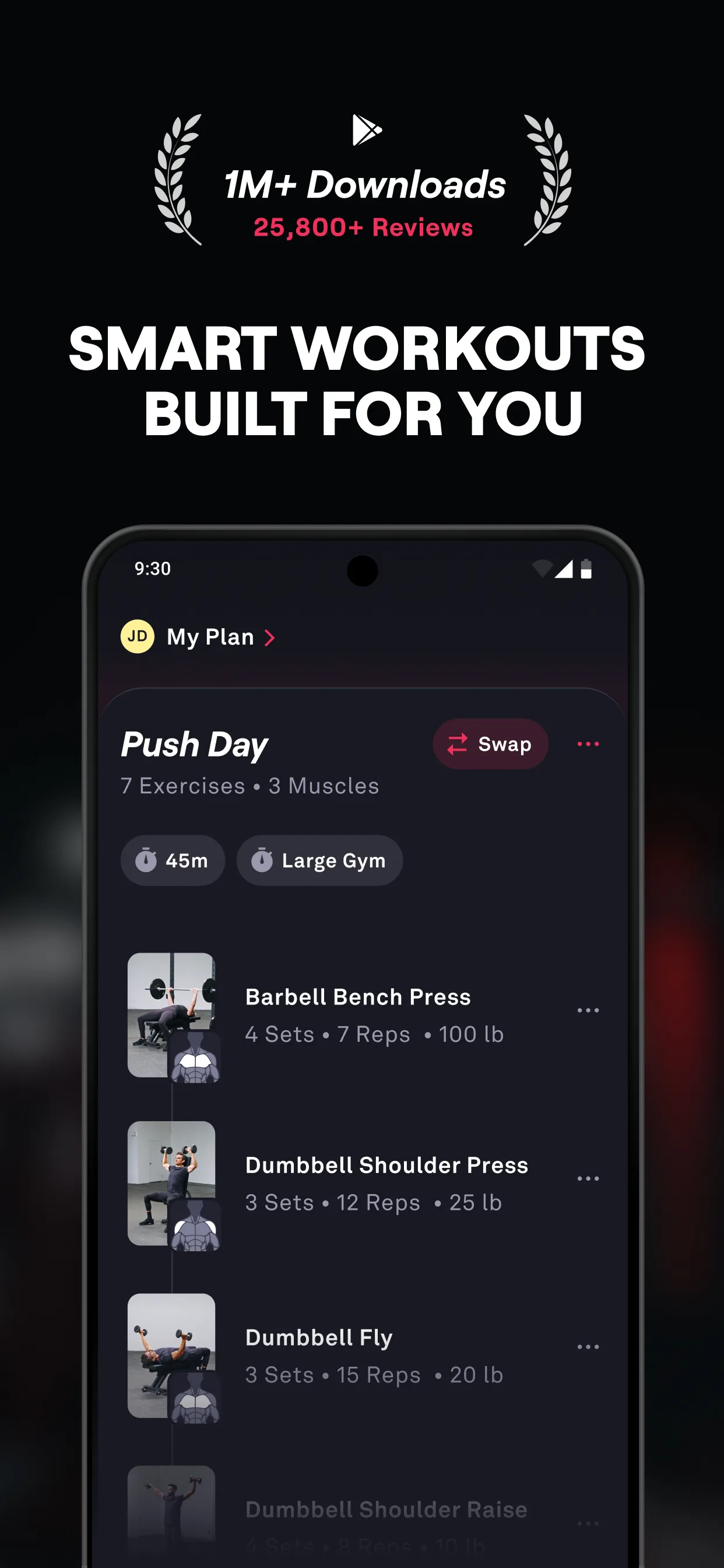
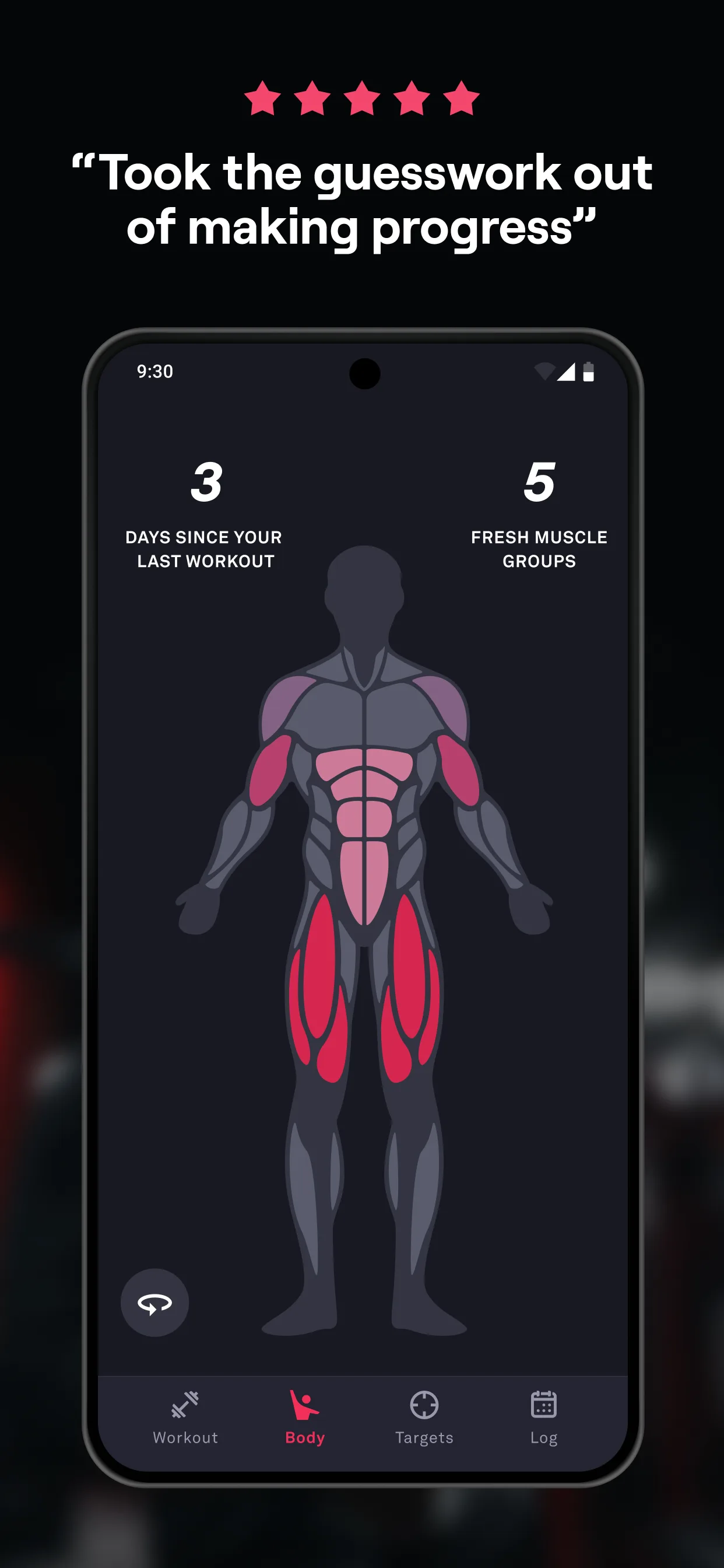
However, Hevy’s manual logging approach requires that you already have a program to follow. Fitbod addresses the large segment of intermediate gym-goers who want a trained eye deciding which exercises to do and at what loads, rather than building their own programming. The AI generates each workout specifically based on muscle fatigue tracking: after logging a chest session, the algorithm knows your pecs need 48-72 hours of recovery before optimal stimulus, and generates the next session around recovered muscle groups.
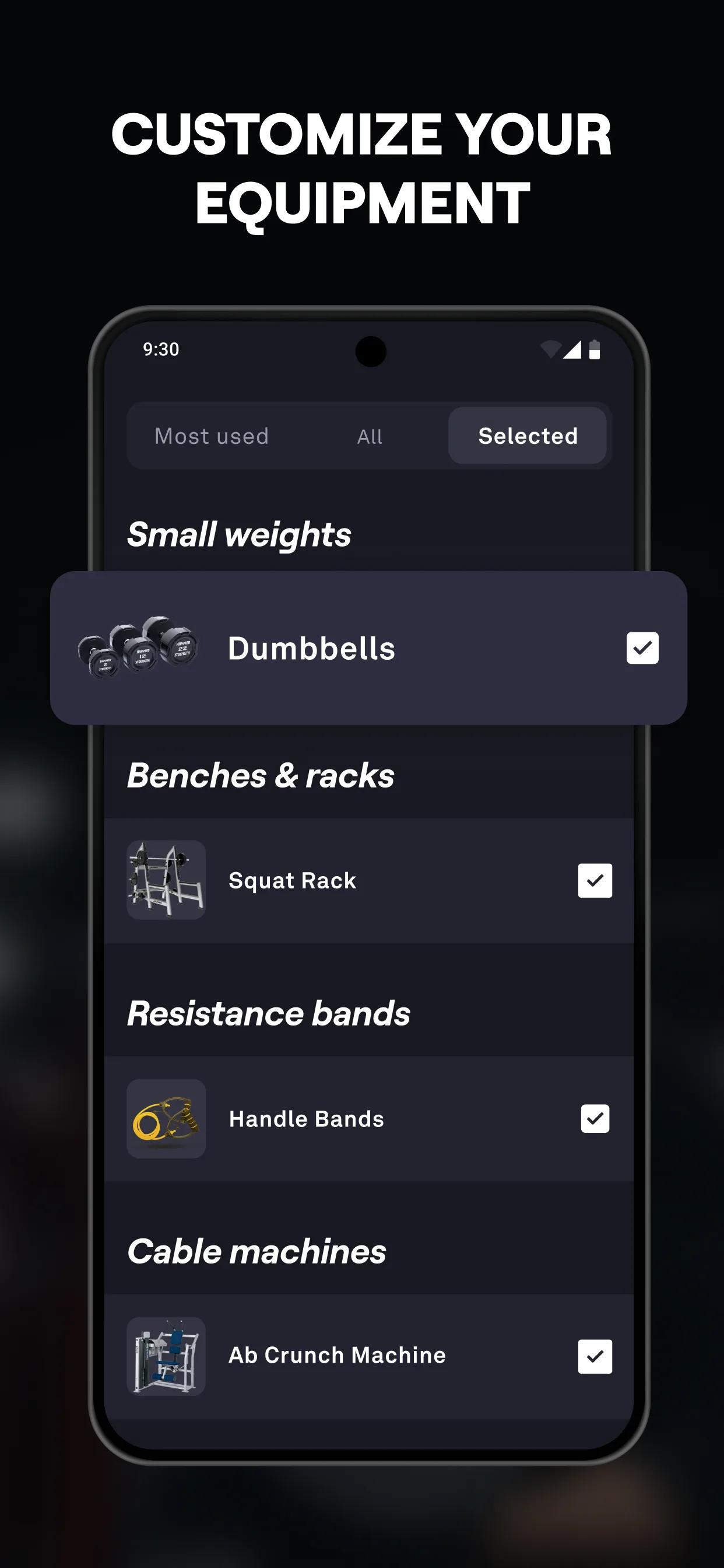
The equipment filtering system is Fitbod’s most practically useful feature for lifters whose equipment access varies. Business travel, hotel gyms, and switching between a commercial gym and a home setup create situations where a fixed barbell program fails. Fitbod adapts each session to whatever is actually available - barbell and full gym, dumbbells only, cables and machines, bodyweight only, or any combination - generating appropriate exercises and loads for the specific equipment present.
What Fitbod does well
- Muscle fatigue tracking AI: generates each workout based on per-muscle recovery status after logging; avoids training muscles that haven’t recovered while maximizing stimulus on those that have
- Equipment filtering: adapts to barbell gym, dumbbells only, cables, bodyweight, or any combination; practically essential for lifters with variable equipment access across locations
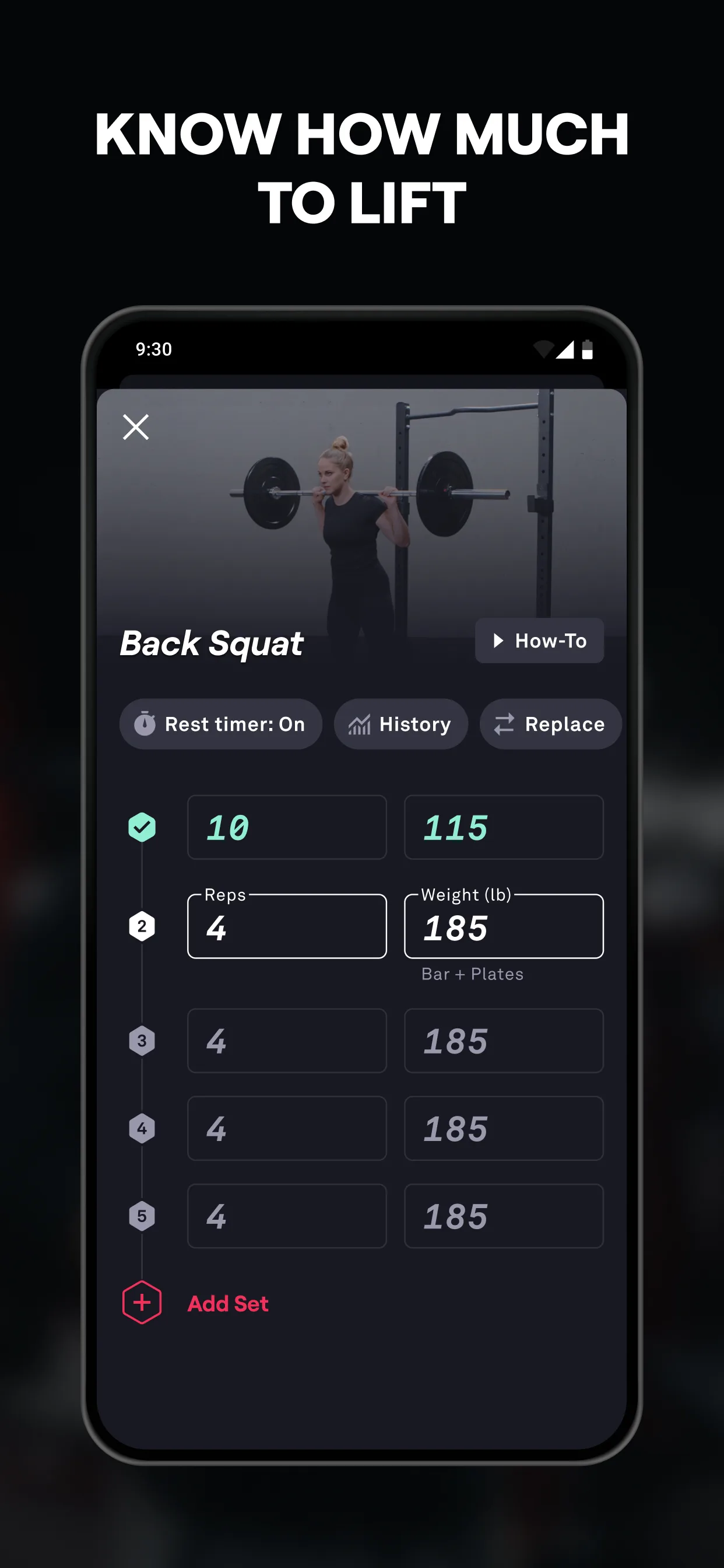
- Adaptive volume and intensity: adjusts recommended loads and sets based on your logged performance history across sessions, improving recommendations as it learns your response patterns
- Muscle fatigue visualization showing which muscles are fully recovered, partially recovered, and still fatigued
- Exercise instruction videos with form cues for every movement in the generated workout
- 7-day free trial for meaningful evaluation before committing to the annual subscription
Where Fitbod falls short
At $95.99 per year, Fitbod is the most expensive pure gym app in this guide and costs more than Hevy Pro, StrengthLog Premium, and Boostcamp Premium combined. The AI generation reduces control over programming choices, which experienced lifters following a specific methodology typically find frustrating - if you want to run Renaissance Periodization or a specific coach’s program, Fitbod’s generated approach actively conflicts with your plan. The model also degrades meaningfully when sets are skipped or logged inaccurately; inconsistent logging breaks the muscle fatigue algorithm.
Pricing: 7-day free trial / $15.99/month or $95.99/year / $359.99 Lifetime
Start Fitbod’s 7-day free trial today and log at least 5 workouts across different muscle groups before evaluating whether the AI recommendations match your training instincts. The algorithm improves after each logged session; 5 sessions gives you enough data to judge whether the generated workouts serve your specific goals and equipment situation.
JEFIT - Best Community Program Library

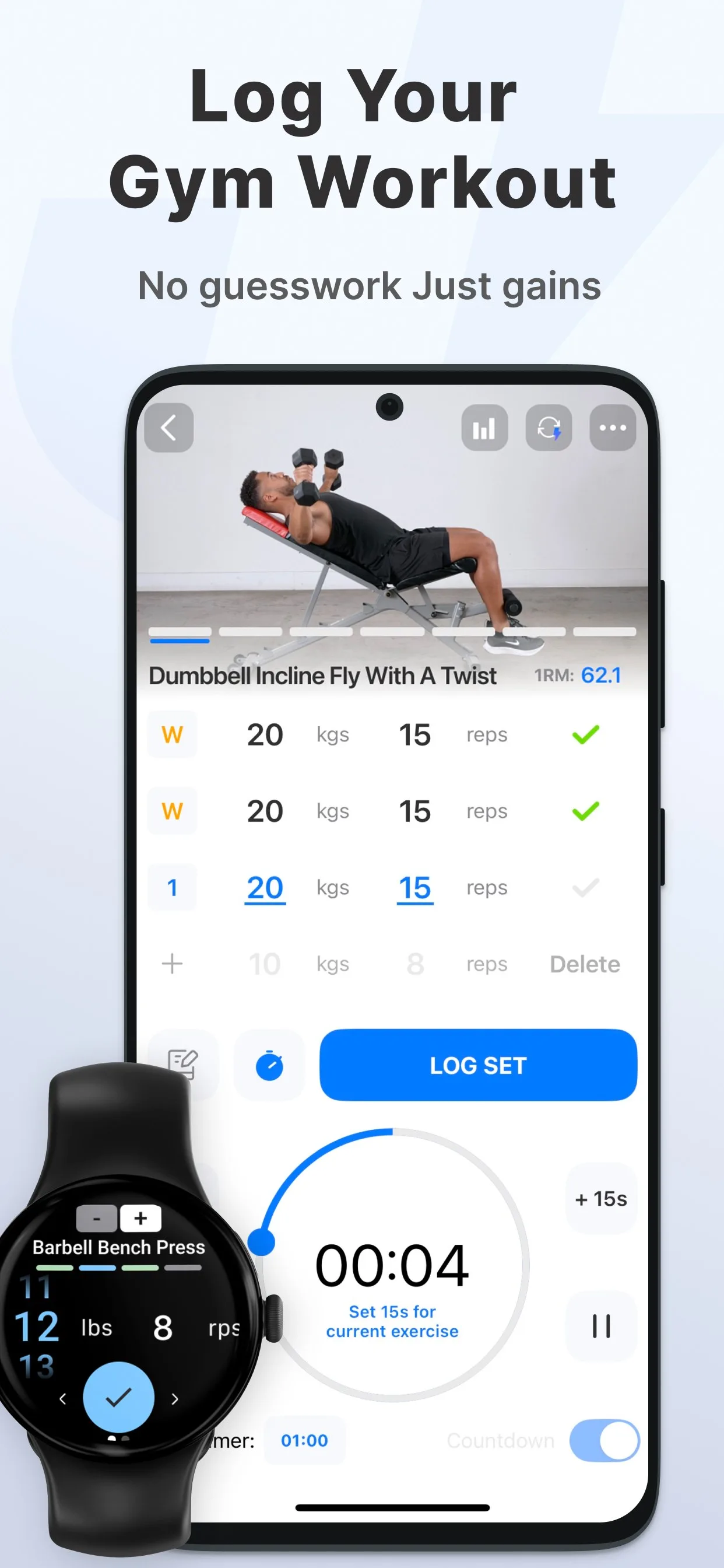
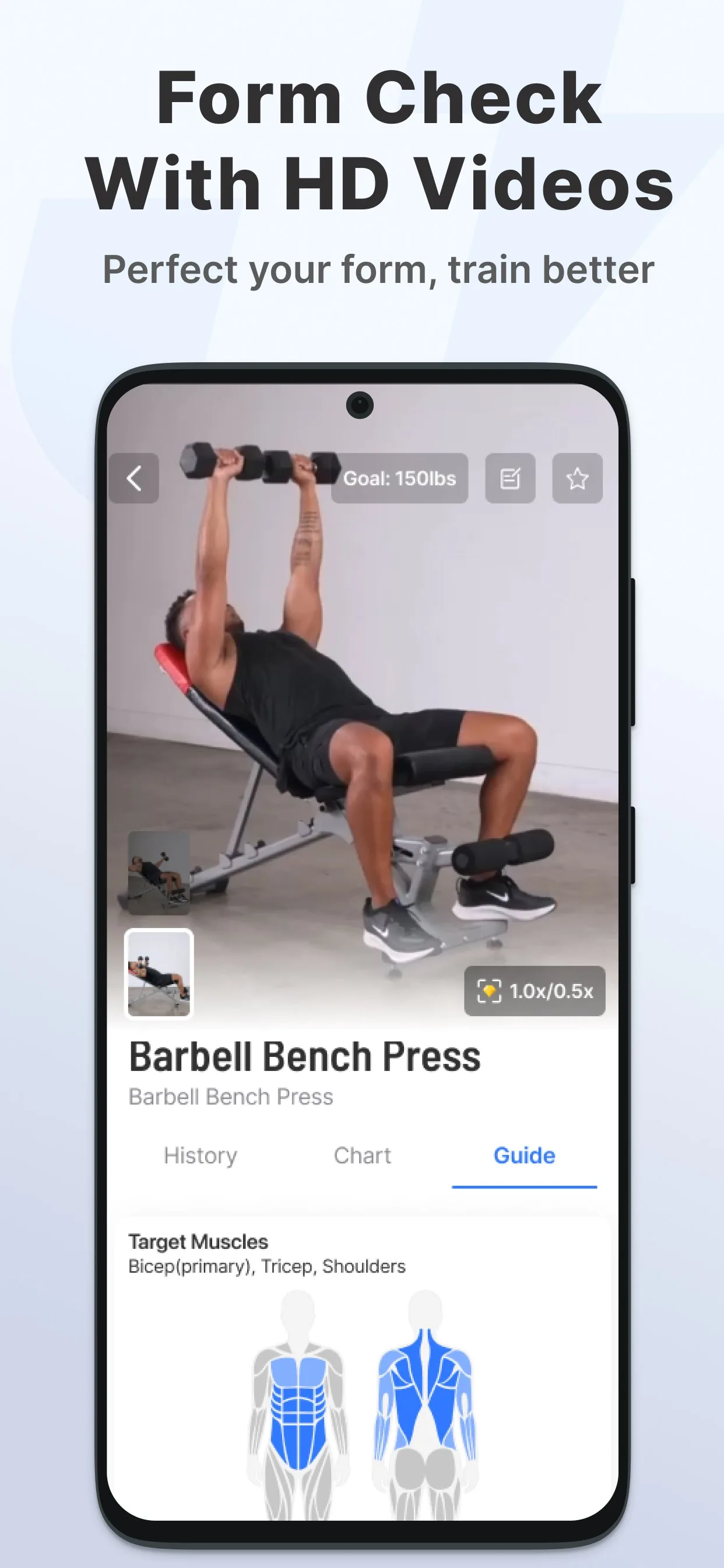
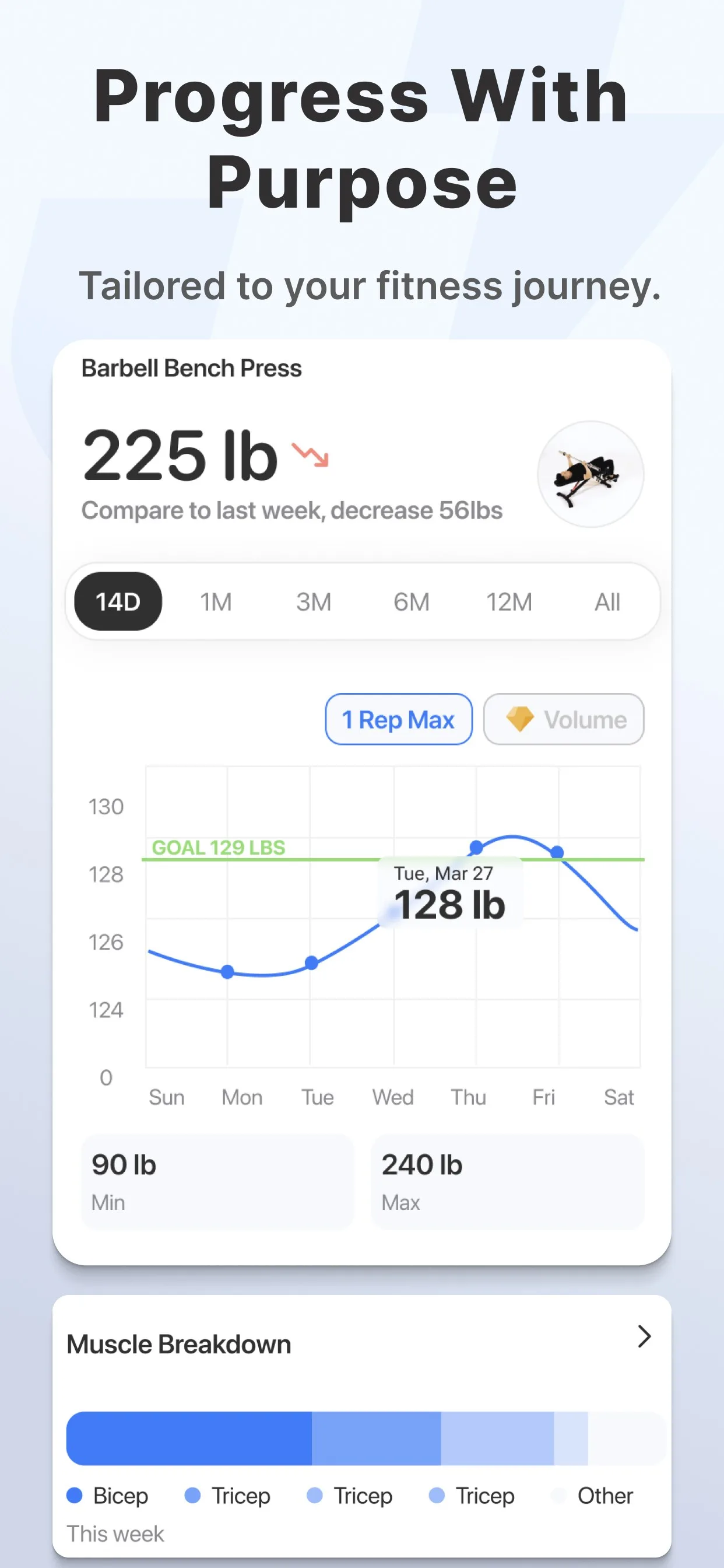
Additionally, JEFIT provides the deepest community program library for intermediate lifters who want a human-designed hypertrophy program without paying for coaching. The 2,000+ shared programs include popular intermediate hypertrophy splits - PPL, Arnold Split, PHUL, PHAT, and programs from well-known coaches and trainers. The 1,400+ exercise library with video instruction is unmatched across all competitors and makes it uniquely useful when a program calls for an unfamiliar isolation exercise.
The NSPI composite strength scoring system tracks overall strength progress as a single evolving number, giving intermediate lifters a simple metric for whether their hypertrophy training is producing measurable strength adaptation alongside the aesthetic goals. Body measurement tracking and muscle heatmap visualization show which muscle groups receive the most training stimulus across your logged sessions.
What JEFIT does well
- 2,000+ community programs: the largest shared program library in any gym app; covers intermediate hypertrophy splits including PPL, Arnold Split, PHUL, PHAT, and specialist programs for specific goals
- 1,400+ exercises with video instruction: no competitor matches this library depth; critical when intermediate programs include isolation exercises that require form guidance
- NSPI composite strength score: tracks overall strength across the main compound lifts as a single evolving number across your training history
- Body measurement tracking with trend charts showing waist, chest, arm, and leg measurements over months of training
- Muscle heatmap visualization identifying training frequency and balance across muscle groups
- Web app access alongside Android, allowing training history review and program management from any device
Where JEFIT falls short
The free tier shows ads during active gym sessions, which is intrusive during rest periods between sets. Elite at $69.99 per year is the most expensive option in the general logging category, harder to justify when Hevy Pro covers similar analytics at $23.99. Some community programs contain excessive volume for intermediate lifters - the quality control on user-generated content is inconsistent, and beginners following high-volume programs without the recovery capacity to handle them risk overtraining. The interface feels dated compared to Hevy’s modern design according to consistent 2026 reviewer feedback.
Pricing: Free (ads, limited plan access) / $69.99/year Elite
Download JEFIT free to access the 1,400+ exercise library and 2,000+ community programs as a planning resource. Use it alongside Hevy for actual workout logging: JEFIT for finding and evaluating hypertrophy programs, Hevy for the session-by-session progressive overload tracking that drives muscle growth.
Boostcamp - Best for Running Established Hypertrophy Programs
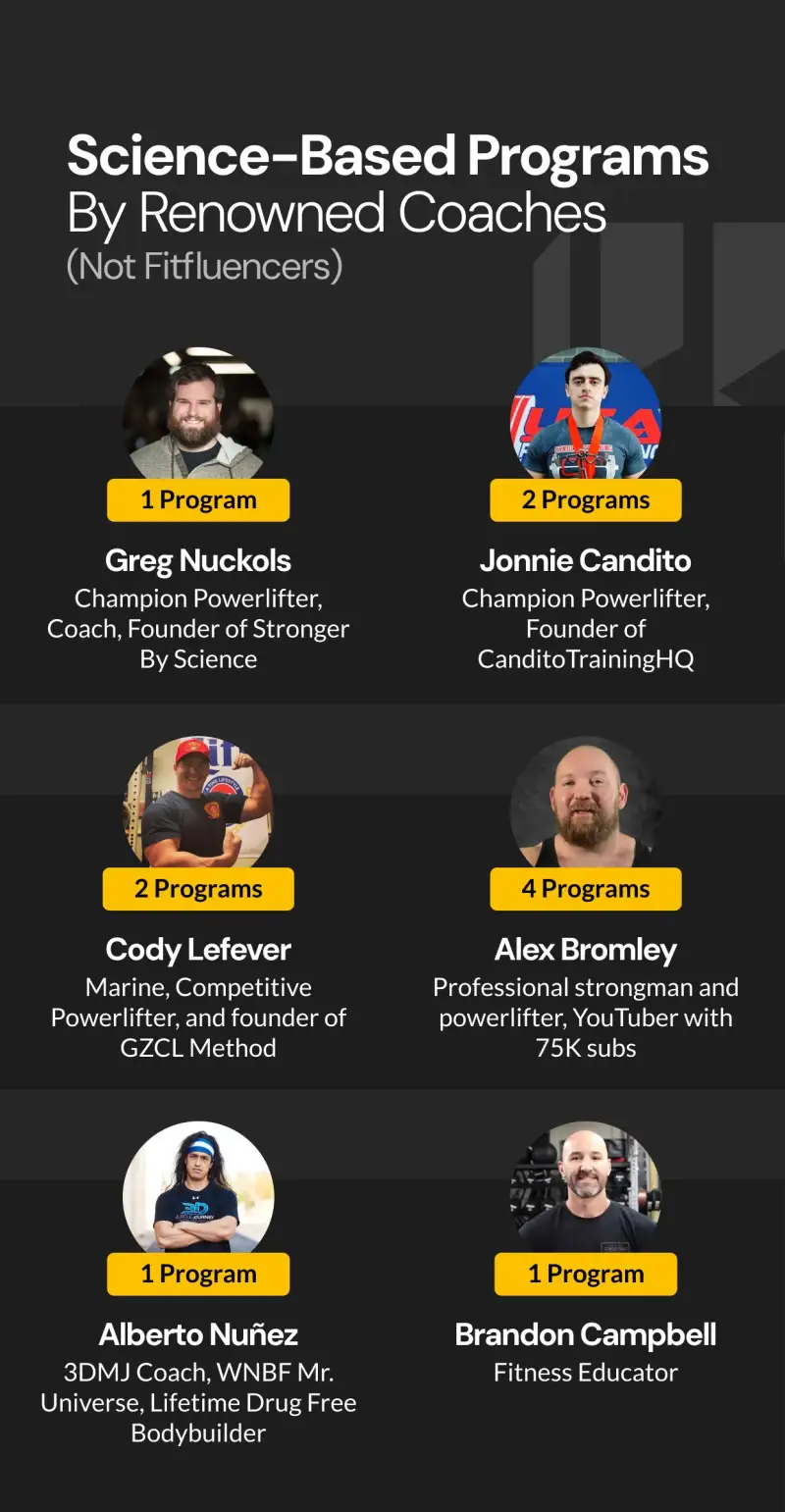
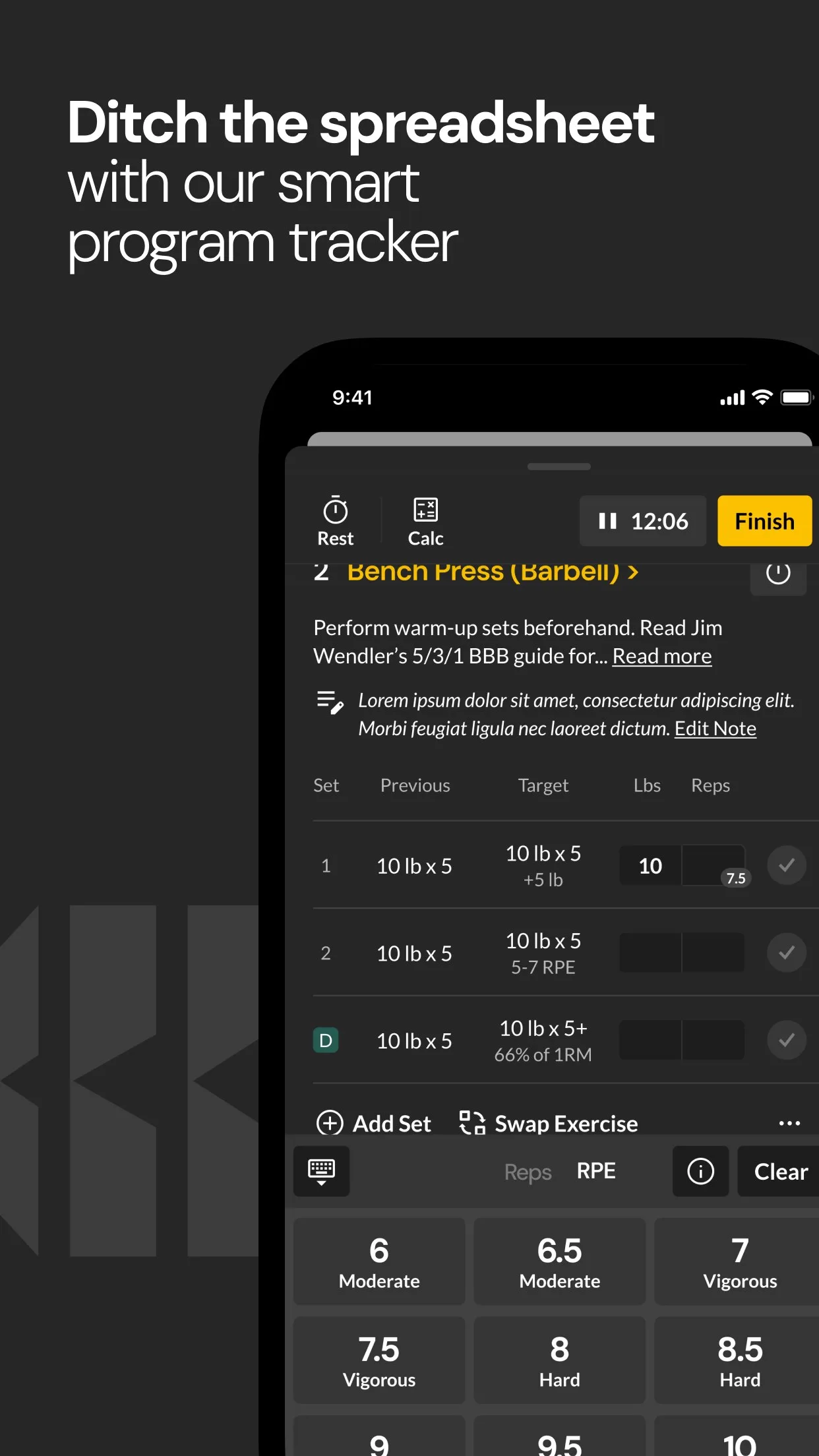
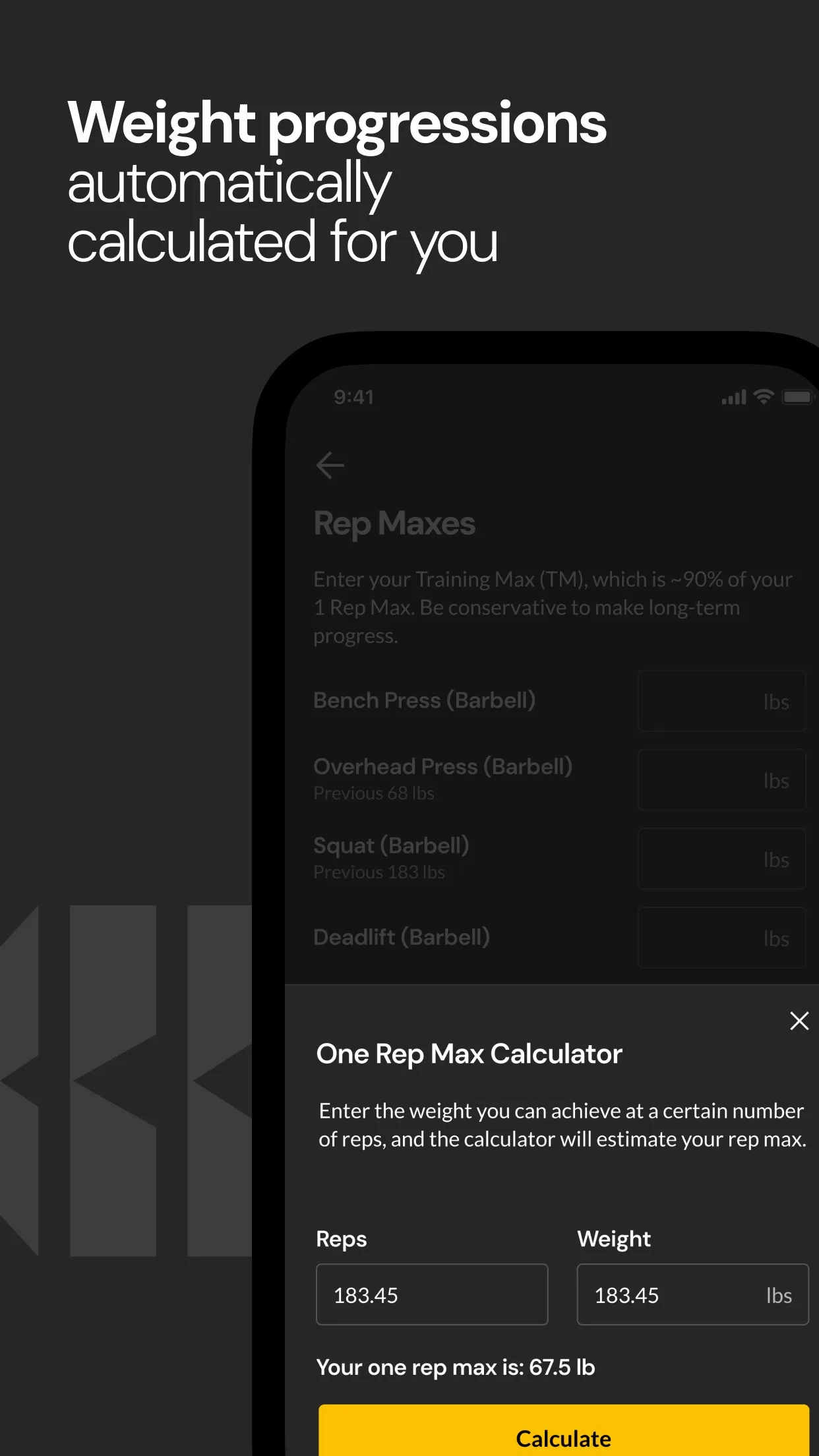
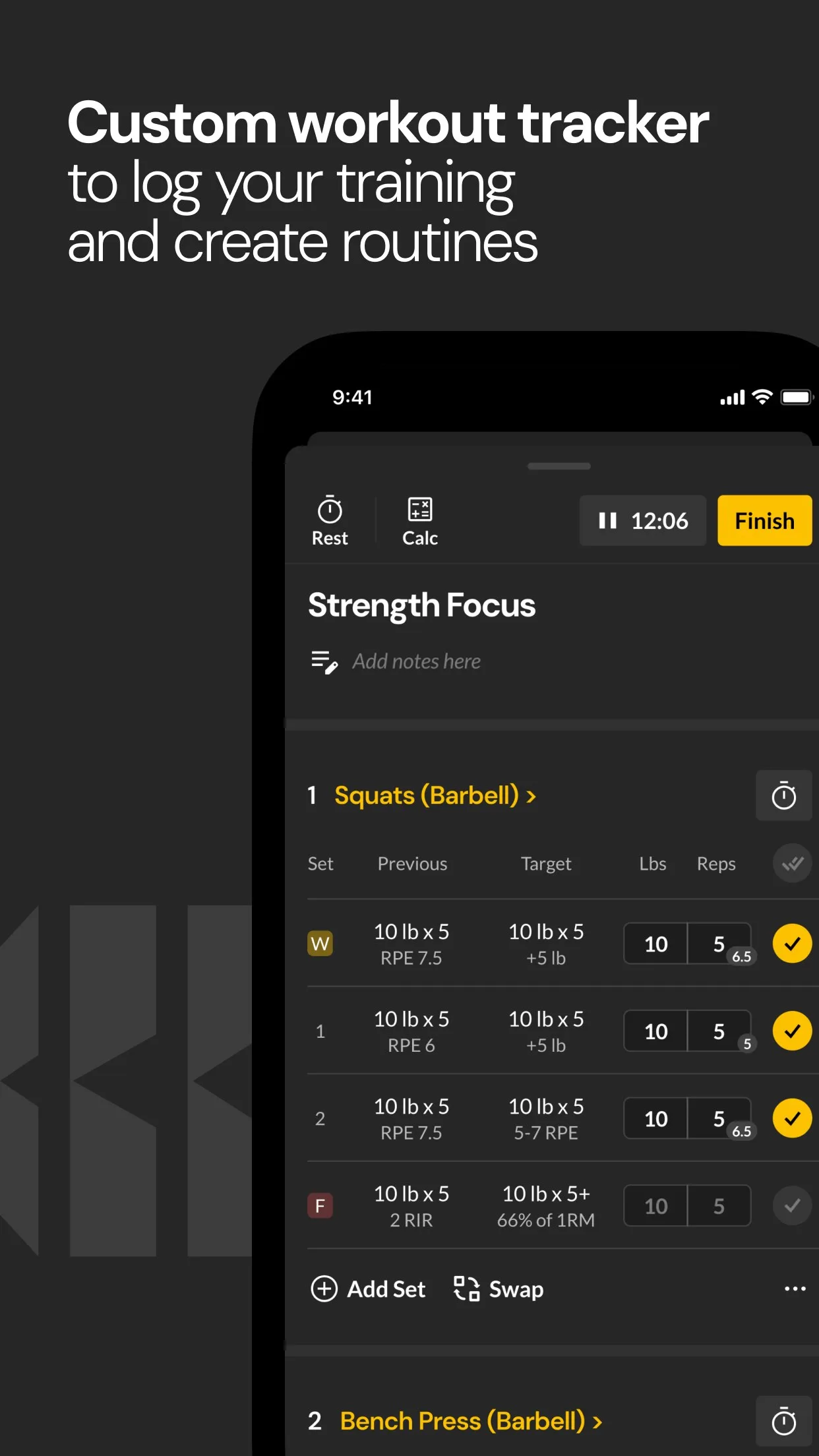
Unlike the flexible logging apps above, Boostcamp solves a specific and underserved problem: running one of the internet’s most popular intermediate hypertrophy programs with automatic weight progression built in. The 100+ licensed programs include PPL (Reddit Push Pull Legs), PHUL (Power Hypertrophy Upper Lower), PHAT (Power Hypertrophy Adaptive Training), and StrongLifts 5×5 - programs designed by coaches with specific weekly progression logic already encoded.
When you start PHUL on Boostcamp, the app calculates your working weights from your inputted 1RM, programs each set across power and hypertrophy days per the protocol, and advances weights week-by-week according to the program’s rules. This removes one of the most common intermediate mistakes: following a written program manually but miscalculating progression weights, deviating from intended load increases, or losing track of which week of a mesocycle you are in.
What Boostcamp does well
- 100+ licensed intermediate programs: PPL, PHUL, PHAT, StrongLifts 5×5, and programs from known coaches; all with automatic 1RM-based load calculation and built-in weekly progression
- Program-specific progression tracking: advances weights per each program’s rules rather than requiring manual calculation; prevents the progression errors that derail intermediate hypertrophy programs
- Most programs completely free: PPL, PHUL, GZCLP, and nSuns are free on Boostcamp permanently; Premium at $80/year adds analytics and specialist programs
- Progress tracking per program cycle with history showing load increases across the full mesocycle
- Multiple program variations for the same protocol: nSuns offers 4-day, 5-day, and 6-day options depending on training frequency preference
Where Boostcamp falls short
Boostcamp is a program-running app, not a freeform workout logger - its value is specific to structured programs with defined progression rules, and it handles custom programming less elegantly than Hevy or JEFIT. Programs do not adapt to missed sessions or performance plateaus; they advance on fixed schedules regardless of whether you hit the target reps in the previous week. Premium at $80 per year is reasonable but sits above Hevy Pro and StrengthLog at similar feature levels.
Pricing: Free (most programs including PPL, PHUL, GZCLP, nSuns) / $80/year Premium
Download Boostcamp free and start one of the free intermediate hypertrophy programs - PPL or PHUL are the most popular choices for muscle-building focus. Pair it with Hevy free for any additional sessions outside the structured program. The combination costs nothing and covers both structured program tracking and flexible logging.
Which App Fits Your Muscle-Building Setup
| App | Price | Best For | Free Tier Useful? |
|---|---|---|---|
| Hevy | Free / $23.99/yr | Progressive overload logging, social | Yes (4 routines) |
| Fitbod | $95.99/yr | AI-generated workouts, variable equipment | 7-day trial only |
| JEFIT | Free / $69.99/yr | Community programs, exercise library | Moderate (ads) |
| Boostcamp | Free / $80/yr | Running established programs automatically | Yes (100+ programs) |
Following your own hypertrophy split
Upgrade Hevy to Pro at $23.99 per year for unlimited routines and muscle group volume analytics. Log every session consistently and review the volume charts weekly to identify imbalances. This is the most cost-effective setup for lifters with existing programming knowledge who want to track progressive overload systematically.
Want AI to program your training
Start Fitbod’s 7-day free trial and log 5 sessions across different muscle groups before evaluating. Subscribe at $95.99 per year if the AI recommendations consistently match your goals and equipment. Accept that the AI approach trades control for convenience - it suits lifters who find program design overwhelming more than those with strong programming opinions.
Starting an established intermediate program
Download Boostcamp free and pick one of the licensed hypertrophy programs matching your training frequency. Start immediately with automatic weight calculation from your current 1RM estimates. Add Hevy free for any sessions outside the structured program.
Need exercise library plus community programs
Download JEFIT free for the 1,400+ exercise videos and 2,000+ community programs. Use it for program discovery and form reference while running Hevy as your primary workout log. Upgrade JEFIT to Elite only if you actively use the community programs and find the ad-free experience improves your training workflow.