You found a €19 flight. By the time you reached checkout, it was €47 — service fee, baggage markup, connection protection added without consent. The airline delayed the first leg. The second carrier wouldn’t wait. Kiwi’s support chatbot looped for three days. That experience, told in some version by nearly every experienced backpacker, is the reason app selection matters as much as destination selection.
Budget backpacking in 2026 is a nine-app problem. You need one for beds, two for transport, one for flights, one to figure out if the route even exists, one for daily spending, one for group expenses, and one to meet locals. Every category has a clear winner, a usable runner-up, and at least one app that looks cheap and isn’t. After testing across Southeast Asia, Europe, and South America on trips ranging from 10-day sprints to 6-week open itineraries, this guide maps the stack.









What Makes a Great Backpacker App
Budget travelers face constraints that other travelers typically don’t. Four criteria matter differently here.
Offline capability separates essential from useless in SE Asia and South America. Power cuts, rural bus journeys through dead zones, and mountain treks with no signal are not edge cases — they’re routine. TravelSpend’s full offline expense logging is not a nice-to-have; it’s the feature that makes it worth using over general finance apps. FlixBus tickets stored as offline QR codes mean you don’t need a signal to board the 6am bus from Prague to Vienna.
Actual total cost versus listed price is the most common deception in travel apps. Kiwi.com’s fares look extraordinary until checkout. Hostelworld adds a per-booking fee. Omio adds service fees on some routes. This guide notes the real cost model for every app so you’re not surprised.
Regional relevance varies dramatically. Hostelworld dominates European hostel booking and is thin in East Africa. FlixBus is the cheapest way across Europe and has grown into South America. 12Go Asia still outperforms all global apps for bus/ferry bookings in Thailand and Vietnam. Using the right regional tool can save 30-50% on a segment.
Connectivity requirement for core functions determines whether an app works during the 40% of a backpacking trip that happens without reliable internet. Apps that require a signal for everything beyond viewing saved tickets are liabilities in the field.
How We Tested
Testing ran across four trip segments between November 2025 and April 2026: a 3-week Europe backpacking circuit (Amsterdam, Berlin, Prague, Vienna, Budapest, Split); a 4-person group trip in Thailand and Vietnam; a 10-day South America segment covering Chile and Argentina; and a budget sprint through Morocco. Total: 38 accommodation bookings, 24 ground transport segments, 11 flights, and 4 months of expense tracking across solo and group configurations. Tested on Pixel 8 Pro and Samsung Galaxy S24+, both running Android 15.
Hostelworld - Best for Booking Hostels

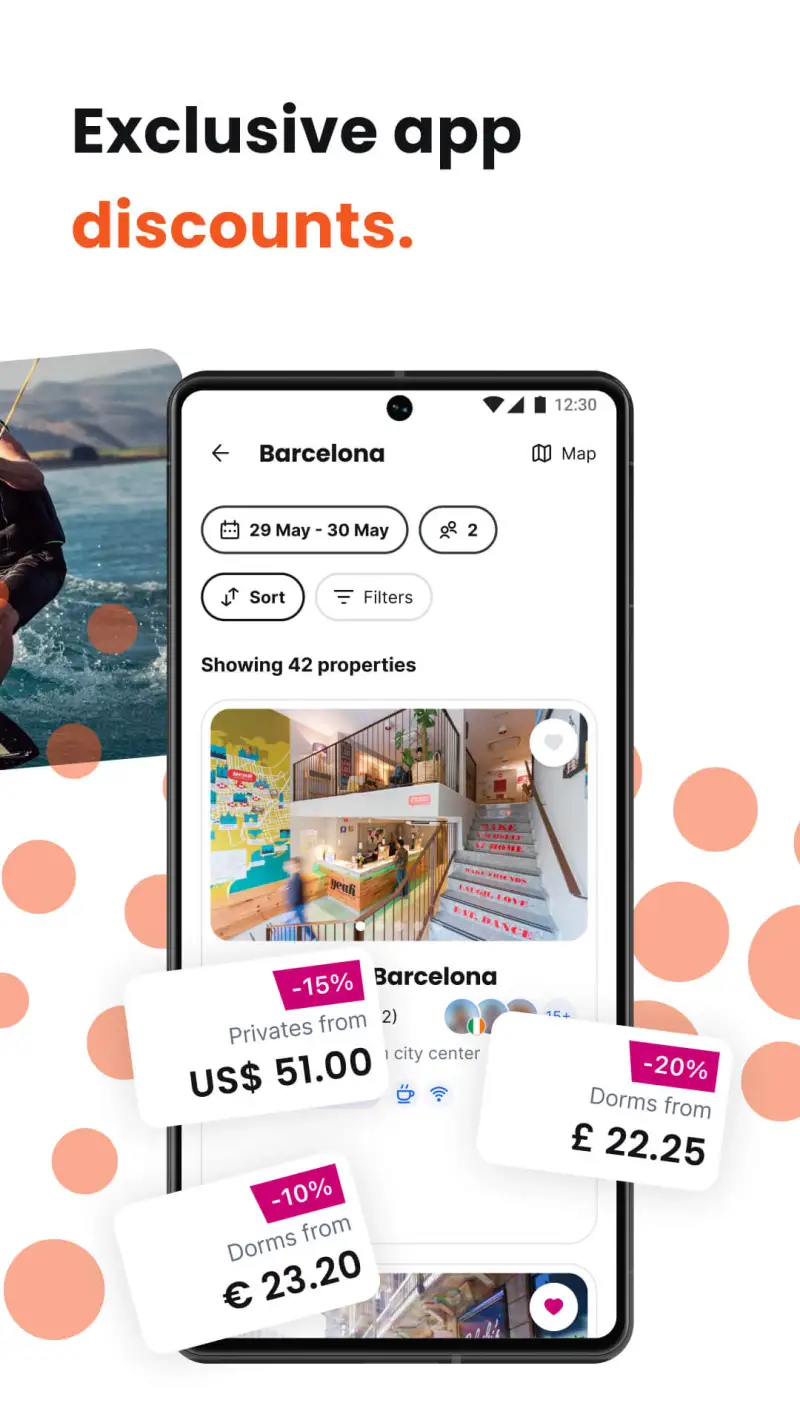
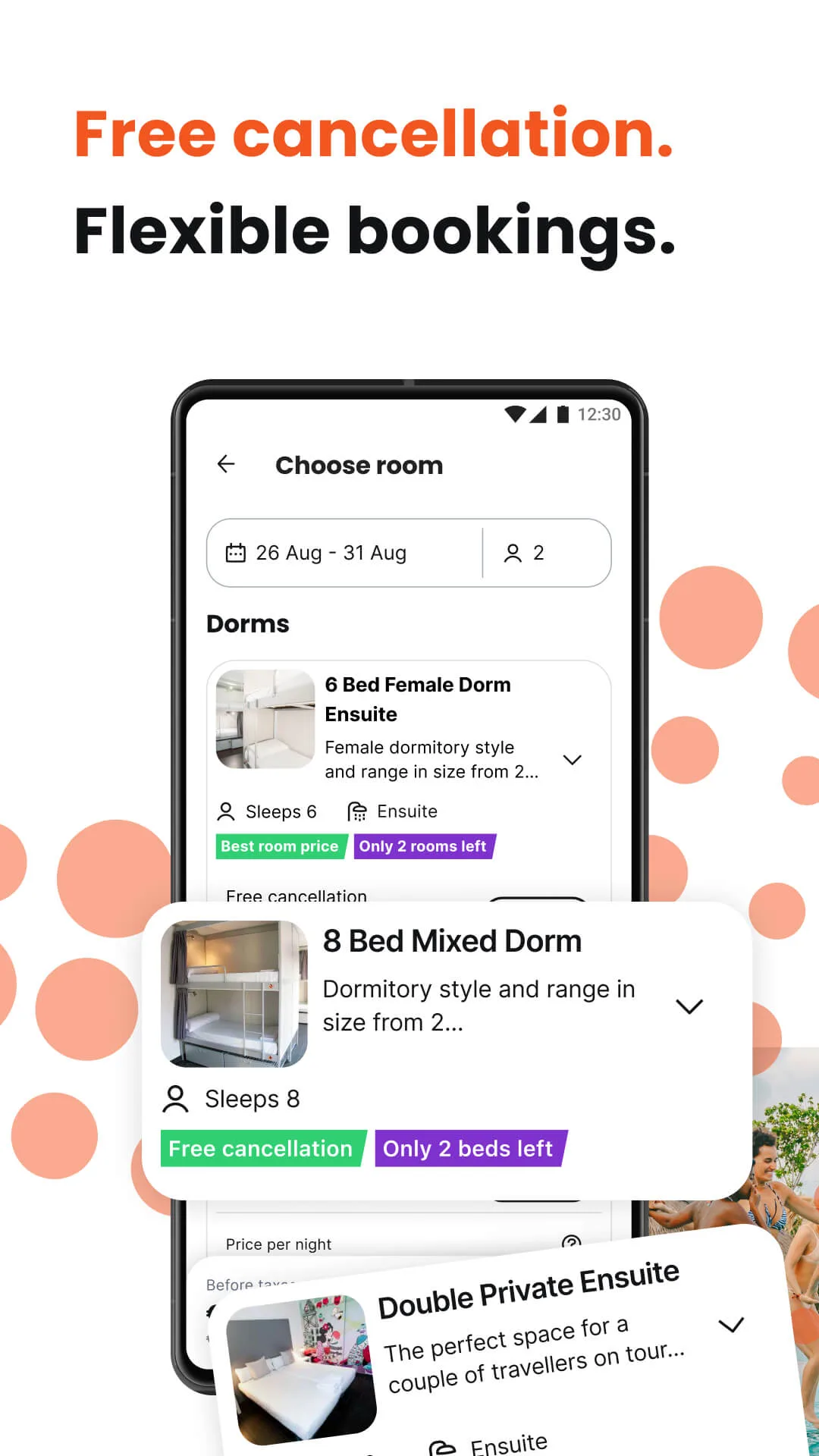
Hostelworld is the default hostel booking platform for 9.4 million reasons — that’s the real install count behind the “5 million+” Play Store listing. The inventory depth in Europe, Southeast Asia, Australia, and Latin America is unmatched: over 36,000 hostels in 178 countries, with dorm-specific filters that Booking.com’s generic accommodation search can’t replicate.
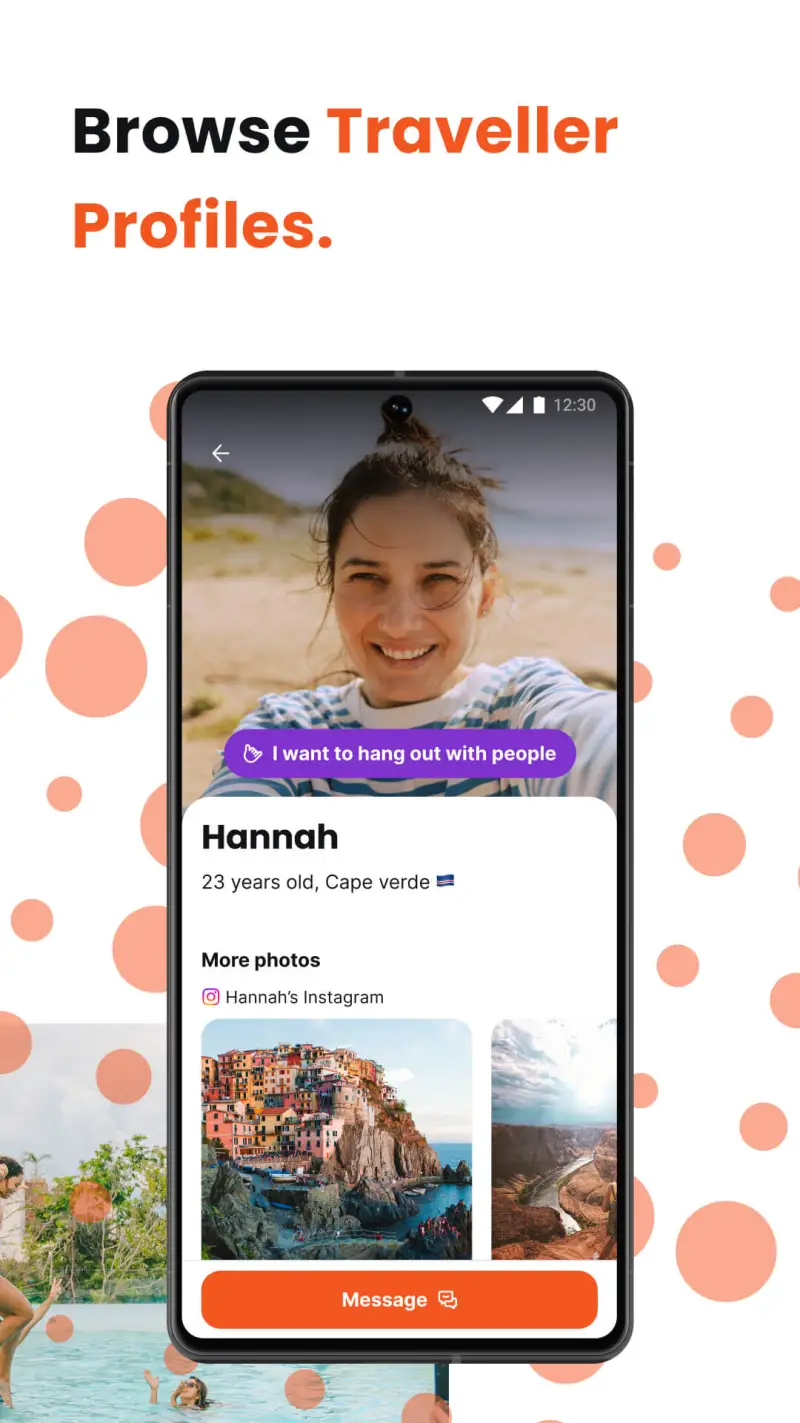
The Horizon feature is the genuinely novel addition. Before arrival, you can see and message other guests booked for the same dates at your hostel, join interest-based chat groups, and connect with travelers heading to the same next destination. For solo backpackers, this converts what used to be an awkward hostel common room introduction into a pre-trip social layer. It works. I connected with two other travelers on the Prague hostel chat before flying, which turned into a 3-day travel group.
The booking fee — typically $1–2 per booking — is the honest negative. It’s modest, but it applies to every booking including $8 dorm beds, and it adds up across a long trip. Hostelworld’s business model charges the deposit upfront; the rest you pay at the hostel. Read cancellation policies carefully, as free cancellation is not universal.
What Hostelworld does well
- Dorm-specific inventory: filter by dorm size, mixed/female-only, social rating, proximity to city center
- Horizon: pre-arrival messaging with fellow guests — converts hostel selection into social planning
- Verified reviews: only guests who actually stayed can review
- Map view shows hostel locations relative to transport hubs
- Offline booking confirmation accessible after booking
- Experience bookings: day trips, tours, activities bookable alongside accommodation
Where Hostelworld falls short
- Per-booking fee (~$1–2) applies to every reservation
- Weaker inventory in East Africa, Middle East, and Central Asia vs. Booking.com
- Some hostels listed on Booking.com don’t appear on Hostelworld
- No free cancellation guarantee across all listings; policy varies by property
- Search functionality requires connectivity
Pricing: Free app; per-booking fee of approximately $1–2. Install Hostelworld before your first hostel search.
Booking.com - Best for Guesthouses and Private Rooms
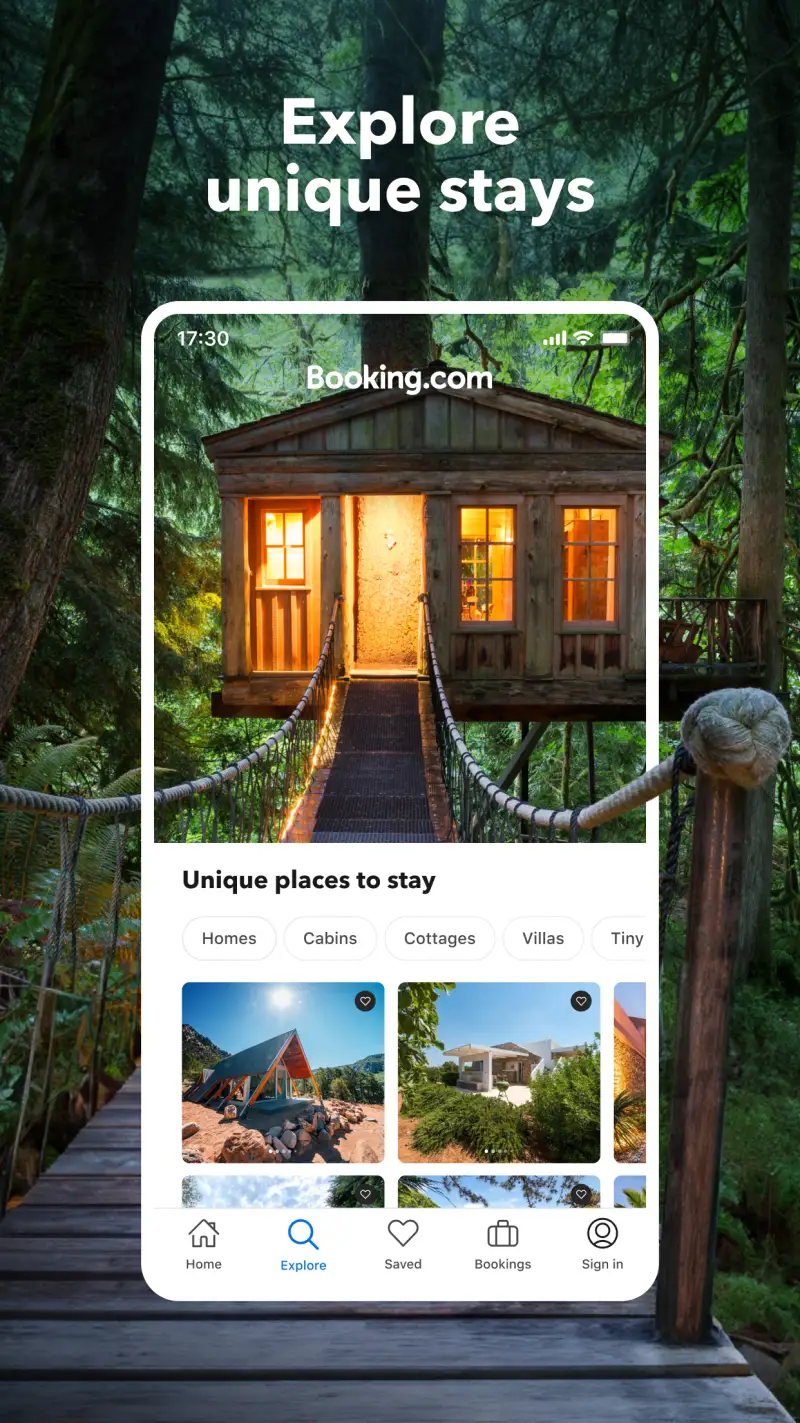
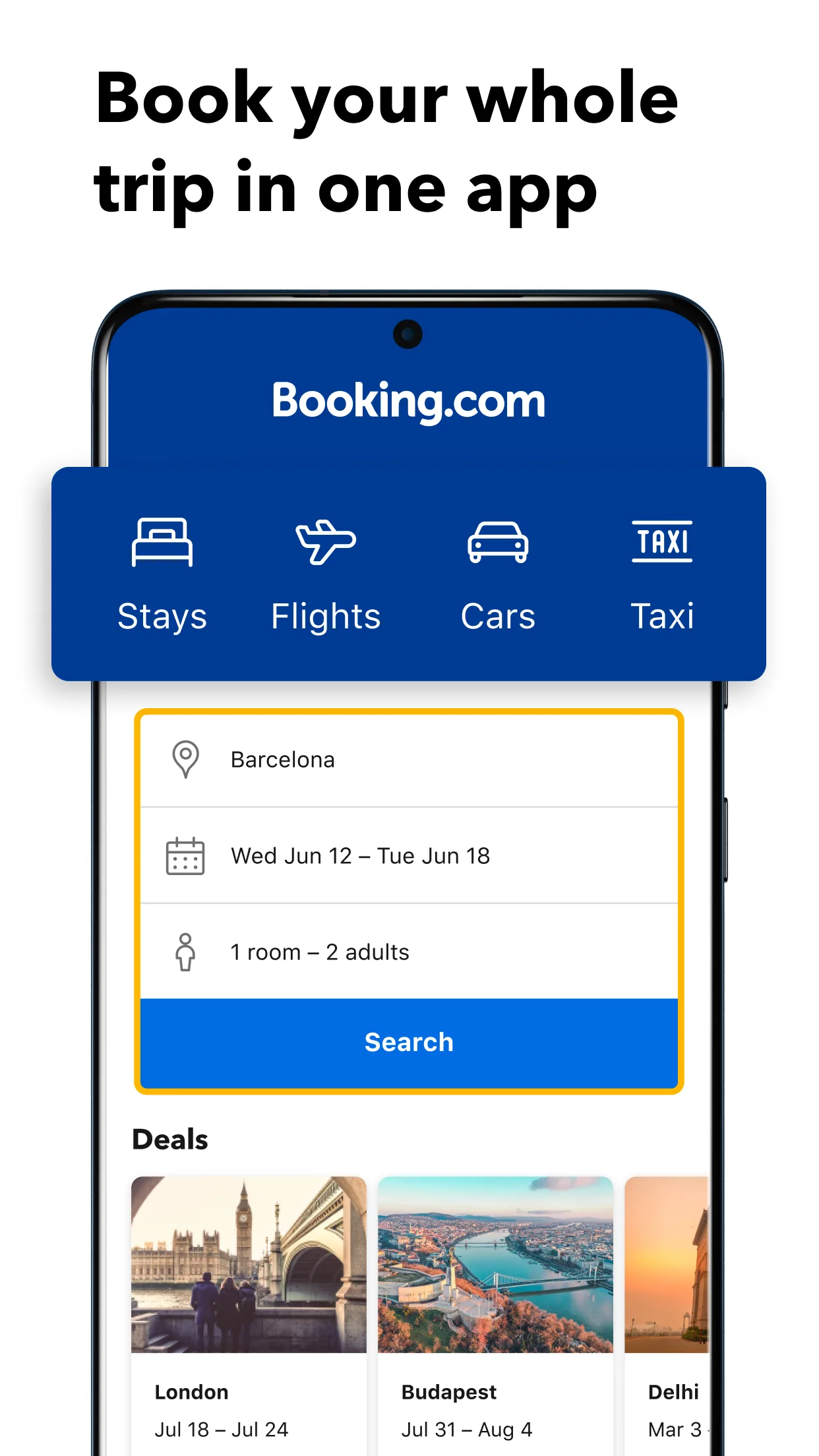
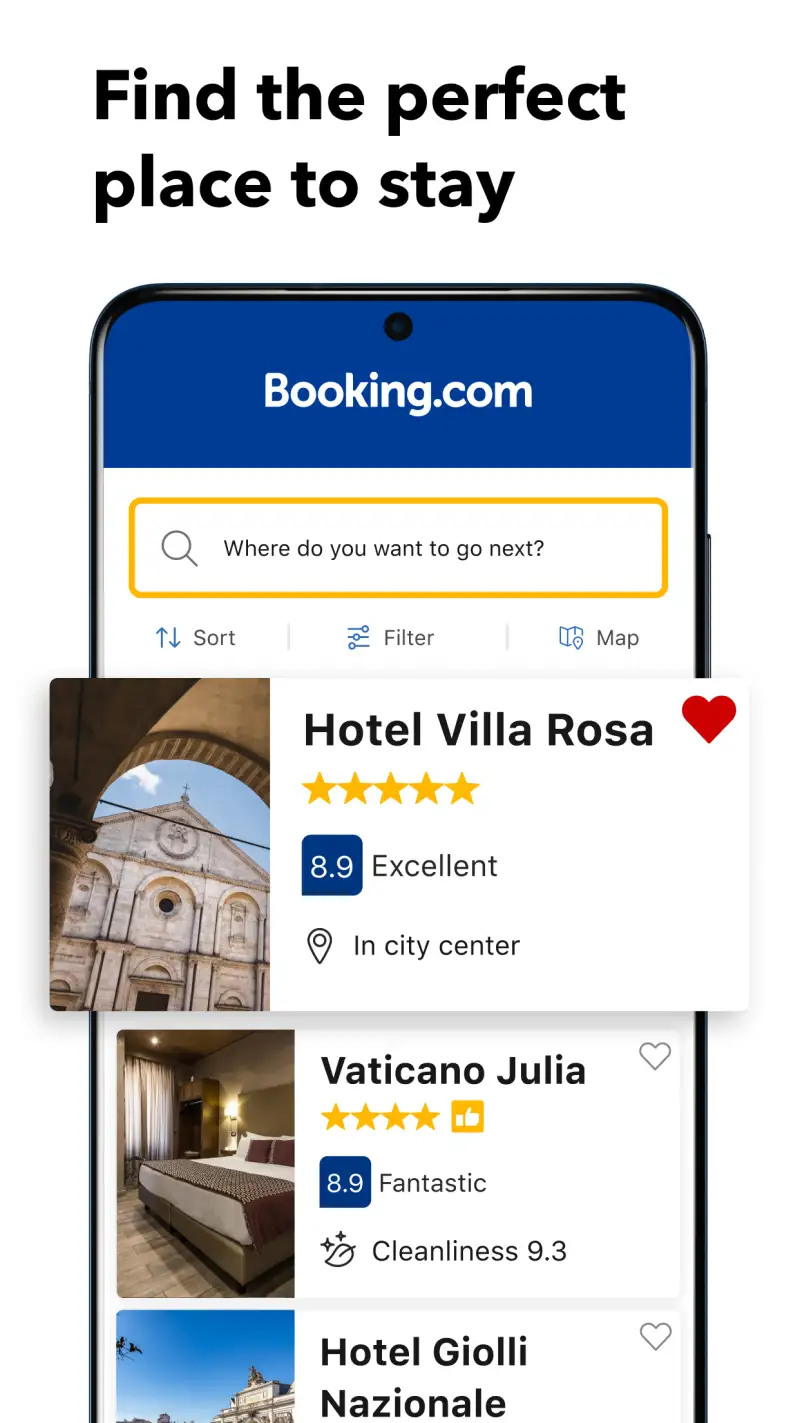
Hostelworld is the hostel specialist; Booking.com is the generalist with 28 million properties. For backpackers moving beyond hostel dorms into guesthouses in Thailand, hospedajes in South America, and cheap private rooms in Southeast Asian cities, Booking.com’s inventory depth is decisive.
The Genius loyalty program accumulates silently. Three stays unlock Genius Level 1 (10% discount on selected properties); roughly seven to eight trips activate Level 2 (15% discount plus free room upgrades and free breakfast at 50,000+ properties). For backpackers who book 15–30 stays in a single long trip, Level 2 is achievable mid-trip. The free breakfast feature at Level 2 properties is worth $8–15/day in Southeast Asia — meaningful on a $30/day budget.
The mobile-exclusive discounts are real. Properties offer an additional 10–15% on the Android app that don’t appear on desktop search. On a $25/night guesthouse, that’s $2.50–$3.75 per night — which adds up to $75–112 savings over a 30-night trip. Set up Genius before departure, not mid-trip.
What Booking.com does well
- 28 million properties: every accommodation type in every market
- Genius loyalty: free breakfast and upgrades at 50,000+ properties on Level 2
- Mobile-exclusive discounts not visible on desktop or third-party sites
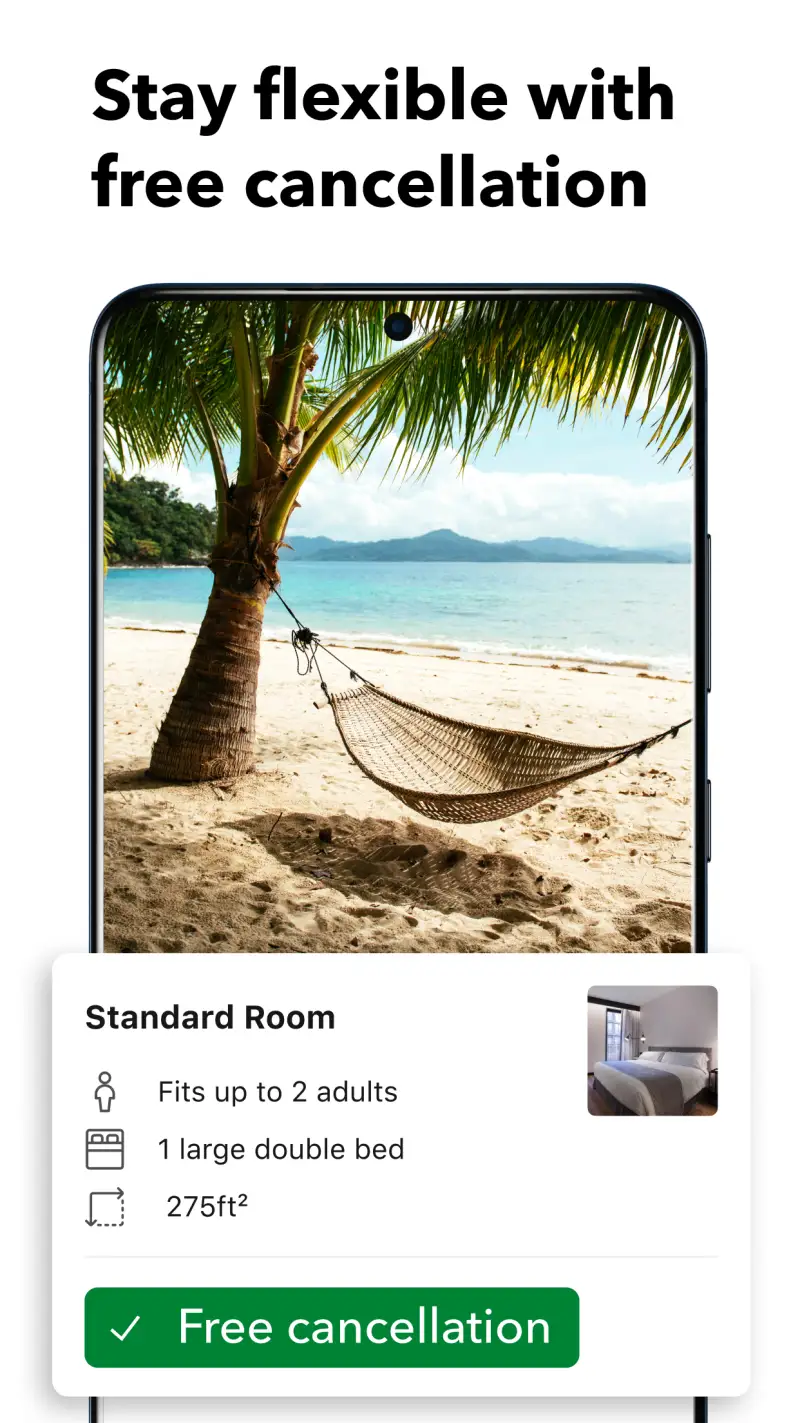
- Free cancellation filter: significantly reduces booking risk for uncertain itineraries
- Last-minute booking: search near me, confirm, done in under 2 minutes
- 24/7 support in 40+ languages — important when things go wrong abroad
- Offline booking confirmation accessible after reserving
Where Booking.com falls short
- No dorm-bed-specific filtering — hostels are listed but not optimized for backpacker social context
- Displayed prices sometimes exclude taxes and fees until final checkout
- Not always cheapest: direct booking at the property is worth checking for longer stays
- Review score can be inflated by volume; cross-reference with Google Maps reviews
Pricing: Free app, no booking fees. Download Booking.com and complete your profile before your first trip to start accumulating Genius status.
FlixBus - Best for Cheap Intercity Buses

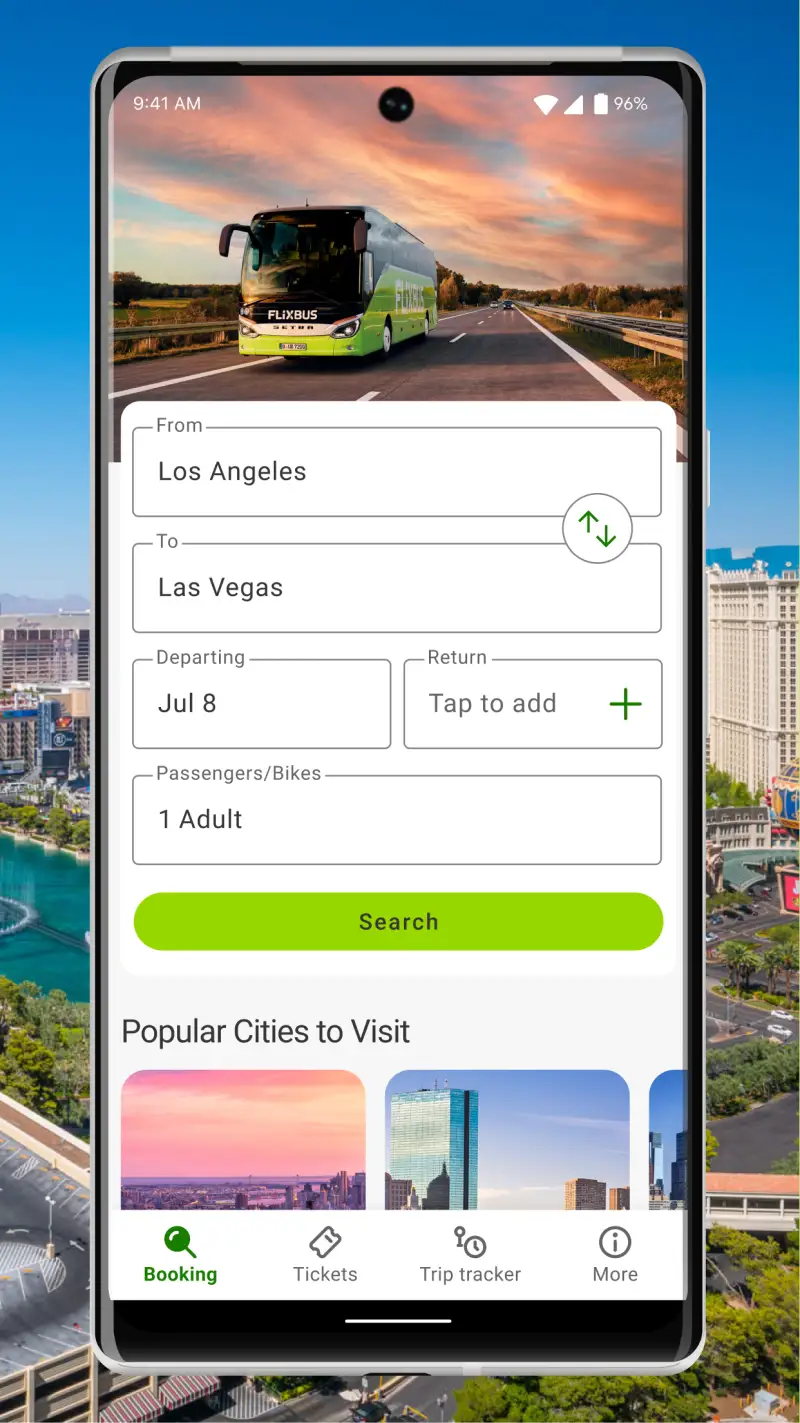
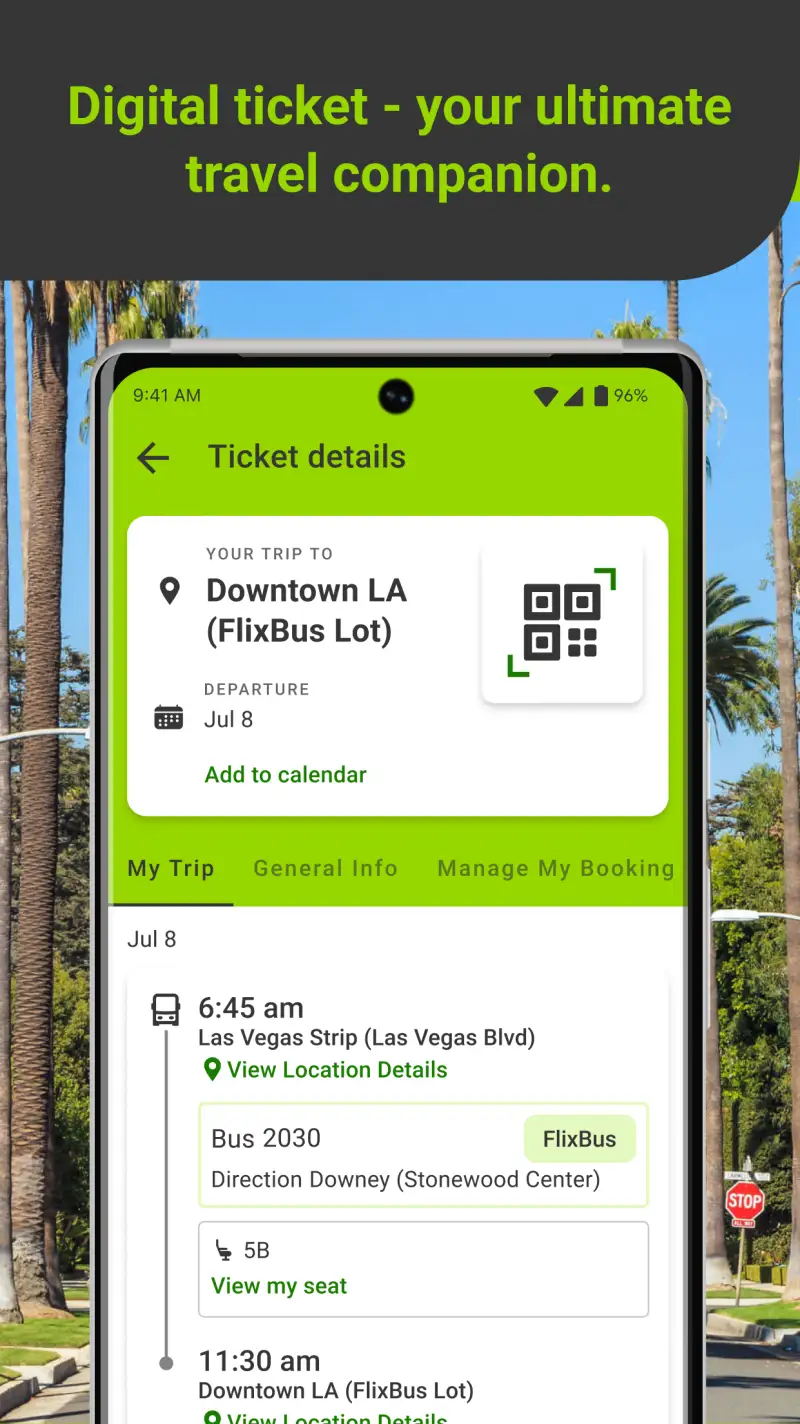
FlixBus is what happens when a German engineering company decides to build intercity bus infrastructure at scale. Routes starting from €0.99 (flash sales) and averaging €5–15 for major European city pairs have made it the de facto transport mode for European backpackers. Amsterdam to Berlin: €7. Paris to Barcelona: €12. Prague to Vienna: €9. These prices don’t require advance booking — midweek routes often stay cheap until departure.
The app’s 925,000 ratings at 4.7 stars reflect a well-maintained Android experience. The offline ticket QR is confirmed reliable — purchased tickets are stored and accessible without signal, which matters when the bus terminal is underground or in a dead zone. Real-time tracking during the journey shows where the bus is and estimated arrival — useful for tight connections.
FlixBus has grown into South America with meaningful coverage in Chile, Argentina, Peru, and Brazil. The routes are less frequent and more expensive than Europe ($20–40 range), but the coverage exists and works through the same app. For a South America backpacking trip, it’s worth checking FlixBus before buying a bus ticket from a station kiosk.
What FlixBus does well
- Lowest intercity bus fares in Europe — the benchmark for budget land transport
- Offline ticket QR code: boards without connectivity after purchase
- Real-time bus tracking during journey
- South America coverage growing: Chile, Argentina, Peru, Brazil
- Route map explorer for trip inspiration and flexible planning
- FlixTrain bookable in Germany via the same app
- 4.7 stars from 925K ratings — one of the most reliable apps in this comparison
Where FlixBus falls short
- Bus travel is 2–3× slower than rail for the same route
- No food or guaranteed WiFi on all routes
- Occasional late arrivals; less reliable than rail for tight connections
- South America coverage thinner than Europe — check Busbud as a backup
- Rural and off-route towns not served
Pricing: Free app, no service fee. Install FlixBus before any Europe trip.
Omio - Best for Multi-Modal European Travel
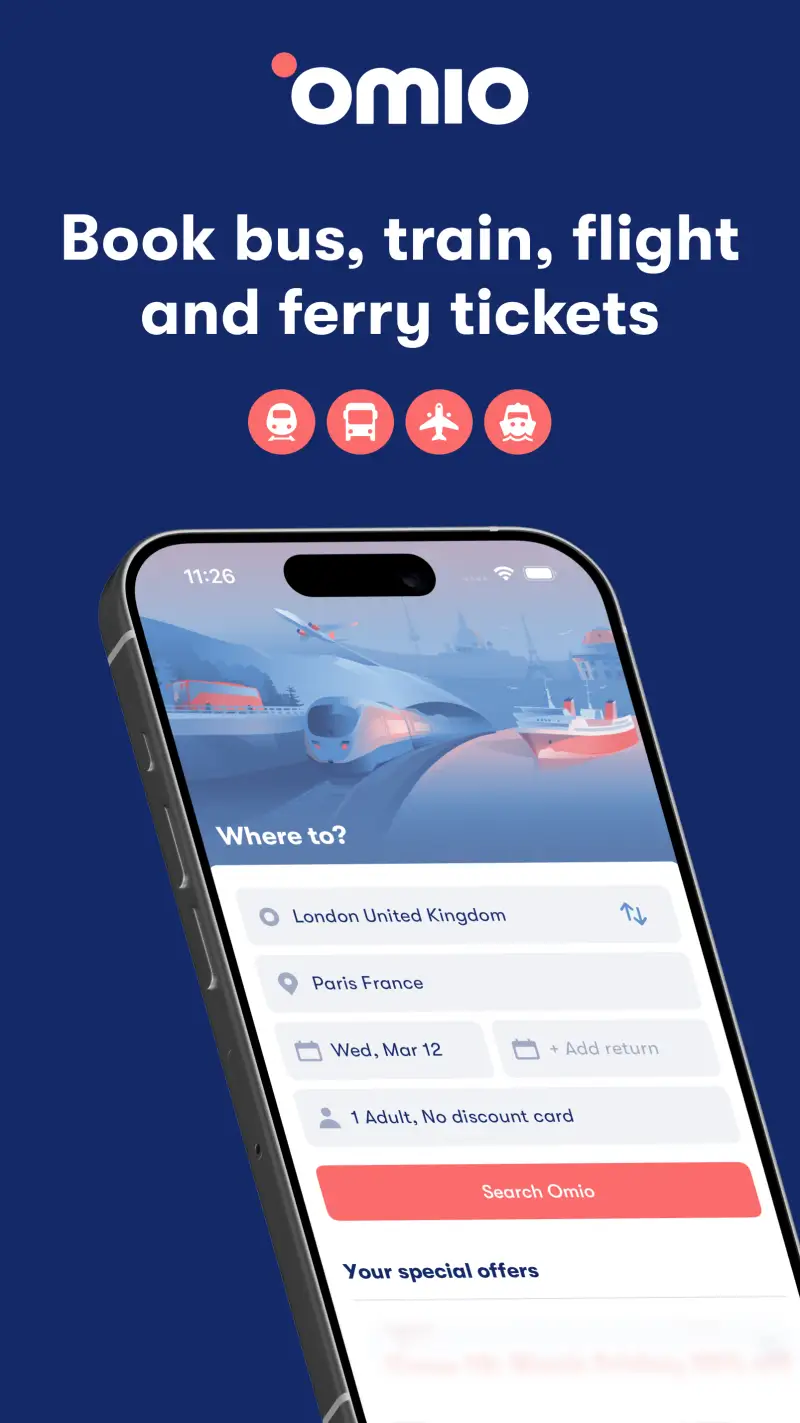
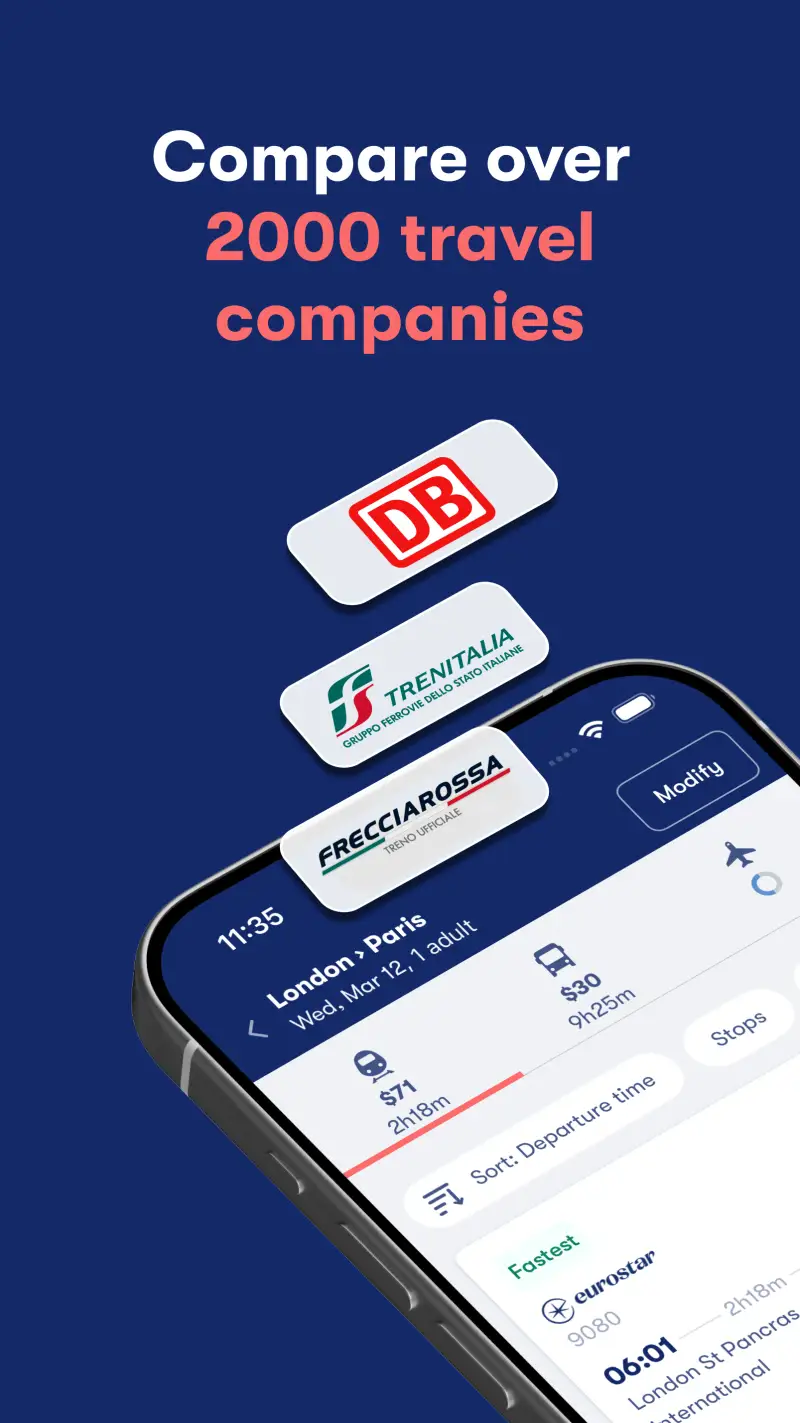

Omio solves the problem FlixBus doesn’t: multi-modal routes where you need a bus to one city, a train across a border, and a ferry to the final destination. The comparison view shows all transport options — planes, trains, buses, ferries — for a single origin-destination pair on one screen. Berlin to Prague: DB train, FlixBus, or Ryanair, with prices, durations, and carbon estimates side by side.
The 45-country coverage now extends into Southeast Asia with Shinkansen booking for Japan, major bus and train routes in Thailand, Vietnam, Malaysia, and Singapore. That’s expanding Omio from its European core into a genuinely global transport layer. For a SE Asia loop that combines trains and buses, Omio increasingly competes with 12Go Asia in terms of coverage — though for niche operators and overnight sleeper buses, 12Go Asia’s relationships with local operators still produce better results.
Service fees on some bookings are the honest negative. For a Eurostar ticket from London to Paris, Omio charges roughly €3–5 more than booking directly on Eurostar’s website. For backpackers doing single-operator journeys, direct booking saves money. Omio’s value is in multi-modal comparison — seeing all options simultaneously — not necessarily in the cheapest individual ticket price.
What Omio does well
- Multi-modal comparison: trains, buses, ferries, flights on one screen per route
- 45-country coverage including Japan (Shinkansen) and SE Asia
- Filter by price, stops, duration, departure time simultaneously
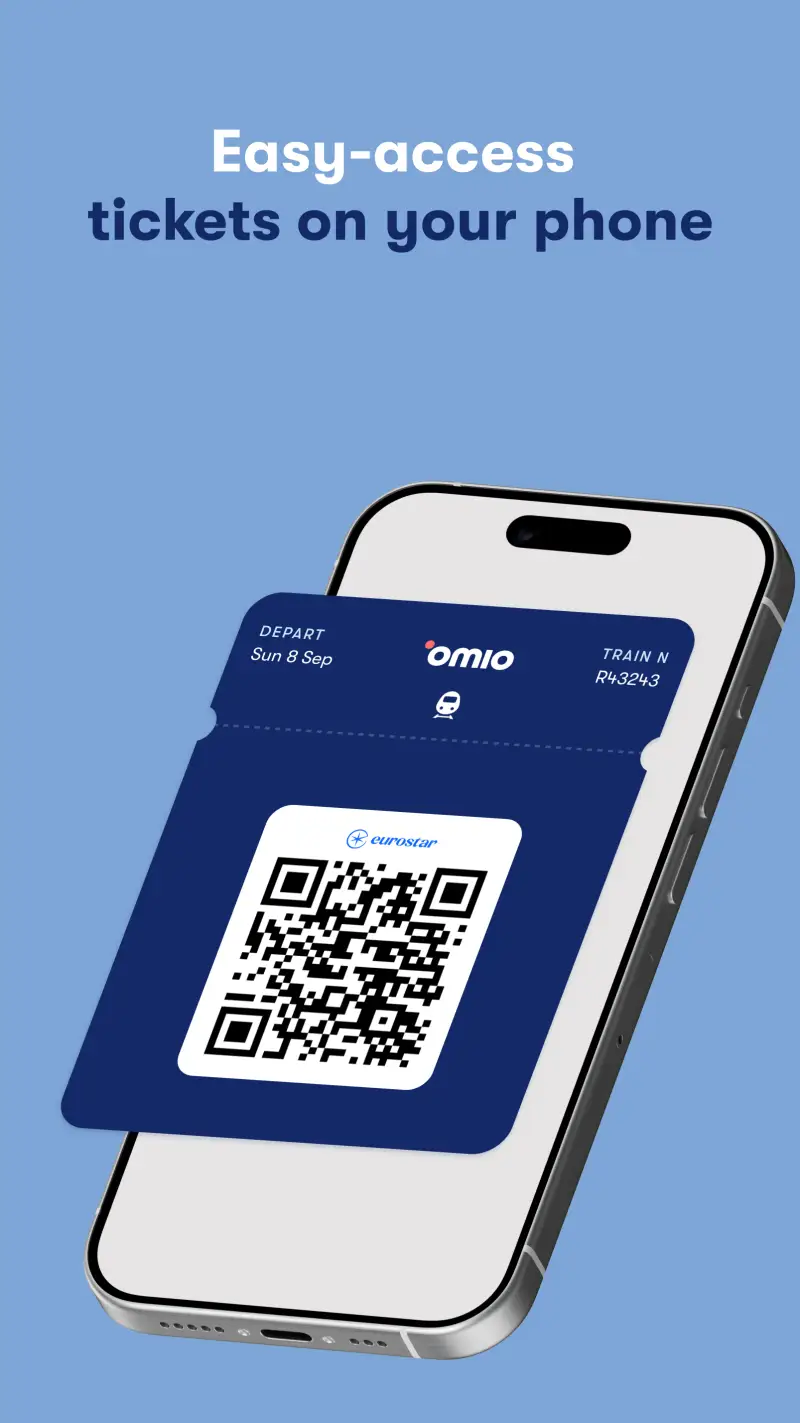
- Tickets stored offline after purchase
- European border crossings where multiple operators serve the same route
Where Omio falls short
- Service fee of €2–5 on some routes versus booking direct with the operator
- Misses some regional operators in Croatia, Balkans, and Eastern Europe
- Less useful for niche overnight bus routes in SE Asia vs. 12Go Asia
- Complex multi-transfer routes occasionally not handled correctly
Pricing: Free app; service fees on some bookings (typically €2–5). Install Omio for European overland travel.
Kiwi.com - Best for One-Way Flight Discovery

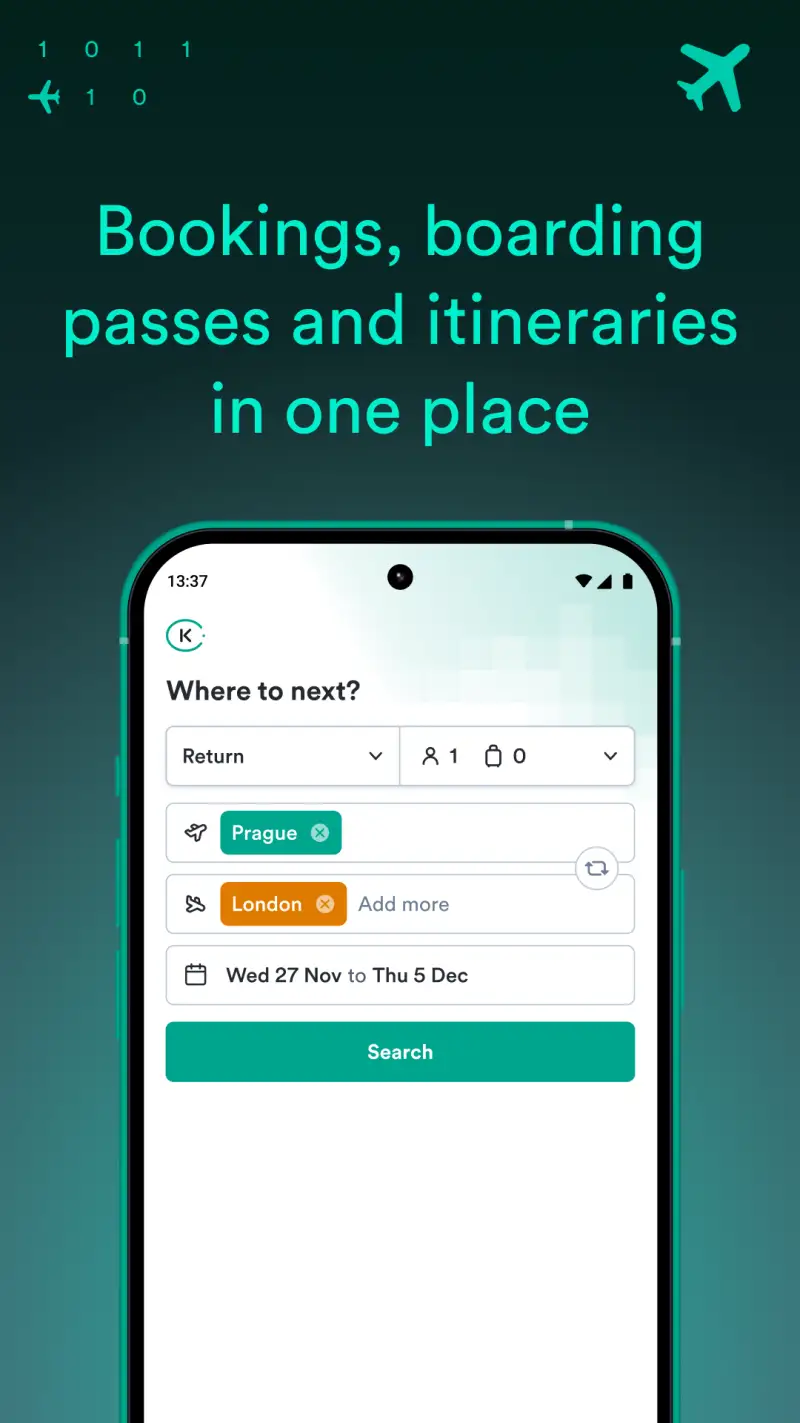
Kiwi.com has a reputation problem and a genuine product advantage, and both are real. The Trustpilot rating — approximately 1 star across 2,000+ reviews — reflects structural problems with post-booking support, hidden fees, and the virtual interlining model. These are not solved problems. Use Kiwi.com knowing exactly what it is and is not.
What it is: the best tool for finding cheap one-way flights and multi-city open-jaw routes. The Nomad search builds a multi-city itinerary automatically from a destination list — “I want to visit Bangkok, Hanoi, Bali, and Colombo, find the cheapest route and order” — and returns optimized sequences that manual searching misses. The “Anywhere” search shows the cheapest destinations reachable from your current location on a given date. For open itinerary backpackers who don’t know their next destination, this is a genuinely useful discovery layer.
What it is not: a reliable booking platform for connected itineraries. Virtual interlining combines tickets from different airlines. If the first carrier delays you, the second carrier has no obligation to rebook you. Kiwi Guarantee ($10–20 add-on) covers rebooking in that scenario, but customer service in practice has been slow and difficult. Never book a virtual interline without Kiwi Guarantee, and never use Kiwi for tight connections on routes where a delay would be consequential.
What Kiwi.com does well
- Nomad search: multi-city route optimization from an unordered destination list
- “Anywhere” search: cheapest destinations from your city on flexible dates
- One-way fares often cheaper than direct airline booking due to inventory aggregation
- Price alerts for specific routes
- Trains and buses bookable alongside flights
Where Kiwi.com falls short
- Service fees and baggage markup add 20–40% to displayed price at checkout
- Virtual interlining: if carrier A delays you, carrier B won’t wait — you pay to rebook
- Trustpilot ~1 star from 2,000+ reviews — post-booking support is a consistent failure point
- Kiwi Guarantee add-on is mandatory for virtual interline safety — always buy it
- Customer service is chatbot-first and slow for complex claims
Pricing: Free to browse; service fees add significantly to listed fares. Always purchase Kiwi Guarantee on virtual interline bookings. Use Kiwi.com for discovery and one-way hunting; book straightforward return flights directly with the airline.
Rome2rio - Best for Route Discovery in Unfamiliar Regions
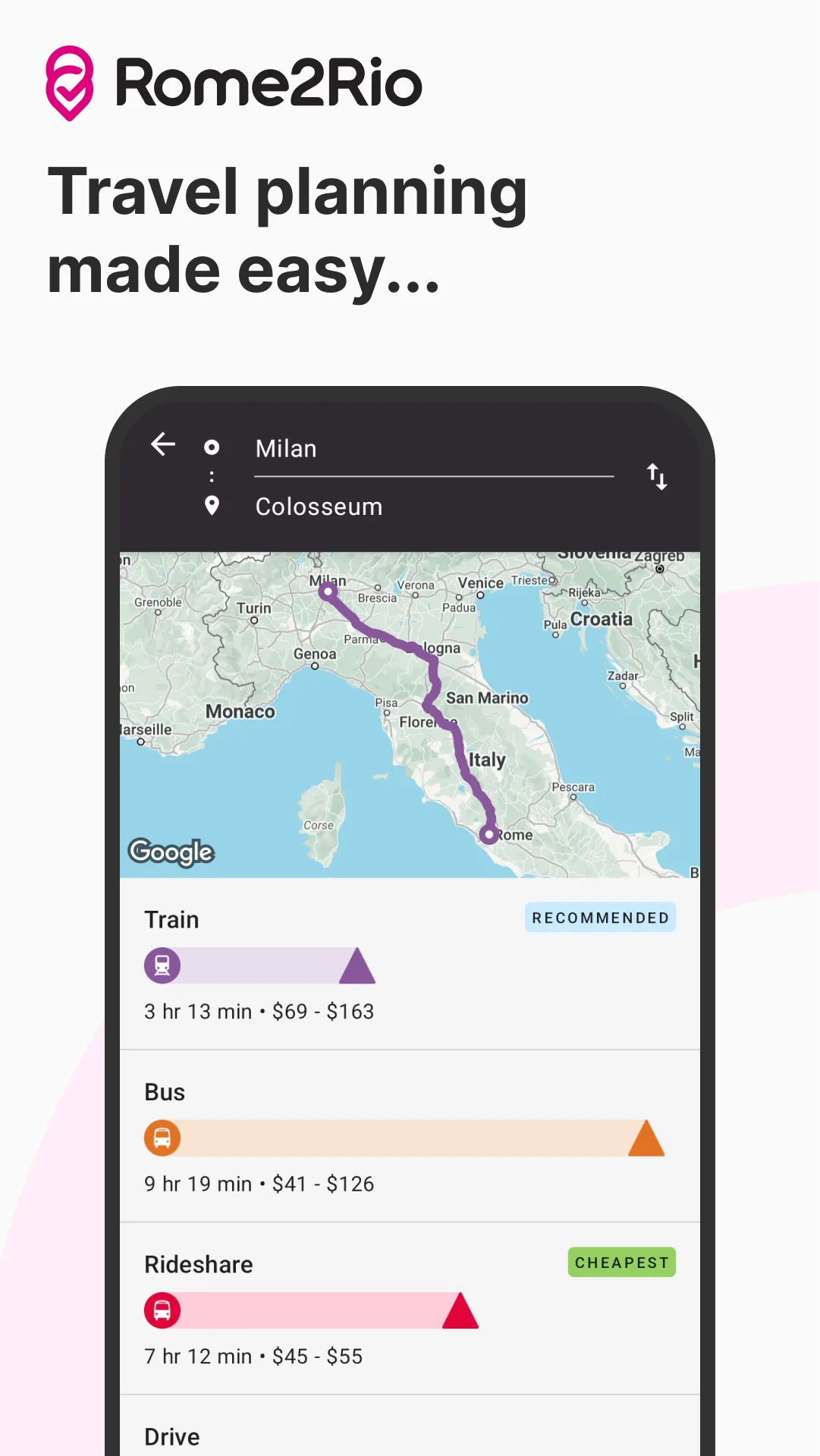
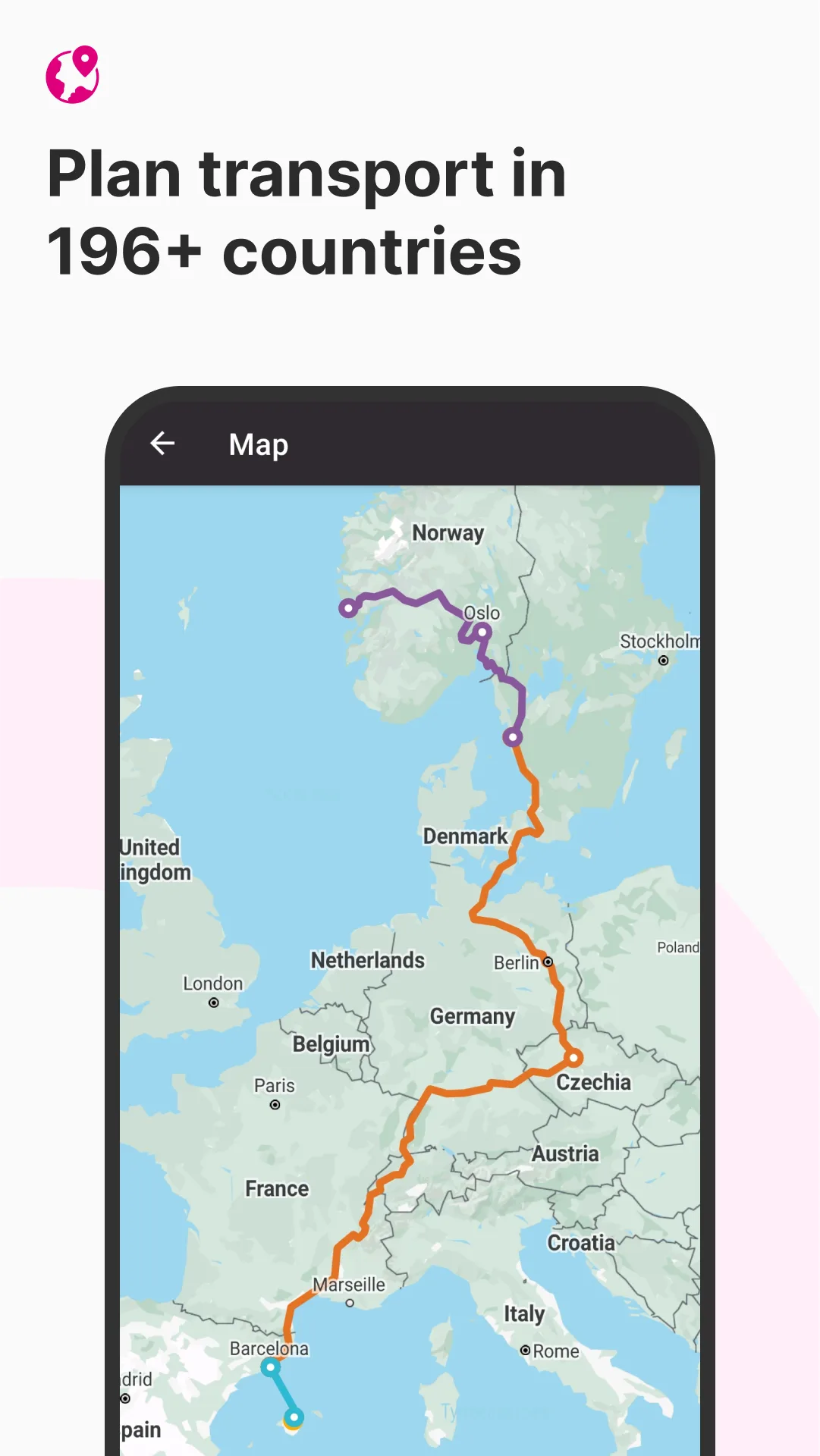
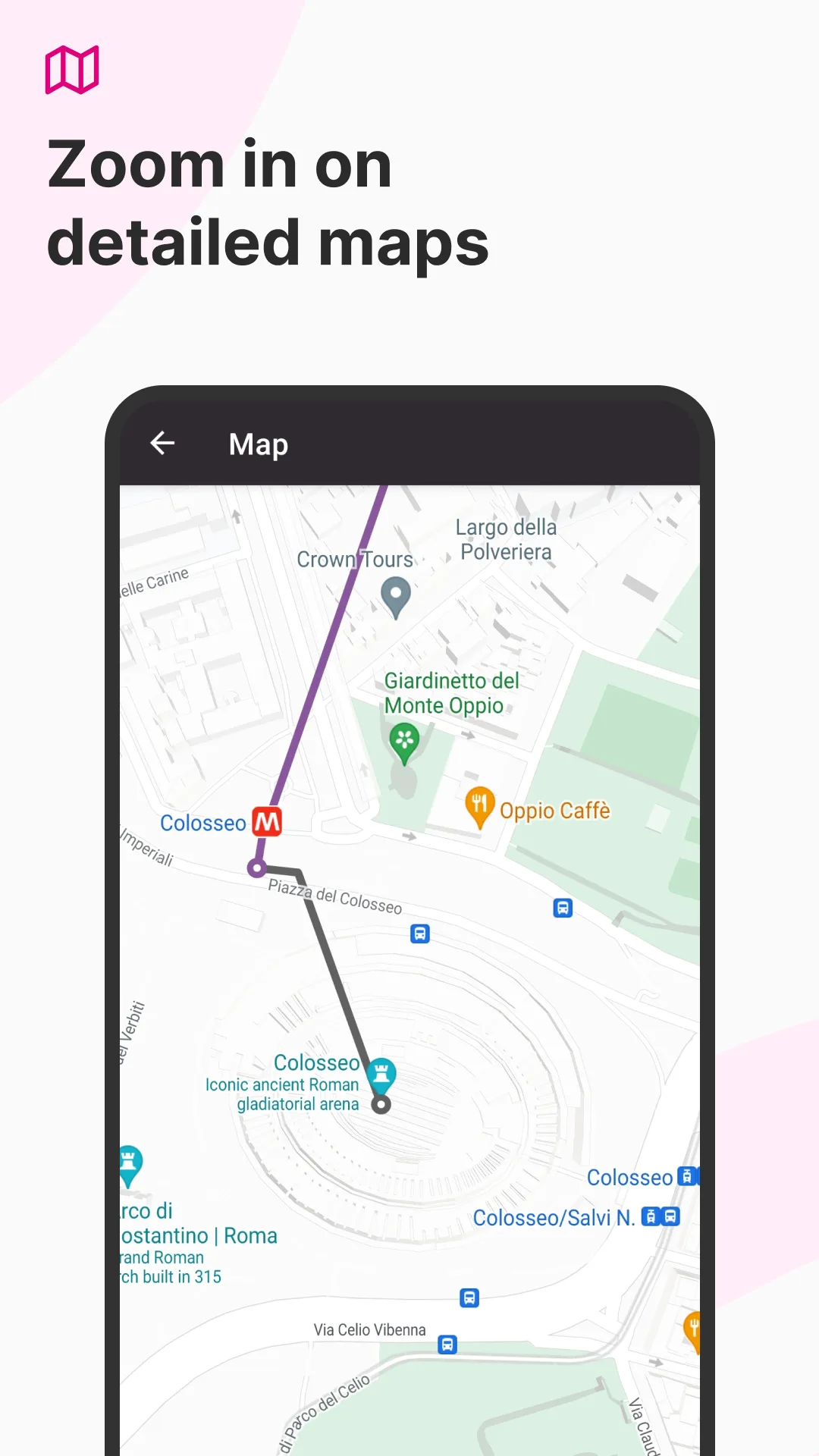
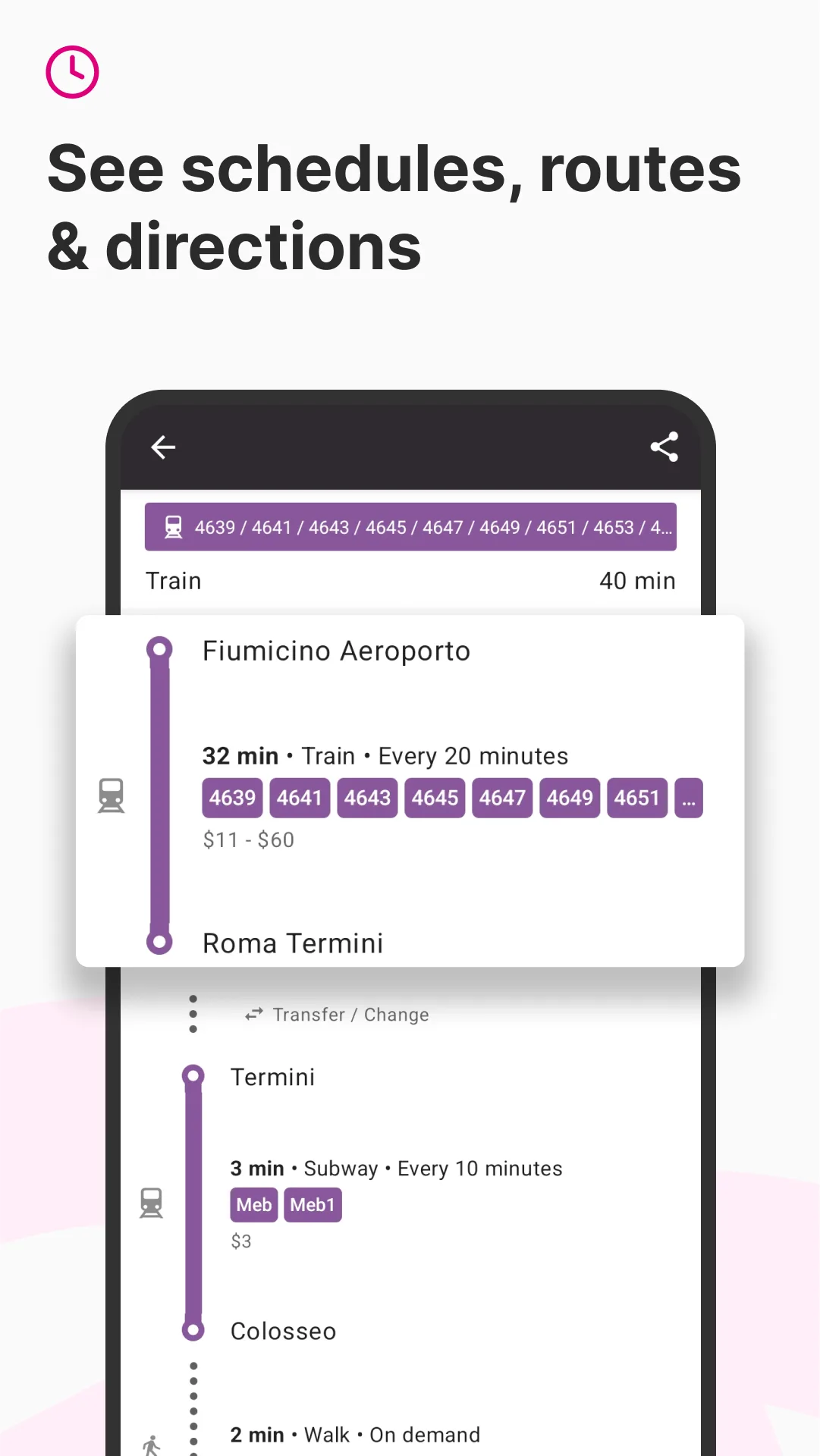
Rome2rio answers the question every backpacker asks at least once per trip: “How do I even get there?” Enter any two points on Earth — cities, landmarks, airports, train stations — and it returns every viable transport option: fly, bus, train, ferry, drive, or walk, with estimated times and rough cost ranges. Chiang Mai to Luang Prabang. Quito to the Galápagos. Marrakech to the Sahara by bus. These are the connections that don’t appear obviously in Google Maps.
The app doesn’t book anything — it links to the relevant carriers and booking platforms for each option. That means it’s a research tool, not a booking platform. Rome2rio’s value is in revealing that the slow bus to the border town costs $4 and takes 8 hours, and that an overnight train also exists for $12 that saves you a night of accommodation. That information changes your decision; the booking happens elsewhere.
The connectivity requirement is the main limitation. Rome2rio doesn’t cache route data offline. In markets where you need it most — rural Asia, Africa, Latin America — a working internet connection may not be available when you’re trying to figure out how to leave. Download the route info and screenshot it before losing signal.
What Rome2rio does well
- Any two points on Earth → all viable transport options displayed
- 240-country coverage including obscure overland routes
- Rough cost estimates that give budget context before deep research
- Essential for discovering that a route exists at all
- Reveals unusual options: ferries, shared taxis, local buses that GPS apps ignore
Where Rome2rio falls short
- Does not book tickets — purely a discovery and comparison tool
- Cost data can be outdated; treat as a range, not a quote
- Requires internet — no offline functionality for route discovery
- Does not replace specialist apps (12Go Asia, Omio, FlixBus) for actual booking
- Limited Android app; the web version at rome2rio.com is often more complete
Pricing: Free. Use Rome2rio at the planning stage to map what transport options exist, then book through the specialist.
TravelSpend - Best Solo Budget Tracker
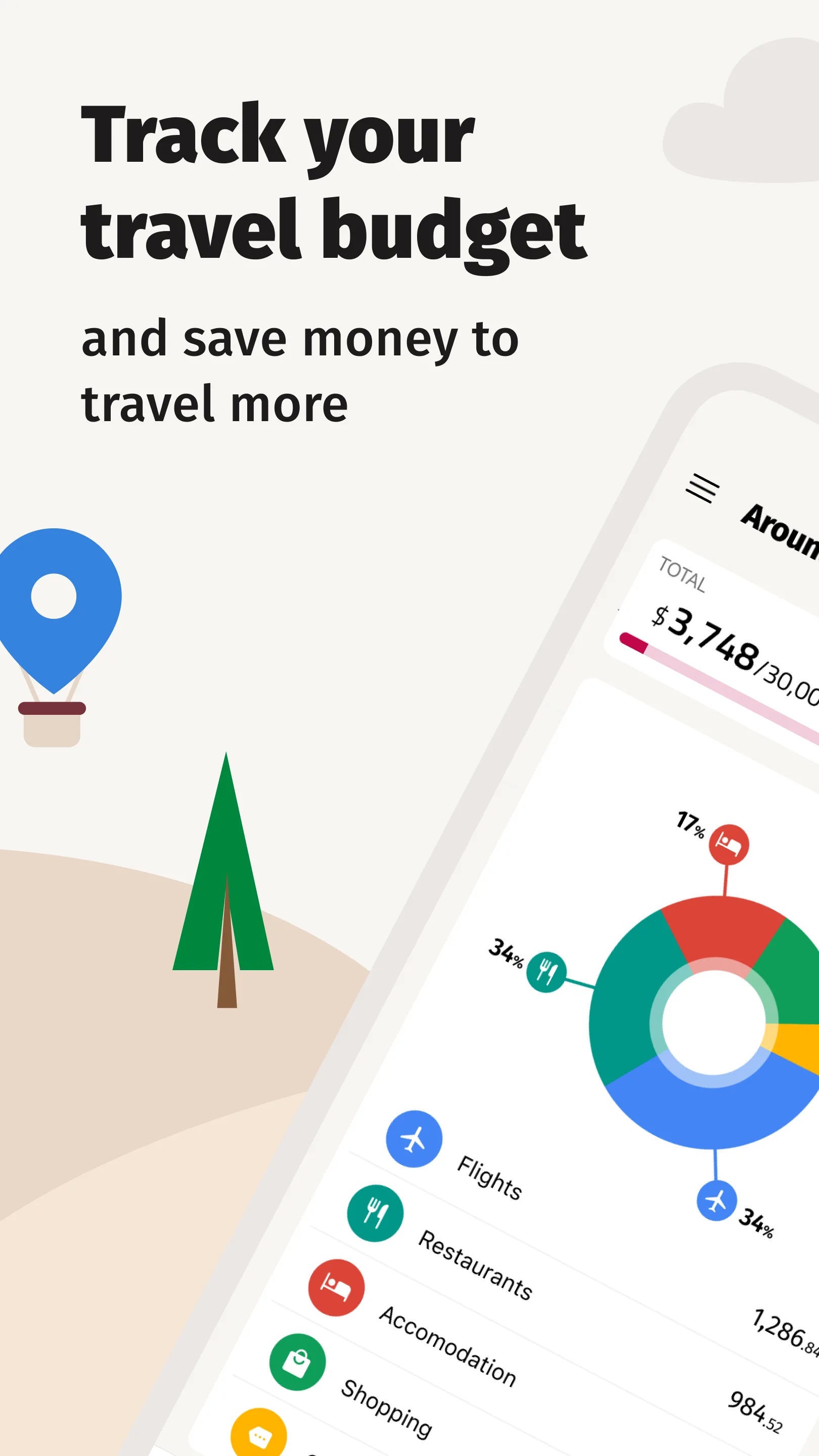
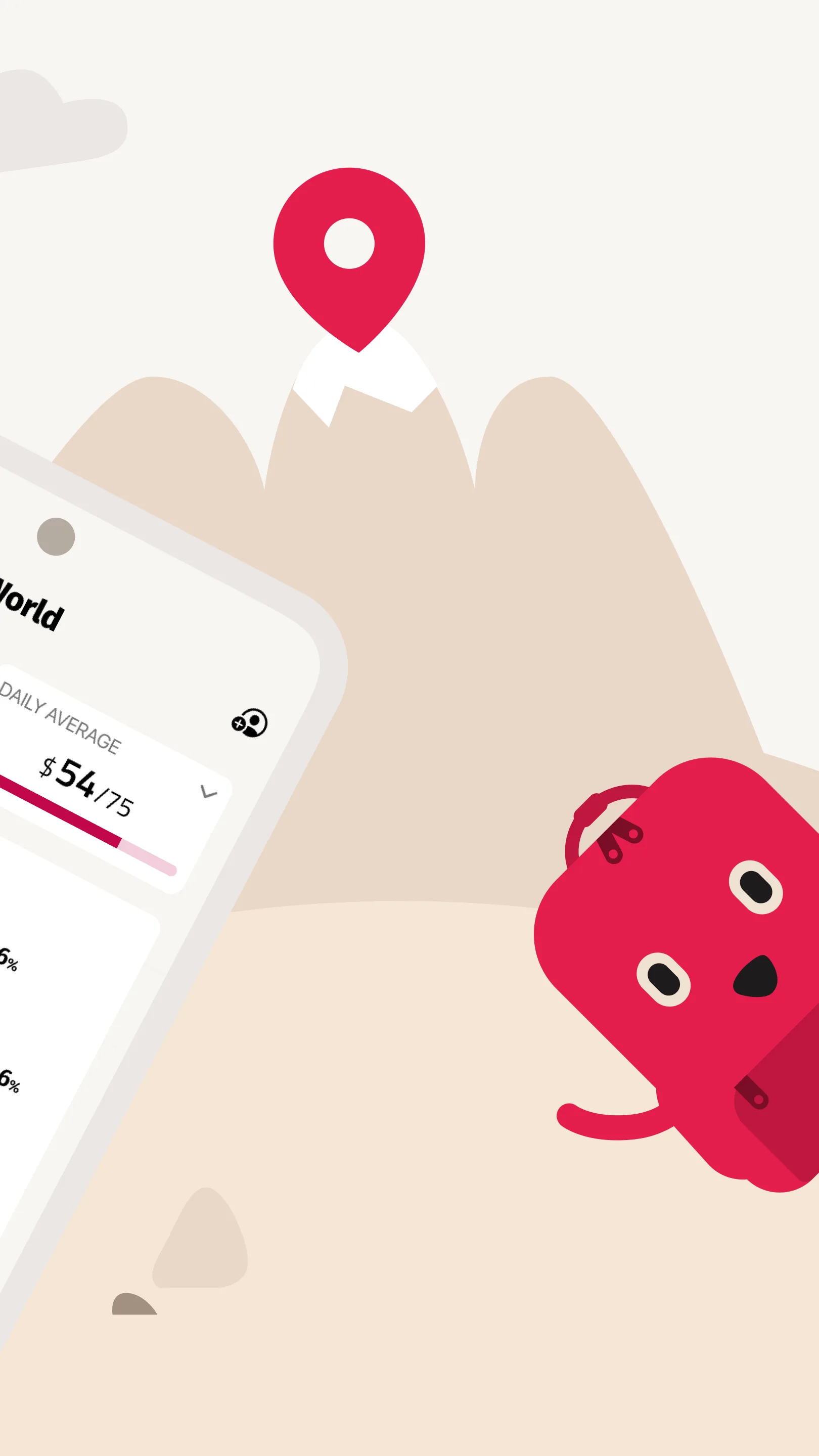
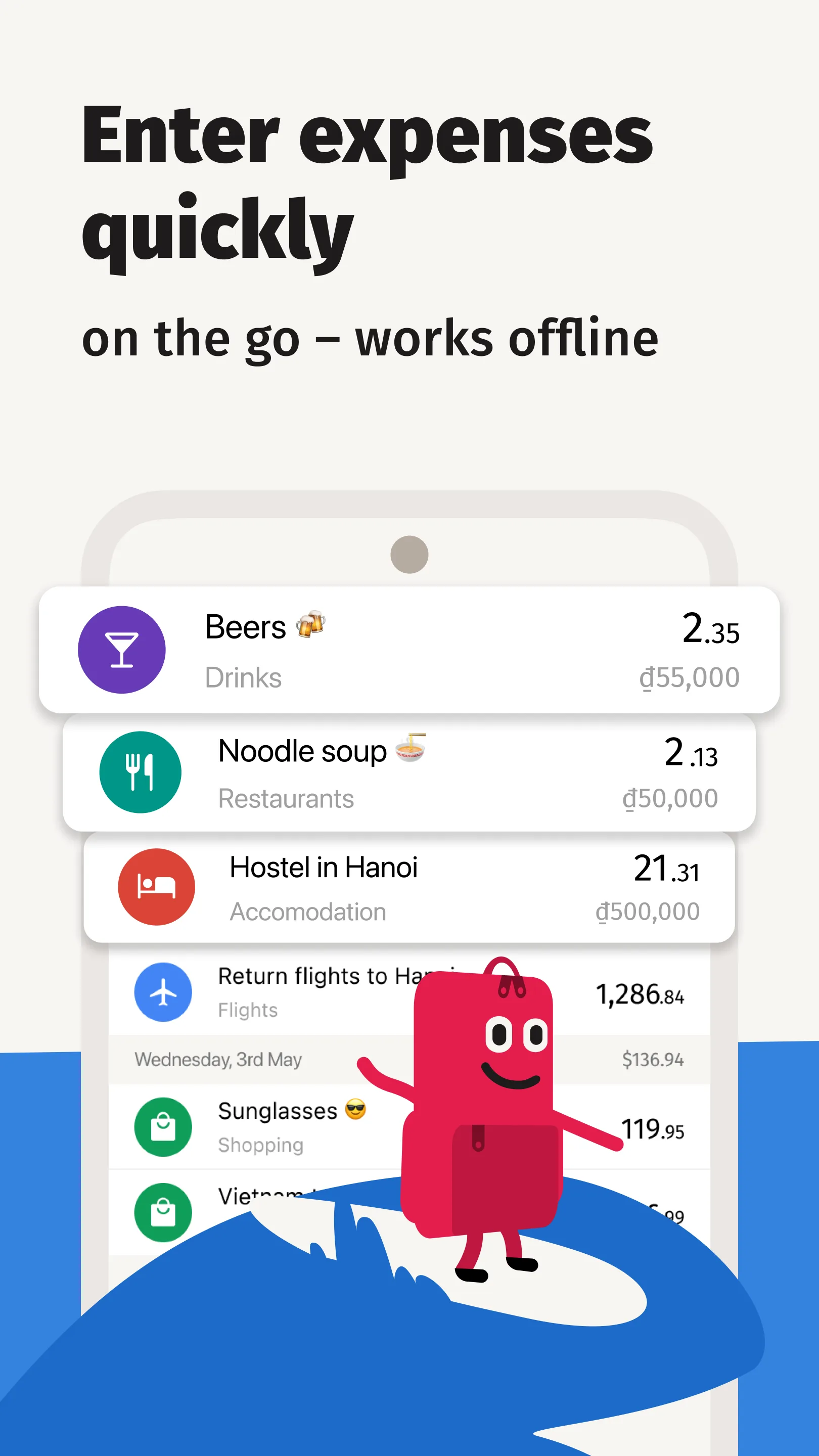
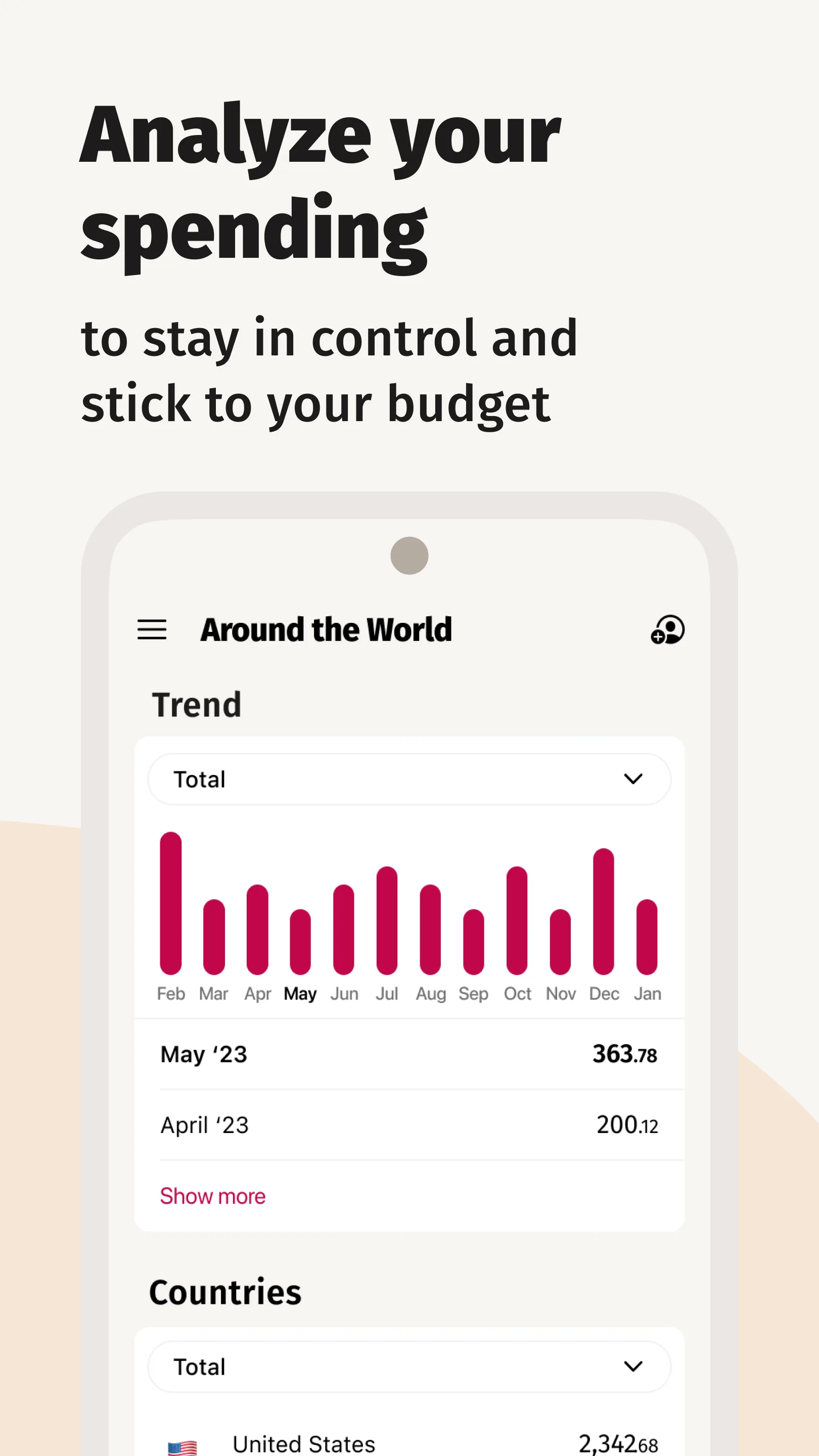
TravelSpend is not the most downloaded app in this comparison by a large margin — 754,000 installs versus Splitwise’s 33.5 million. The 4.73-star rating from 11,000+ reviews suggests the users who find it don’t leave. The reason: it does one thing with precision that no other travel-specific budget app matches, and that thing is full offline operation.
Log expenses in any local currency — Thai baht, Vietnamese dong, Moroccan dirham — with no internet required. TravelSpend converts at the exchange rate you set when you loaded the trip (or the last rate it synced). Set a daily or trip budget and get a real-time over/under indicator. The trip statistics view shows your daily average, which categories you’re overspending on, and the projected total at your current burn rate.
For solo backpackers or couples, this is the cleaner tool than Splitwise. Splitwise is designed for groups with complex debt relationships; TravelSpend is designed for one person or two people tracking daily spending against a budget. In Thailand, where logging a 45-baht breakfast at a street stall happens on a tuk-tuk with no signal, the offline-first design is the feature.
What TravelSpend does well
- 100% offline operation — core functionality requires no internet connection
- Multi-currency with offline exchange rate caching
- Daily and trip budget tracking with over/under indicator
- Expense categories: food, transport, accommodation, activities, misc
- Photo attachment per expense entry for receipt documentation
- Trip statistics: daily average, projected total, category breakdown
- Built specifically for travelers — minimal setup, one-tap expense entry
Where TravelSpend falls short
- Group splitting is basic compared to Splitwise — not designed for 4+ people
- Pro subscription required for multi-device sync and CSV export
- Smaller install base means fewer integrations and community resources
- Charts and analytics less sophisticated than general finance apps
- Currency conversion accuracy depends on Pro tier for real-time rates
Pricing: Free (core features); Pro available for multi-device sync and export. Install TravelSpend before your trip and set your daily budget during the first hour abroad.
Splitwise - Best for Group Expense Splitting
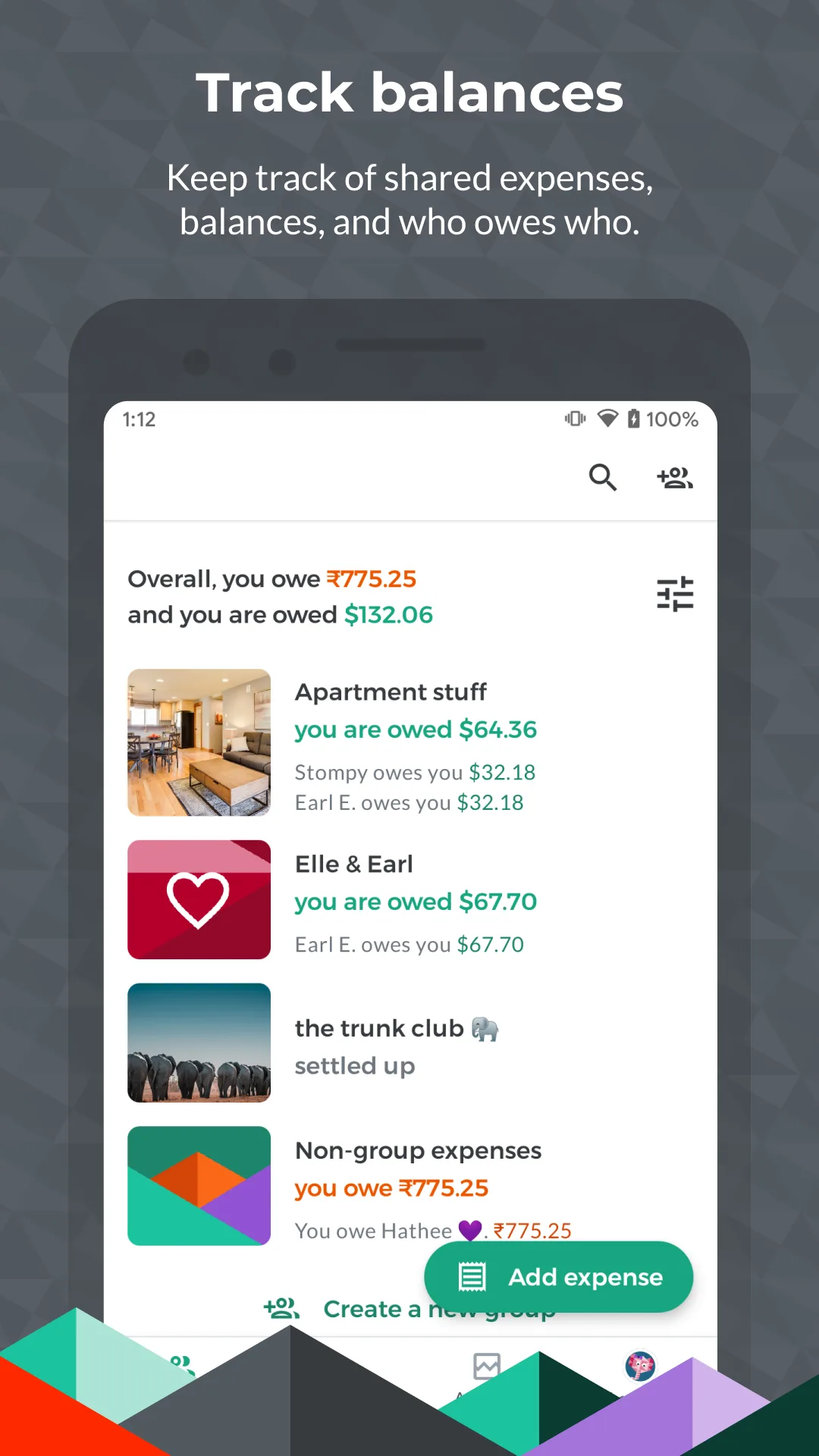
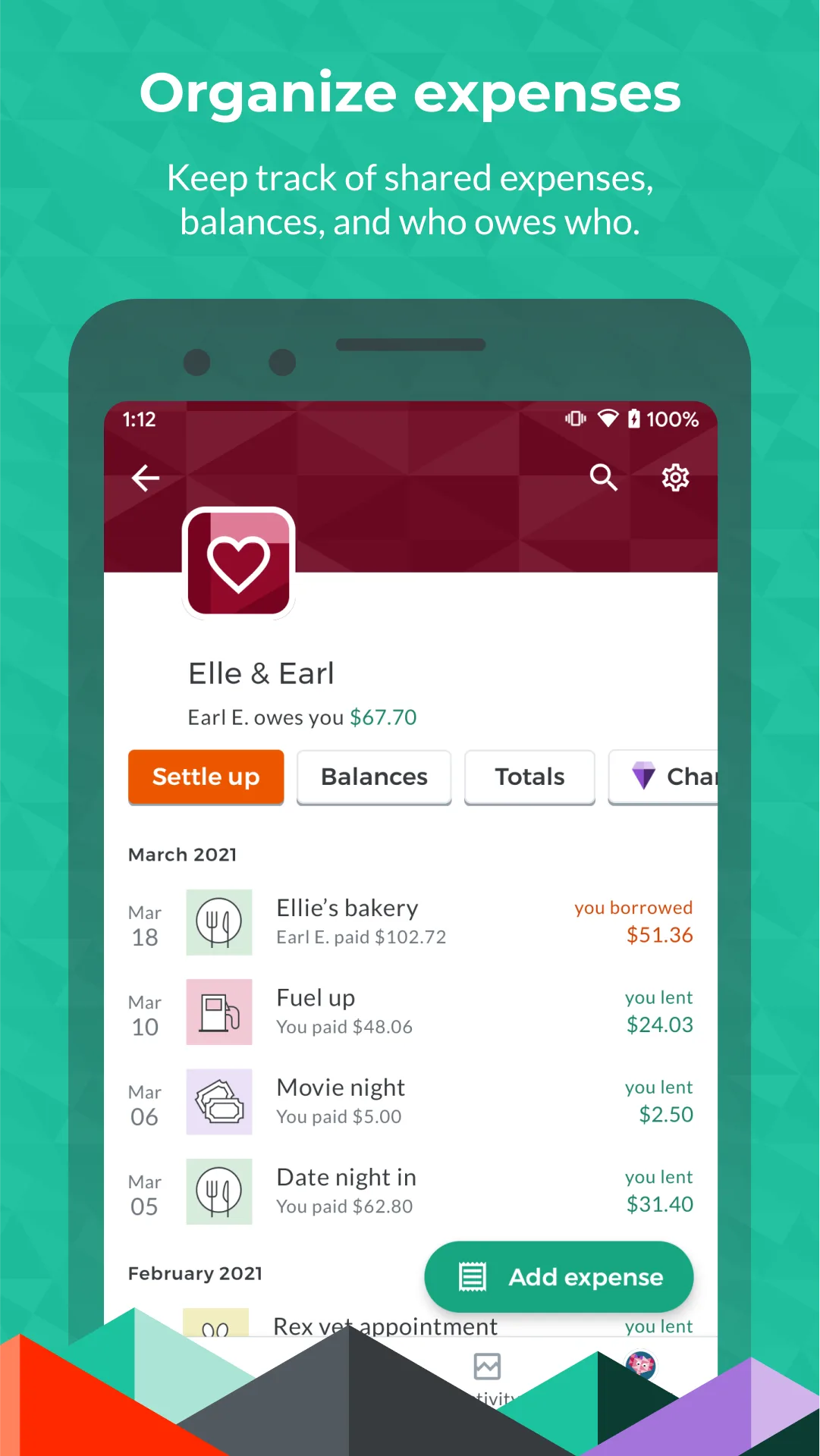
For groups of three or more sharing accommodation costs, tour bookings, and restaurant bills, Splitwise is functionally mandatory. The debt simplification algorithm finds the minimum number of transfers needed to settle all balances at the end — which on a 4-person trip with 40+ shared expenses across 3 weeks typically reduces to 3-4 transfers rather than 12-15 individual repayments.
The 33.5 million real installs reflect universal adoption in the group travel space. Every serious group traveler uses it; the friction of convincing trip mates to create accounts is the only barrier, and it’s a one-time setup cost that pays off across the whole trip. The web access via splitwise.com means balance summaries are visible on any device when phone batteries die at the end of a long day.
The free tier restriction introduced in recent updates is the genuine complaint. Daily expense entry caps and banner ads degraded the experience for long-term users. Pro at $29/year removes limits and adds currency conversion via Open Exchange Rates — the most accurate rates in any budget app tested. For a group trip of 2+ weeks, Pro is worth it. For a weekend trip with 4 people, the free tier typically covers the expense count.
What Splitwise does well
- Debt simplification: minimum transfers to clear all balances in one round
- Flexible splits: equal, exact amounts, percentages, or shares per person
- Web access: balances visible on any browser, not just the primary device
- PayPal and Venmo in-app settlement (US accounts)
- Android widget: current balances visible on home screen
- 10-year track record — the most tested group expense tool available
Where Splitwise falls short
- Requires all group members to create accounts — setup friction at trip start
- Free tier: daily expense cap and ads frustrate heavy users
- Not designed for solo travel or daily budget tracking (use TravelSpend instead)
- Currency conversion is Pro-only for accurate rates
- New expenses technically require a sync — not fully offline like TravelSpend
Pricing: Free (limited daily entries, ads); Pro $2.99/month or $29/year. Install Splitwise before any multi-person trip.
Couchsurfing - Best for Meeting Locals (With Caveats)

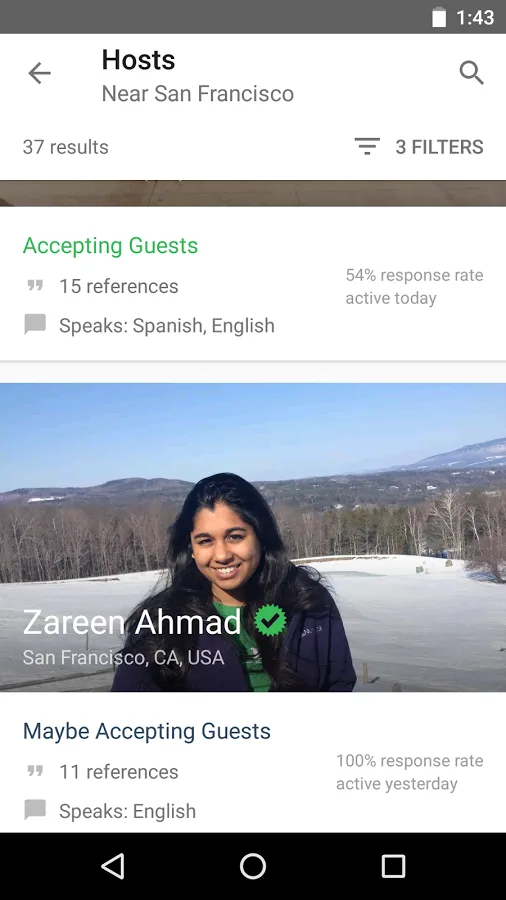
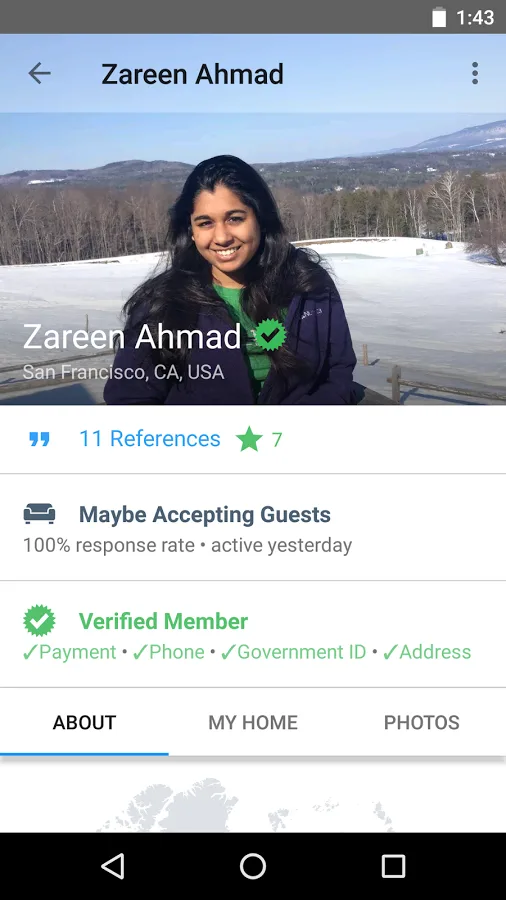
Couchsurfing was the defining backpacker platform from 2004 to 2019. At its peak, 14 million members offered free accommodation and local knowledge in 230,000 cities. The mandatory paid membership introduced in May 2020 — timed to COVID-19 lockdowns when travel had stopped — triggered a 42% drop in new sign-ups and gutted the active host community. The 3.22-star Google Play rating from 117,000 reviews is not an exaggeration.
The platform still functions and still has the largest network by raw numbers. Current pricing runs $2.99–4.99/month or roughly $15–20/year. For a backpacker doing 10+ couchsurfing nights on a long trip, the ROI against hostel costs is clear — $150–300 saved versus even budget dorms. For a 2-week trip with 1-2 planned stays, the subscription cost roughly equals one hostel night, and the active host count in many cities has declined enough that finding a last-minute couch is significantly harder than it was pre-2020.
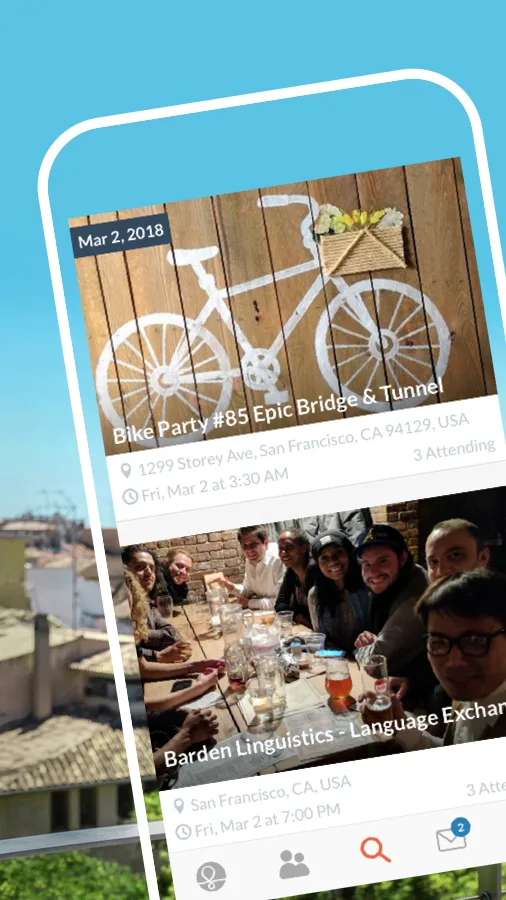
The Hangouts feature — meeting locals in your current city for a walking tour, meal, or drinks without a hosting arrangement — remains genuinely useful. Local connections through Hangouts are often the best part of the Couchsurfing experience for travelers who aren’t seeking free beds but do want to avoid spending every evening in backpacker bars. The Hangouts feature is accessible with a membership.
What Couchsurfing does well
- Largest active host network globally despite membership decline
- Hangouts: meet locals for activities without a hosting arrangement
- Community events organized by city chapters in major destinations
- Host reference system provides meaningful trust signals
- Access to cultural exchange that no booking platform replicates
Where Couchsurfing falls short
- Mandatory paid membership ($2.99–4.99/month or ~$15–20/year) — was free until 2020
- Active host community is a fraction of its 2019 peak
- 3.22-star rating reflects genuine platform trust erosion since paywall
- Billing issue reports on Trustpilot — read cancellation terms carefully
- BeWelcome (bewelcome.org) and Couchers.org are free alternatives for the ideological community
Pricing: Mandatory membership $2.99–4.99/month or ~$15–20/year. Worth it for trips with 8+ planned stays; evaluate carefully for shorter trips where the subscription cost approaches the accommodation value.
Which Apps Do You Actually Need
The app stack varies by destination and trip length.
Europe backpacking: Hostelworld + Booking.com + FlixBus + Omio + TravelSpend (solo) or Splitwise (group). That’s five apps covering accommodation, transport, and money.
Southeast Asia: Booking.com dominates guesthouses over Hostelworld. Add Rome2rio for route discovery. Omio for rail and cross-border buses. TravelSpend offline-first is critical here.
South America: Booking.com for accommodation. FlixBus for major bus routes. Busbud for routes FlixBus doesn’t cover. Rome2rio to figure out what exists.
First-time solo backpacker: Install TravelSpend on day one and set a daily budget. The habit of logging every expense — even the $2 street food — builds the financial awareness that determines whether you run out of money before the trip ends.
The minimum viable stack: Hostelworld, FlixBus, TravelSpend. Everything else adds specificity. But Kiwi.com for the one-way discovery and Splitwise for any group arrangement are close behind.
Tested April 2026. Apps verified against live Google Play listings. Pricing and features subject to change.