Habit tracking apps have a documented failure pattern: intense use for the first week, declining use through week three, complete abandonment by week six. The apps are not the problem. The design assumption that a check mark creates behavior change is. The most effective habit trackers in 2026 do not just record whether you did the thing — they change the psychology around starting the thing, sustaining it through difficult days, and recovering from breaks without abandoning the system.
After tracking habits across five apps for 16 weeks — covering a daily writing habit, an exercise routine, a reading goal, and several smaller behavioral targets — the differences between apps are meaningful and practical. Habitica’s RPG consequences produce the highest sustained completion rate. Loop Habit Tracker’s streak visualization is the most motivating for data-driven users. Daylio’s journaling hybrid builds emotional context that pure habit trackers miss. Streaks and HabitNow serve users who want structure without complexity.





What Makes a Great Habit Tracker
The restart problem is where most habit systems fail. Missing one day is inevitable. How an app handles that miss determines whether it becomes a long-term tool or an abandoned source of guilt. Apps that reset a streak to zero on any miss create an all-or-nothing psychology where a single skip leads to a week of skips because “the streak is already broken.” Apps that use completion rates rather than streaks — Loop Habit Tracker shows a percentage of successful days, not a count — remove this failure mode.
Cue-routine-reward structure is the behavioral framework behind effective habit design. A habit tracker that only records the routine (did I exercise?) without helping you set cues (7am alarm, workout clothes already laid out) or rewards (data visualization, level-up) addresses only one third of the habit loop. Habitica addresses all three deliberately; most other apps address only the routine recording.
Frequency flexibility separates serious habit trackers from streak counters. A habit you target 3 times per week requires different tracking than a daily habit, and an app that only handles daily habits will show failures for intentionally less-frequent targets. Loop Habit Tracker, Habitica, and Daylio handle non-daily frequencies well. Streaks handles daily habits excellently and less-frequent habits awkwardly.
Visual motivation is underrated as a design element. Seeing a 47-day streak, a rising completion graph, or a growing forest of completed habits is motivating in ways that a text list of checkmarks is not. The visualization model determines which users find an app motivating and which find it clinical. Data-driven users respond to Loop’s graphs; narrative users respond to Habitica’s RPG story; minimalist users respond to Streaks’ clean dots.
How We Tested
Testing covered 16 weeks between January and April 2026. Habitica tracked 4 habits with daily accountability over the full period. Loop Habit Tracker ran in parallel on a secondary device tracking the same 4 habits for direct comparison. Daylio was used for 8 weeks as a daily mood journal combined with habit tracking. Streaks was tested for 6 weeks on a habit set of 6 daily targets. HabitNow was the backup app for weeks where primary apps were stress-tested against edge cases (missed syncs, app crashes, habit deletion by accident). All apps tested on Pixel 8 Pro and Samsung Galaxy S24+, running Android 15.
Habitica - Best for Gamified Accountability
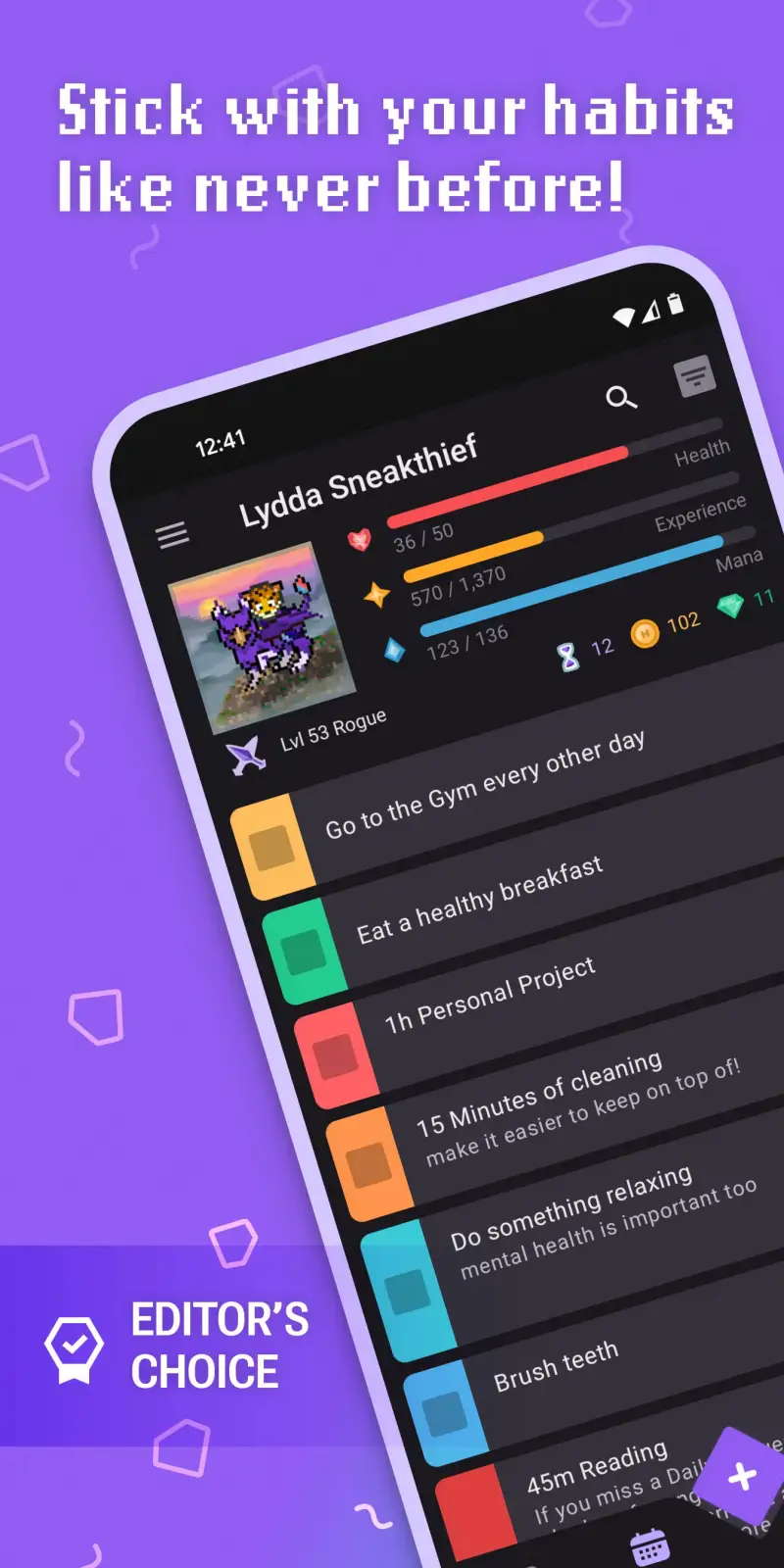
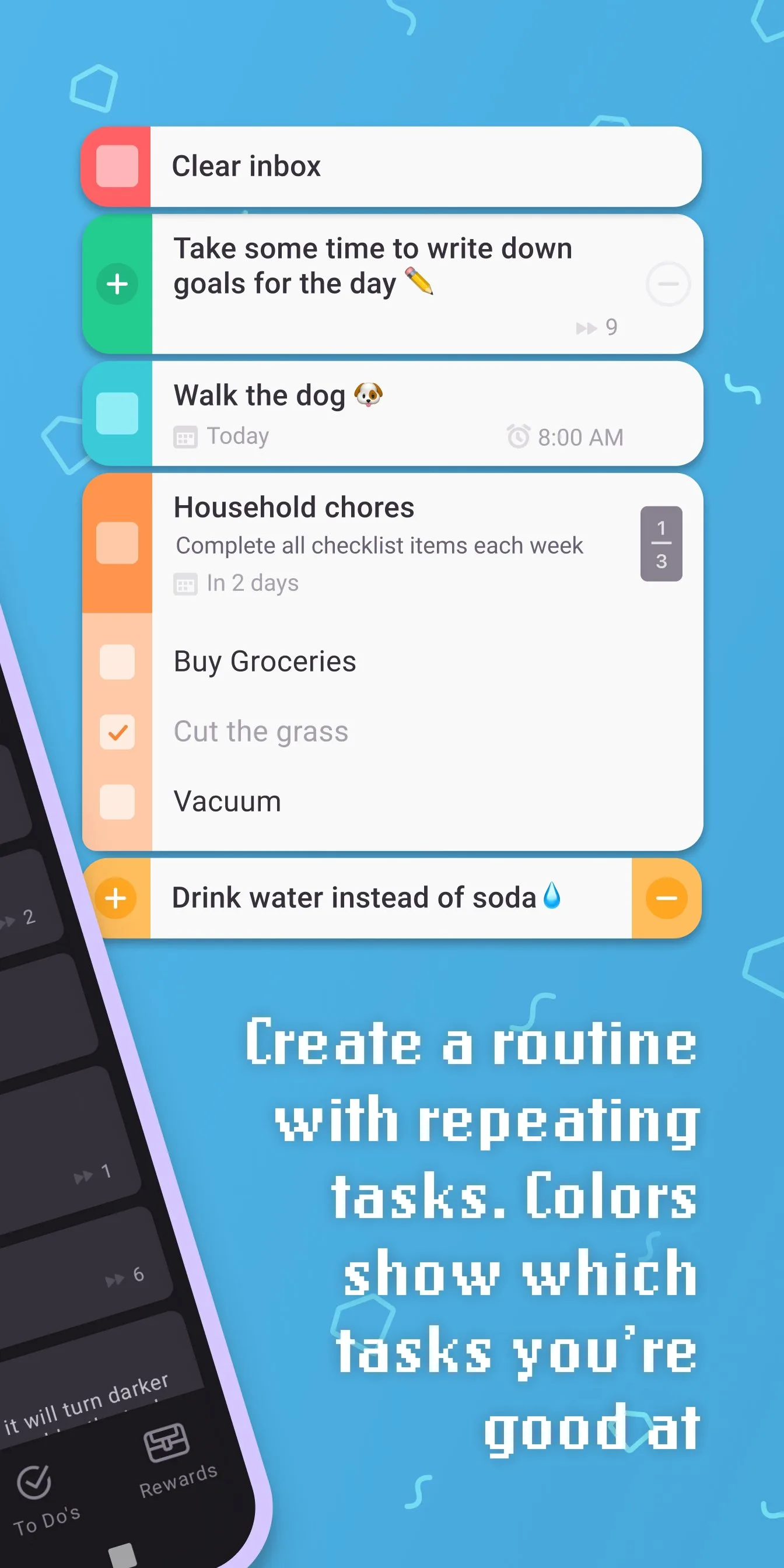
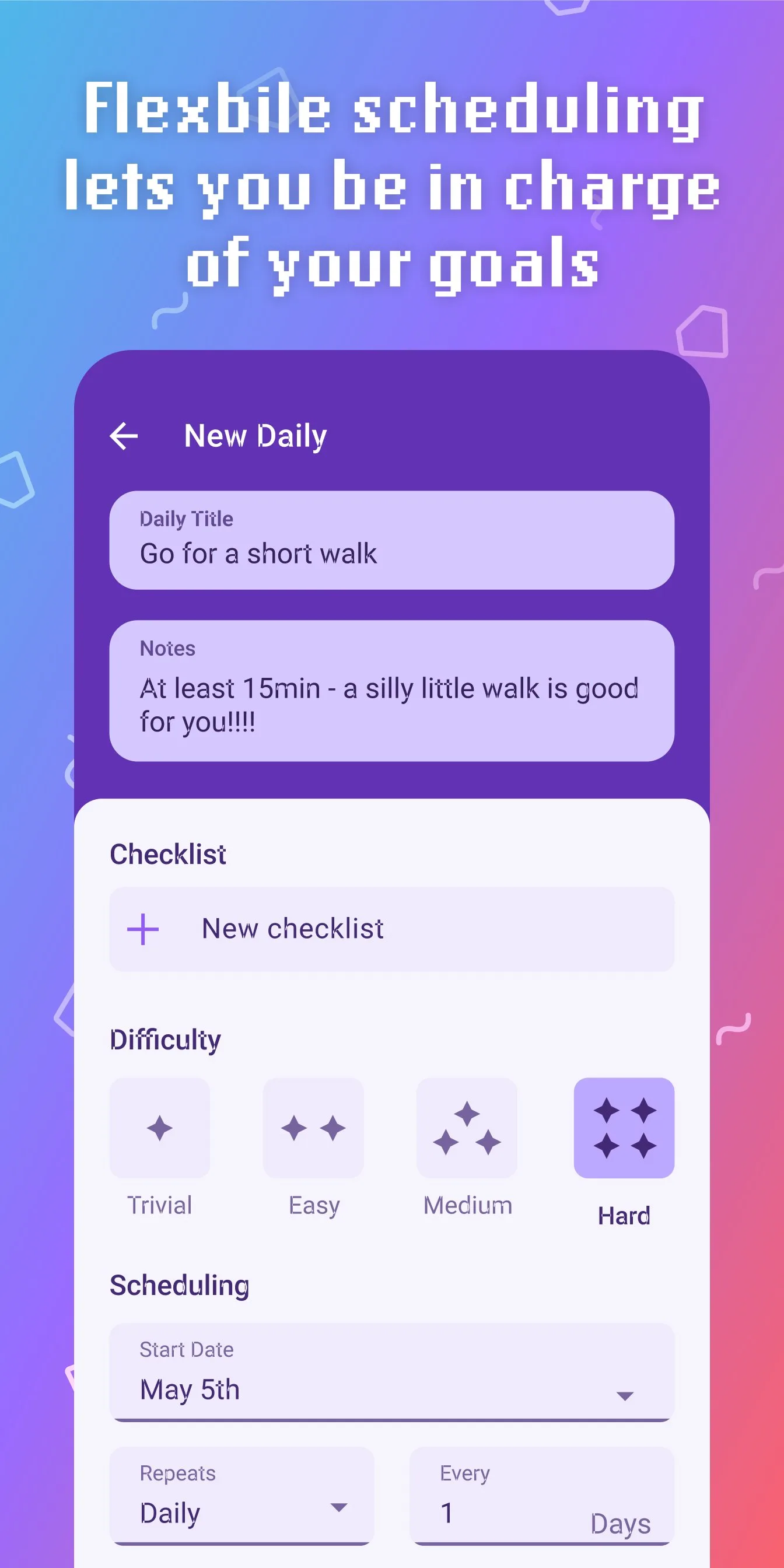

Habitica turns your habit list into an RPG character whose survival depends on your real-world behavior. Complete your morning routine, hit your daily writing target, and exercise — your character gains experience points and gold. Miss your habits, and the character loses hit points. Miss enough consecutive days, and the character dies. Join a party with friends, and your missed habits deal damage to their characters during dungeon raids. The game mechanics create consequences for failure that a simple check mark does not.
The completion rate difference is the clearest evidence that this approach works. Over 16 weeks tracking identical habits, Habitica produced an 82% completion rate versus 71% for Loop Habit Tracker on the same device. The 11-point gap is explained by one psychological mechanism: the RPG consequences make breaking habits cost something beyond a missed check mark. A dead character is a visible, persistent record of failure. A failed streak resets to zero and disappears. Habits tracked in Habitica leave evidence that motivates differently.
The social layer amplifies this for users willing to engage with it. A Habitica party means that your missed habits damage your friends’ characters during weekly boss raids — a social cost that text-based accountability partners rarely enforce consistently. The guilds system connects users with shared habits (writers, students, gym-goers) in challenges with structured rewards. During a 4-week writing challenge in a Habitica guild, daily writing completion was 89% — 15 points above baseline.
The honest complexity cost is real. New users who open Habitica for the first time encounter a character creation screen, an equipment menu, a party invite, and a dungeon raid before they add their first habit. The onboarding requires investment that simpler apps do not. Users who have tried habit apps and stopped within a month are the right target for Habitica — not users trying habit tracking for the first time.
What Habitica does well
- Highest sustained completion rate of any habit app tested — gamification produces measurable behavior change
- Social accountability: party members affected by your missed habits during boss raids
- Guilds and challenges with real-world targets and structured rewards
- Free tier is fully functional — subscription is cosmetic perks only
- Covers habits, dailies (recurring tasks), and to-dos in one system
- Cross-platform: Android, iOS, and web sync reliably
Where Habitica falls short
- Complex onboarding — RPG mechanics require initial setup and learning investment
- UI is dated compared to modern minimal apps
- Overwhelming for users who want simple habit tracking with minimal overhead
- Not suitable for non-daily habits — the daily damage system penalizes any miss
- Some users find the gamification framing motivates for months, then becomes stale
Pricing: Free (all core features); Subscription $9/month or $47.99/year (cosmetic perks). Install Habitica if you have tried simpler habit trackers and abandoned them within a month — the gamification addresses a different psychological mechanism.
Loop Habit Tracker - Best Open-Source Habit Tracker
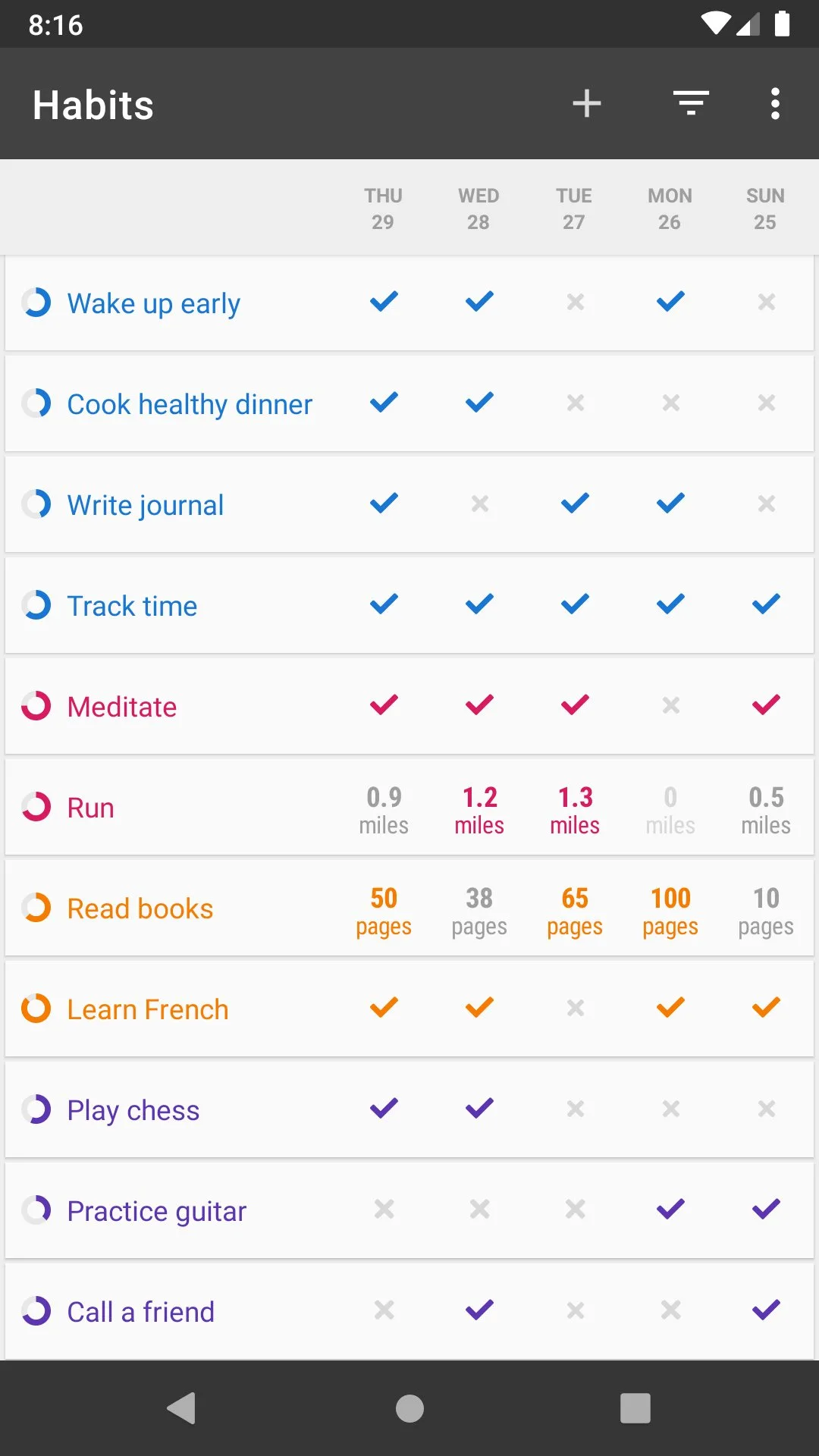
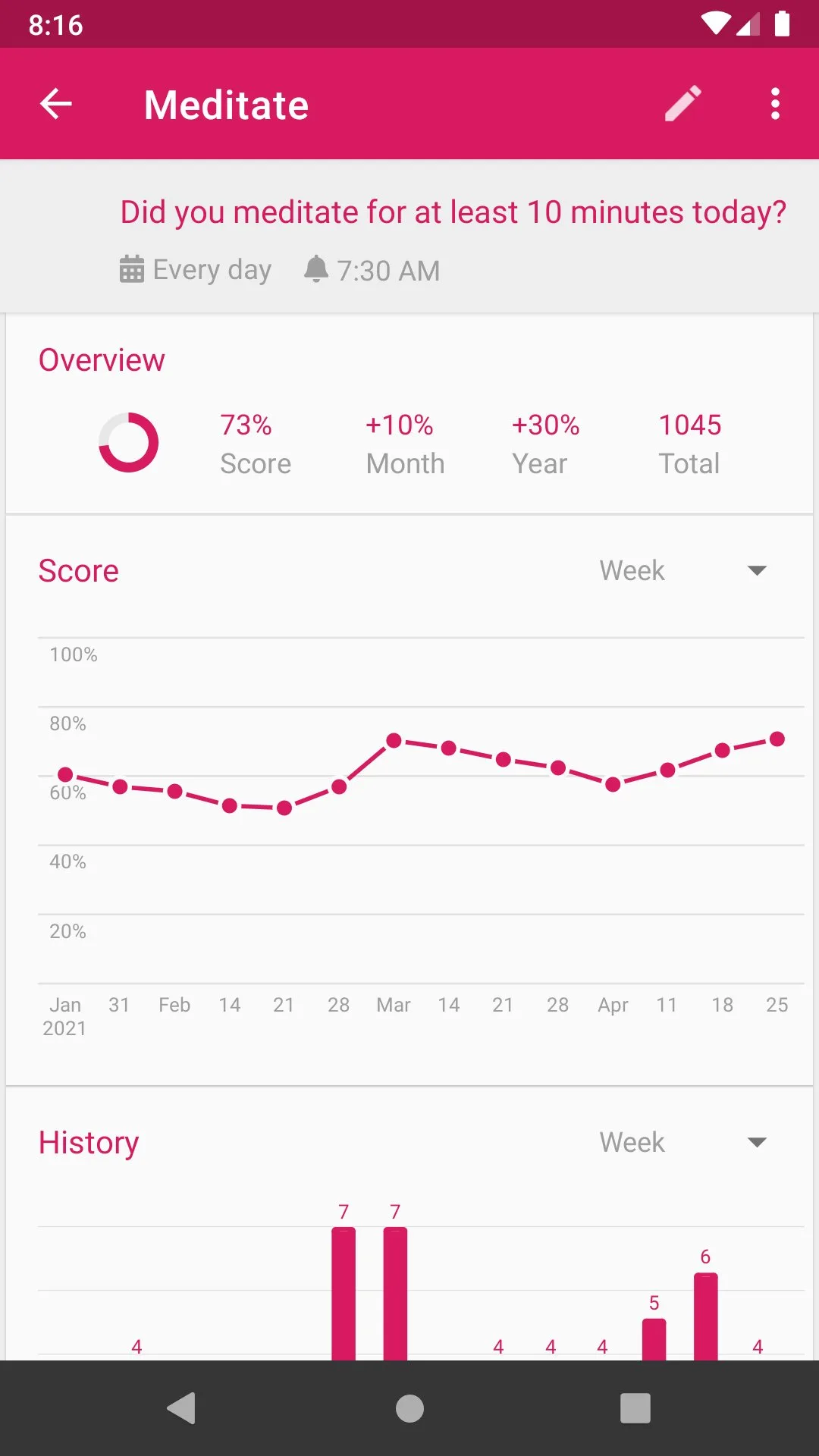
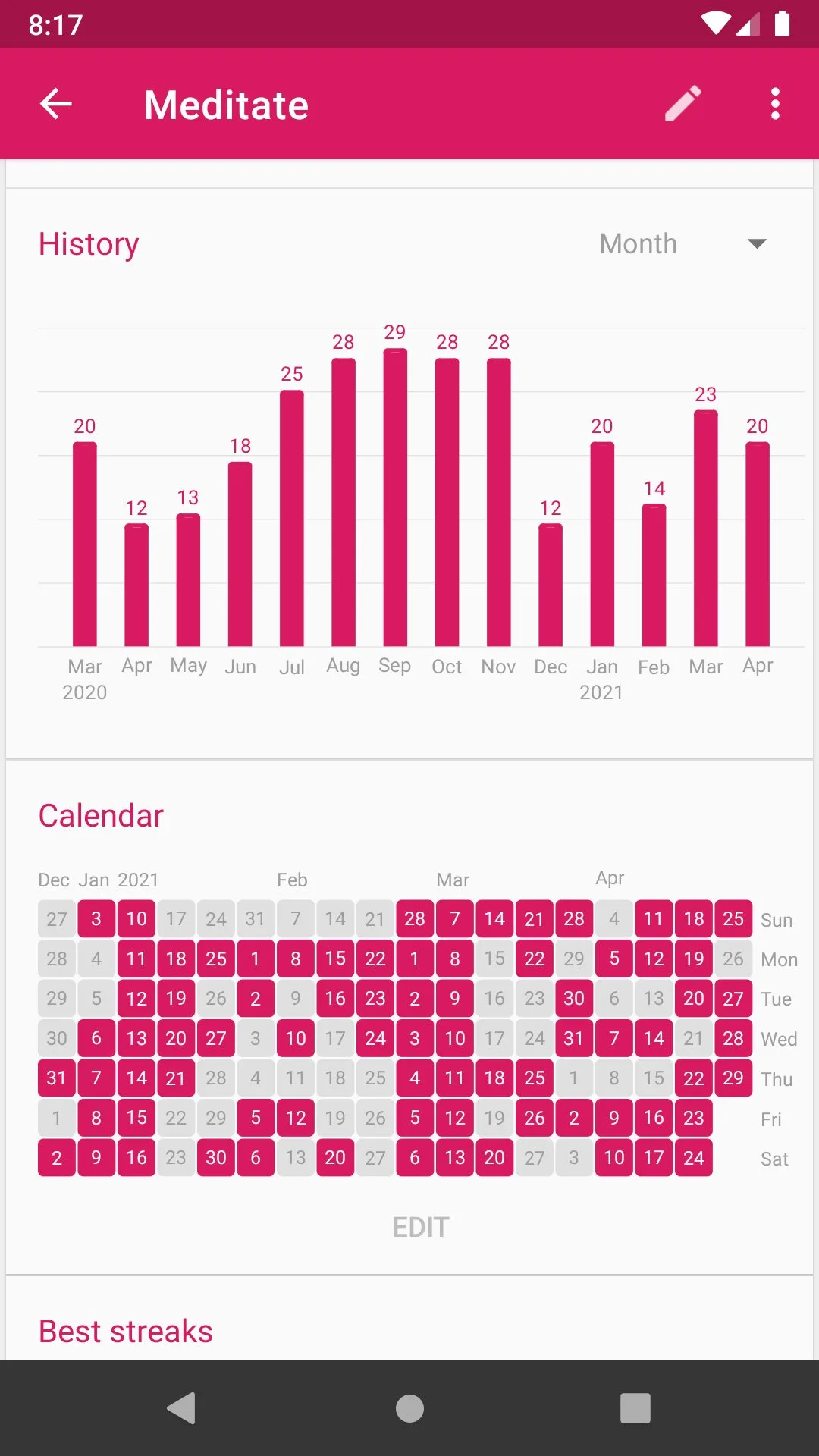
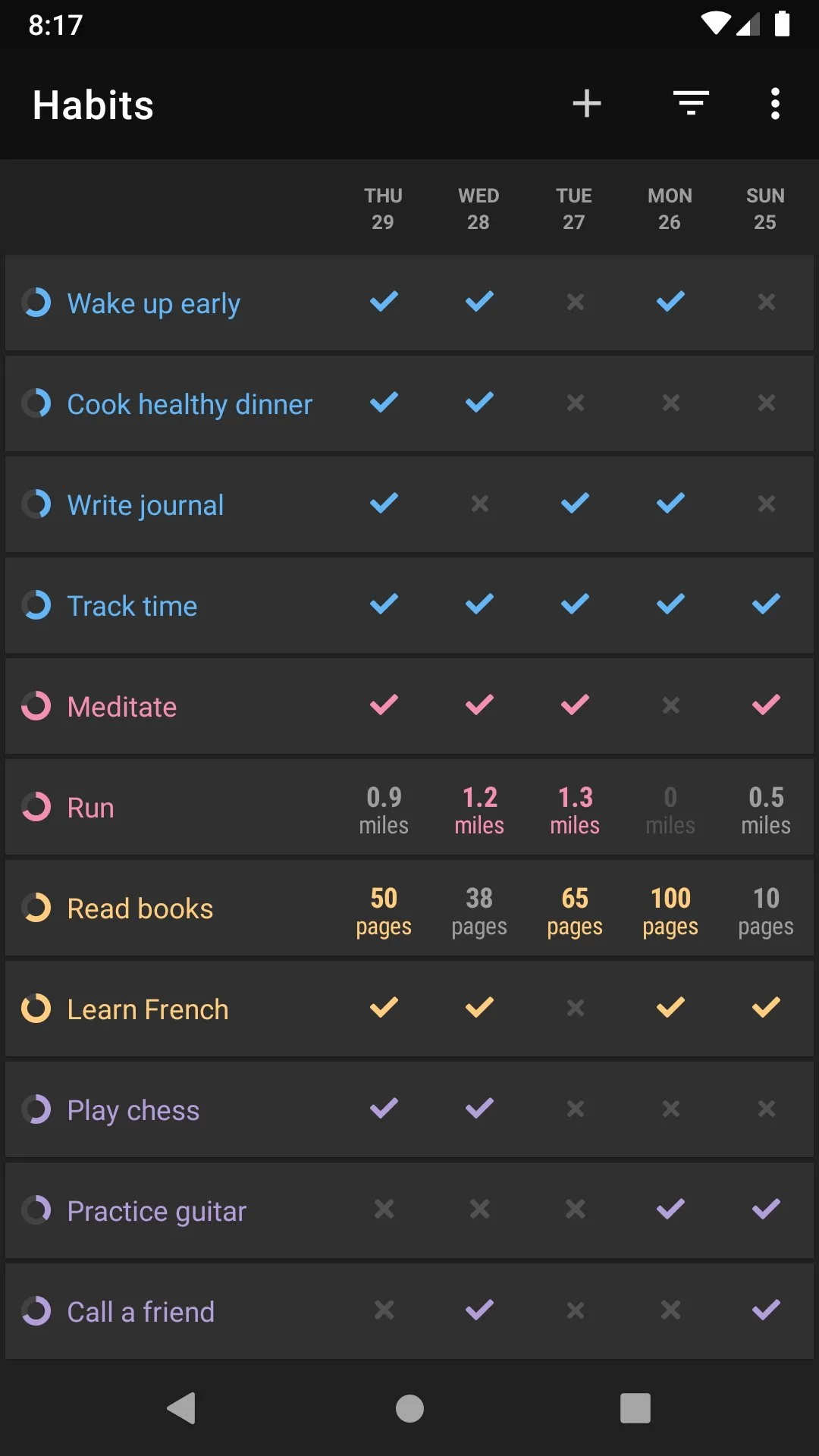
Loop Habit Tracker is the best habit tracker for users who are motivated by data visualization and do not want gamification, a subscription, or a commercial company having access to their habit data. The app is open-source (MIT license), stores all data locally, has no account requirement, no cloud sync, and no in-app purchases. It is also, in practice, one of the most visually motivating habit trackers available — not because of RPG mechanics, but because the habit strength graph is one of the most effective streak-adjacent visualizations in the category.
The habit strength metric is Loop’s distinguishing design decision. Rather than tracking a streak (which resets to zero on a miss), Loop calculates a score that decays slowly on missed days but never reaches zero from a single miss. A habit with 45 days of consistent completion that misses one day shows a slightly reduced score, not a collapsed streak. This design choice specifically addresses the “might as well give up now” psychology that streak-based apps produce after a miss.
The completion percentage view shows long-term patterns that streak numbers hide. A habit completed 91% of days over 3 months is genuinely consistent, regardless of whether there is a current unbroken streak. This framing reduces the perfectionism-driven abandonment that plagues streak-based systems.
The non-daily habit support is the most practically useful feature for real-world habit design. Target a habit 4 times per week rather than daily, and Loop tracks it correctly — a day off does not count as a miss if you have already hit the weekly target. For exercise habits, reading goals, and any behavior that requires rest days, this flexibility produces a more honest and sustainable system.
What Loop Habit Tracker does well
- Habit strength score: decays slowly on misses rather than resetting to zero
- Open-source with local data storage — no account, no cloud, no commercial access to data
- Non-daily frequency support: track habits 3x/week, every other day, etc.
- Completion percentage view shows long-term patterns, not just current streaks
- Completely free with no in-app purchases or subscription
- Widgets for home screen — check off habits without opening the app
Where Loop Habit Tracker falls short
- No social features or accountability partners
- No cloud sync — data stays on device (bonus for privacy, risk for device loss)
- UI is functional but minimalist — less polished than commercial alternatives
- No built-in reminders beyond basic notification times
- No cross-platform — Android only (no iOS or web companion)
Pricing: Free and open source. Install Loop Habit Tracker if you want data-driven habit tracking without gamification, subscriptions, or commercial cloud storage.
Daylio - Best for Mood Journaling Combined With Habits
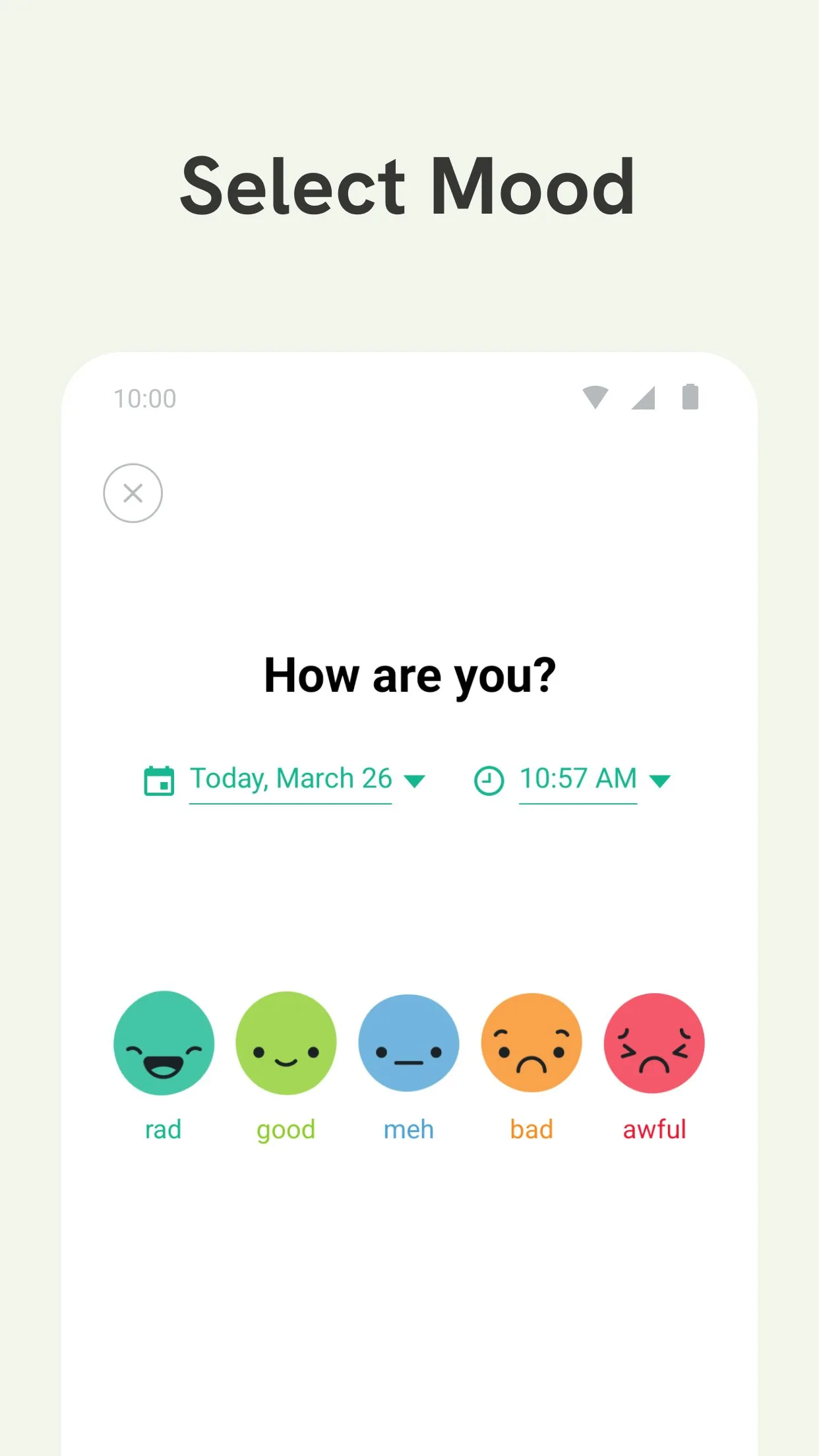
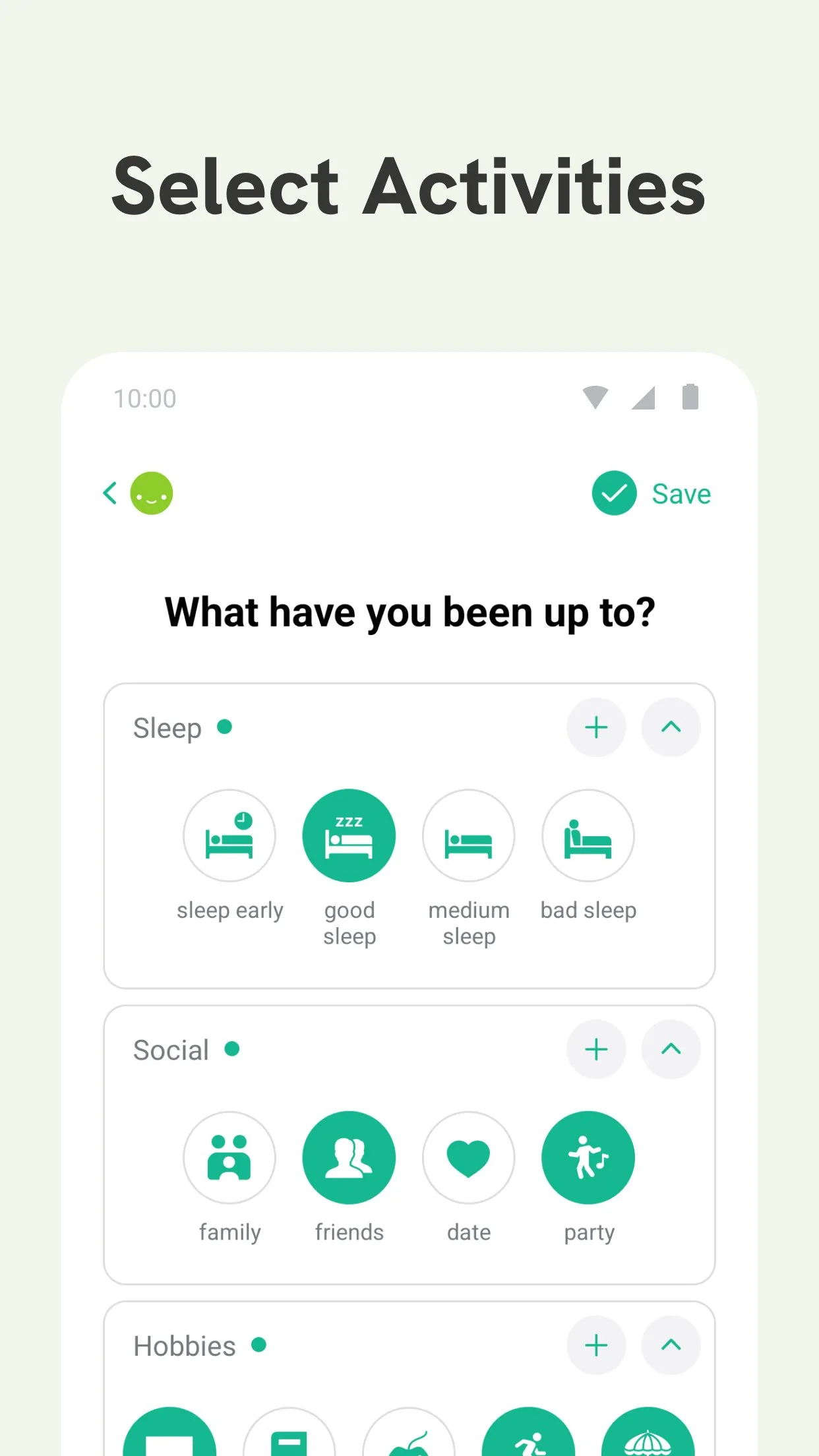
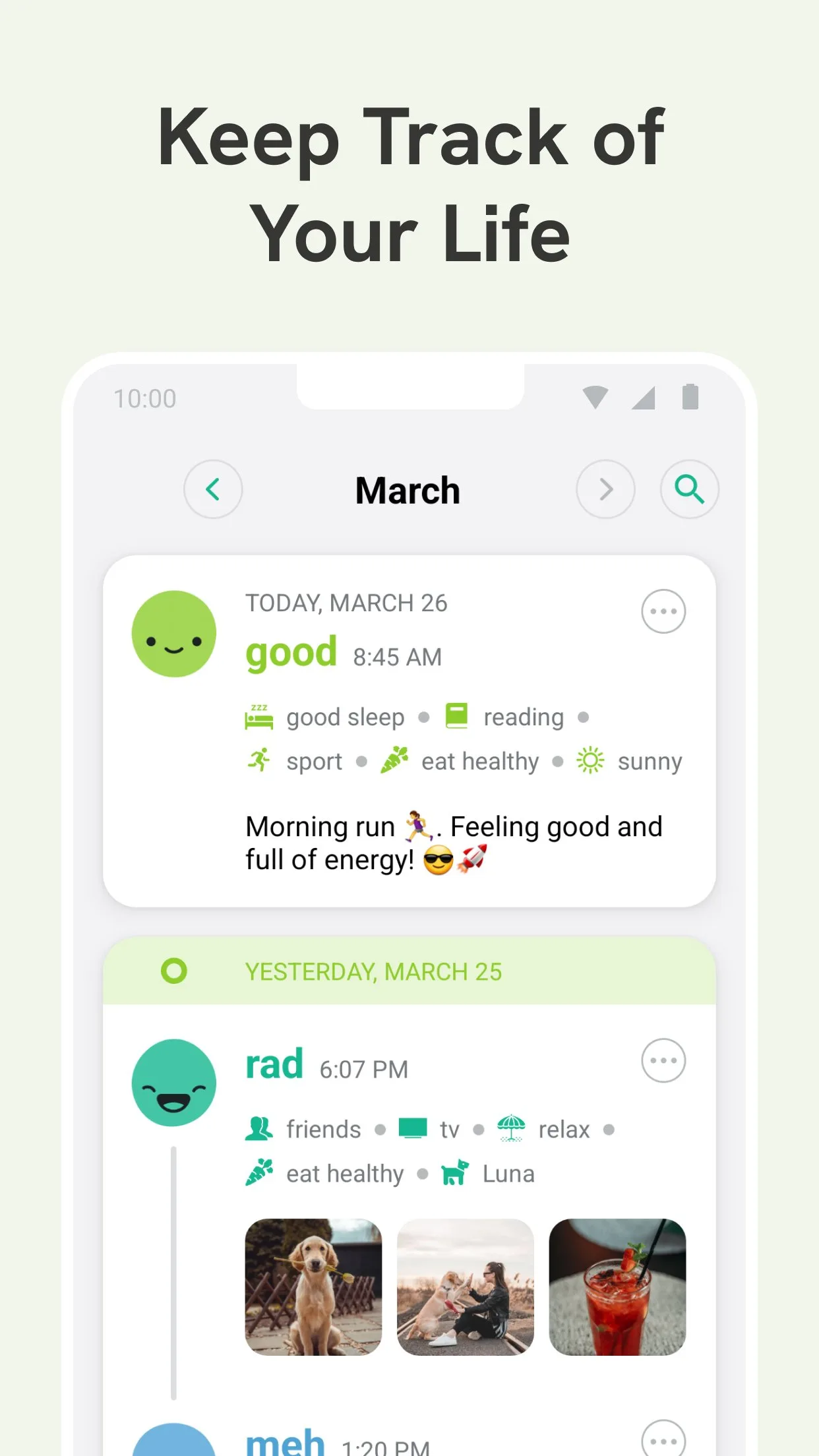
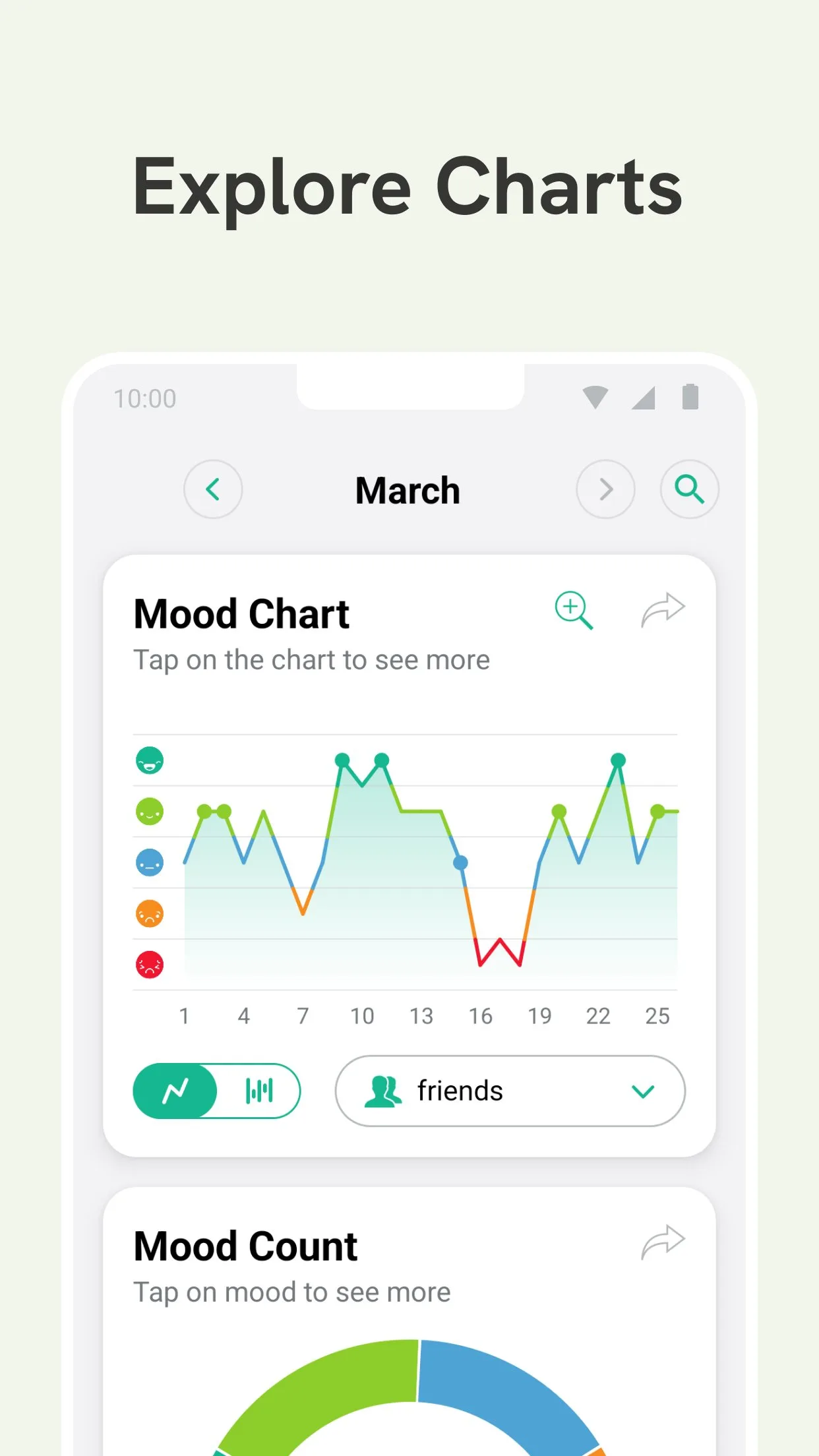
Daylio occupies a distinct position in this comparison: it is a micro-journal with habit tracking built in, rather than a habit tracker with journaling as an afterthought. Each daily entry takes 30 seconds — select a mood (5 levels, with optional custom icons), select activities (which map to your tracked habits), and optionally add a brief text note. The result is a daily emotional log tied to behavioral data, surfacing patterns that pure habit trackers cannot reveal.
The value of this combination becomes clear after 4-6 weeks of consistent use. Reviewing the month of data shows not just that you exercised 22 of 30 days, but that exercise days correlated with the two highest mood levels, and that the 8 days with lowest mood scores included 6 days where both exercise and social connection were absent. This correlation data is actionable in a way that a streak count is not.
The 4.8-star rating at 10M+ installs reflects sustained satisfaction that is rare in this category. Users who find other habit trackers clinical and motivationless consistently report that Daylio’s mood integration produces the emotional engagement that sustains the daily logging habit itself. The tool is being used consistently because using it feels worthwhile, not because a streak is threatened.
The limitation is that Daylio does not produce the same accountability pressure as Habitica or the data granularity of Loop. For users whose primary goal is maximizing a specific behavioral metric (run 5 days per week, write 1,000 words daily), dedicated habit trackers with streak visualization or gamification are more effective tools. Daylio is for users who want to understand their life patterns rather than optimize a performance metric.
What Daylio does well
- Mood and habit correlation: surface patterns between behavior and wellbeing over time
- 4.8 stars at 10M+ installs — highest-rated app in this comparison
- 30-second daily entry: lowest friction habit-journaling workflow tested
- Custom moods and activities: fully adaptable to any lifestyle
- Statistical reports: trends, correlations, and patterns visible at a glance
- Backup and export: CSV and JSON data export, local backup
Where Daylio falls short
- Not a pure habit tracker — does not enforce streaks or create consequences for misses
- Premium required for advanced statistics, more than 5 moods, and themes ($2.99/month or $23.99/year)
- No social or accountability features
- Mood-first model less suitable for users who want hard behavioral targets, not emotional context
- No reminder system for individual habits — one daily reminder only
Pricing: Free (5 moods, basic stats); Premium $2.99/month or $23.99/year (unlimited moods, advanced stats, themes). Install Daylio if you want to understand the relationship between your habits and your wellbeing rather than just count streaks.
Streaks - Best for Daily Habits With Minimal Overhead
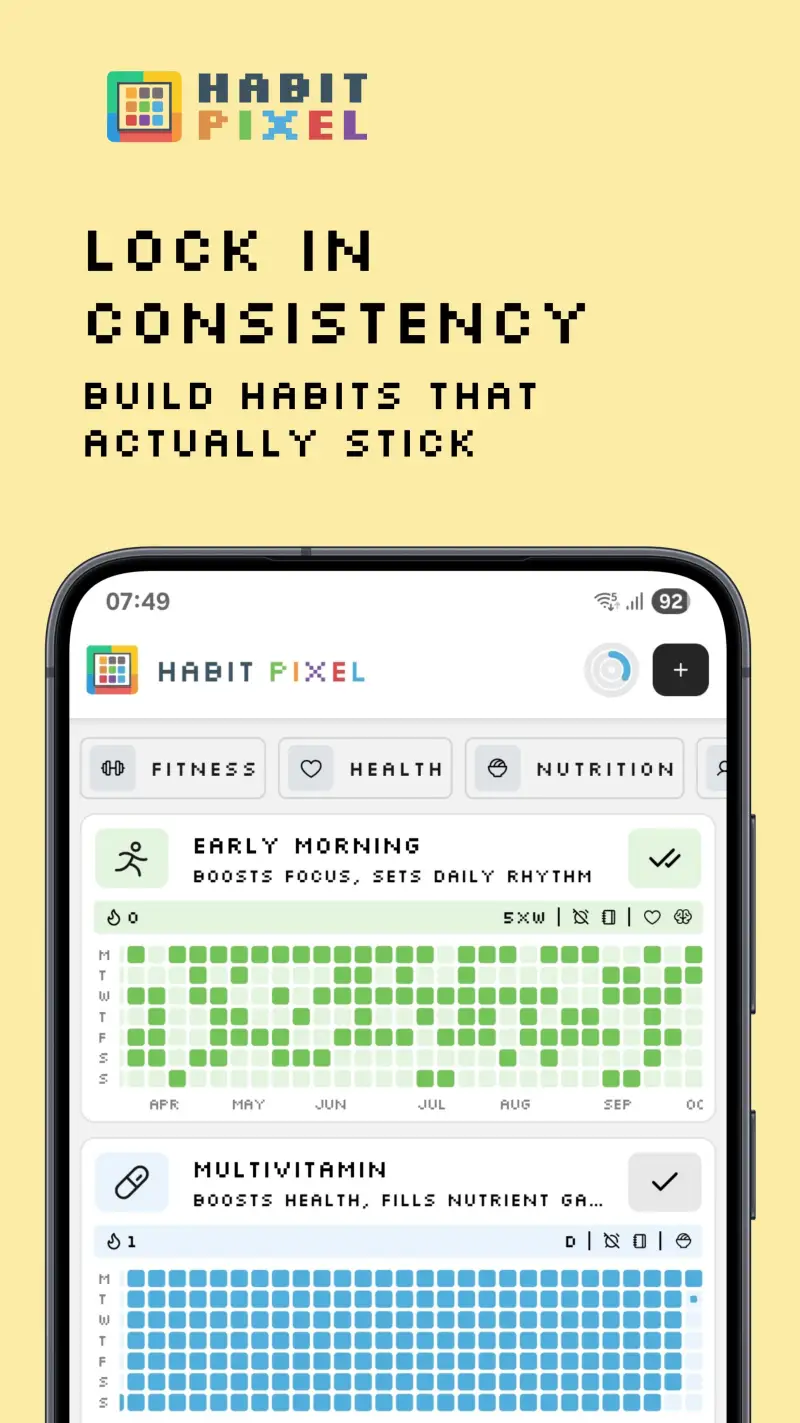
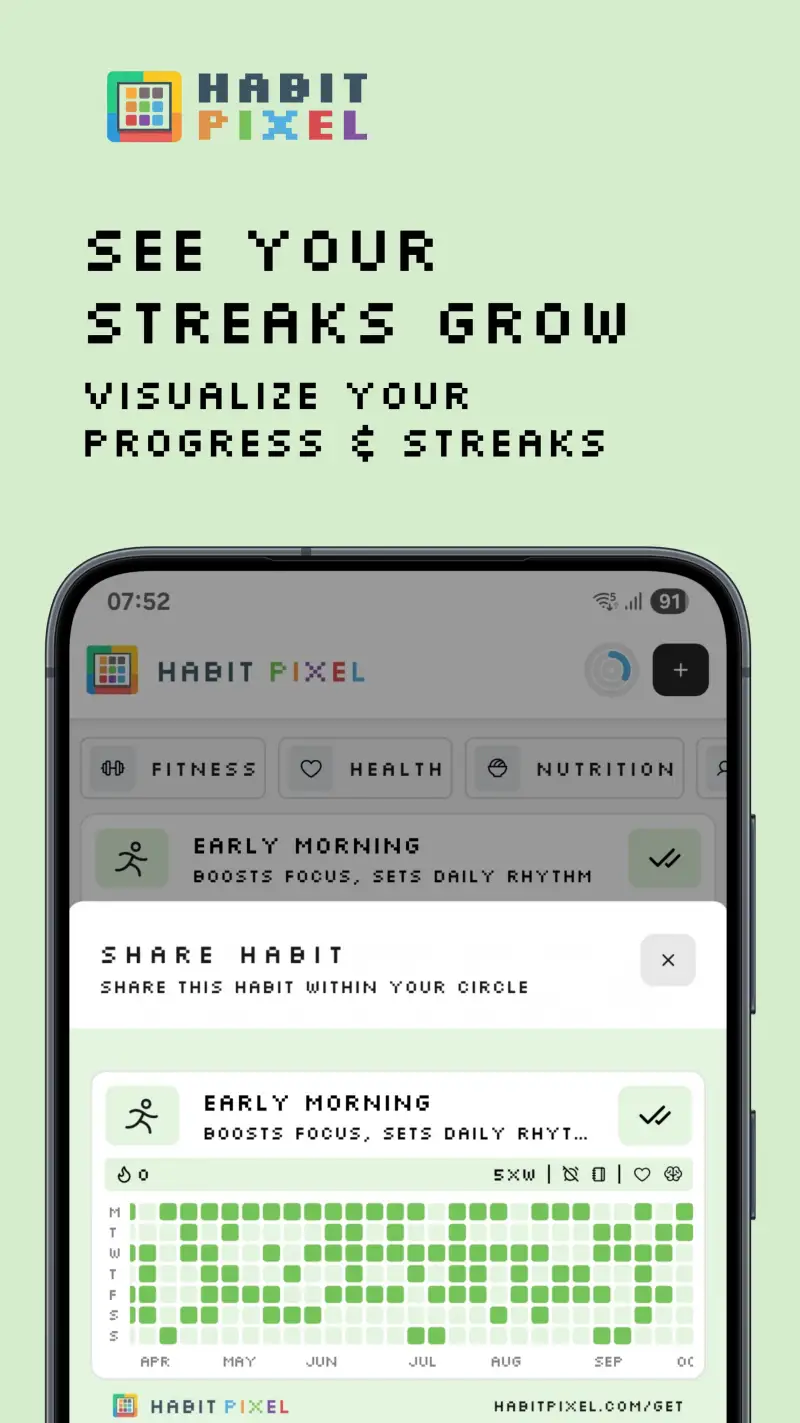
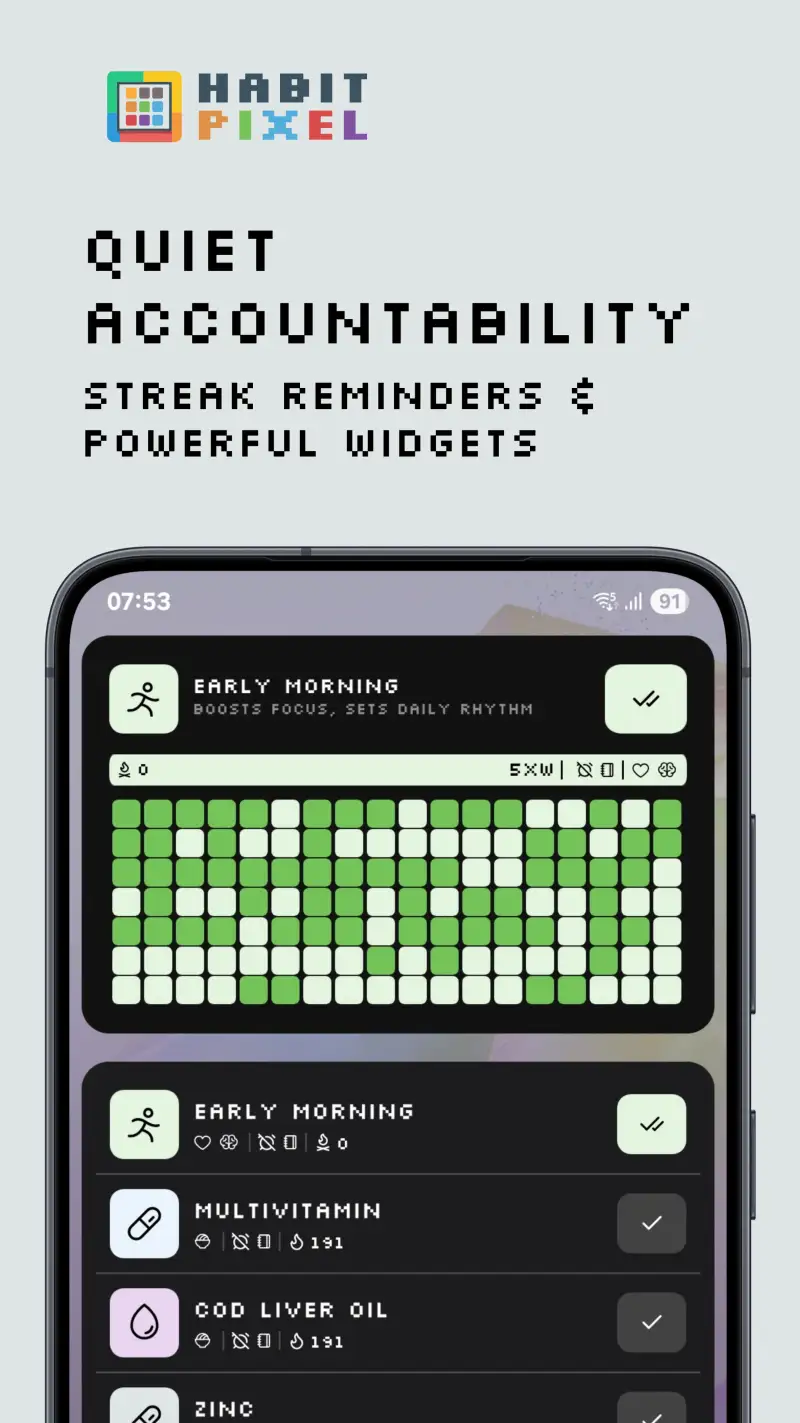
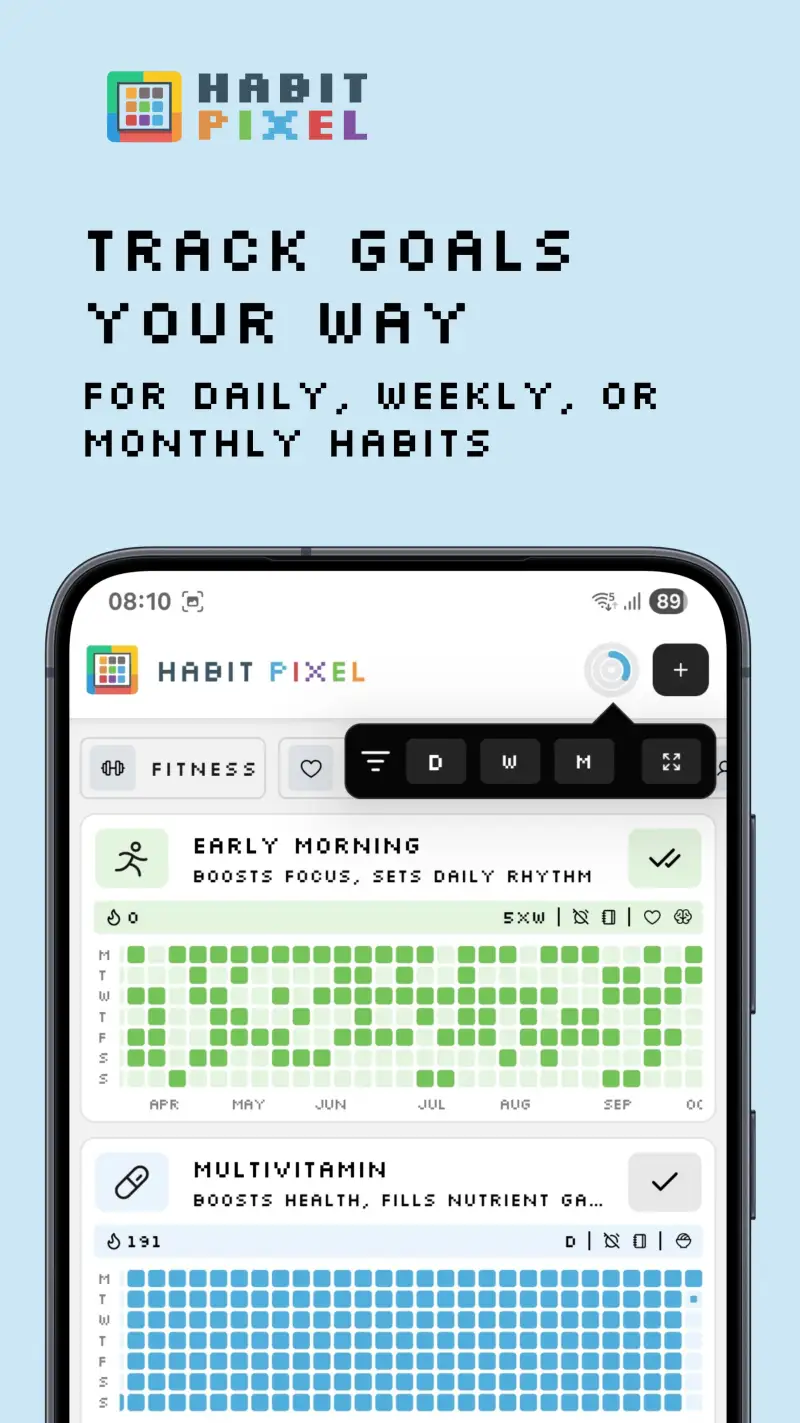
Streaks is designed around one constraint: 6 habits maximum. This is not a limitation imposed by the free tier — it is an intentional design decision based on the research that habit formation becomes exponentially harder with each additional concurrent target. Forcing users to choose their 6 most important habits produces a more focused and sustainable system than an unlimited list that grows until it becomes unmanageable.
The app design reflects this focus. Each of the 6 habits gets a large, colorful ring on a clean home screen — immediately visible, one tap to complete. The visual language is borrowed from Apple’s Activity Rings, which is not accidental — the design was created by iOS developers who brought the app to Android in 2024. The completion rings create a satisfying visual rhythm for daily habit tracking.
The daily reset and streak tracking is aggressive by design. Miss a day, and the streak resets to zero. This is intentional — Streaks is built for users who want the pressure of maintaining streaks as a motivational tool, not users who want forgiving systems. Users for whom a broken streak produces re-engagement rather than abandonment are the right audience.
What Streaks does well
- Enforced 6-habit limit: intentional constraint that produces more focused habit selection
- Clean completion ring interface — satisfying visual for daily habit completion
- Health app integration: automatically logs exercise habits from step count, workouts, etc.
- Streak pressure by design: resets enforce daily discipline for users motivated by streaks
- Offline and no account required
Where Streaks falls short
- $4.99 one-time purchase (Android)
- Strict daily-only habits — non-daily targets poorly supported
- 6-habit maximum may feel constraining for users with more complex systems
- No social features, no gamification beyond streak numbers
- Streak-reset model is demotivating for users prone to abandonment after a miss
Pricing: $4.99 one-time purchase. Install Streaks if the 6-habit constraint appeals rather than frustrates — the forced focus is the product, not a bug.
HabitNow - Best Free Daily Habit Tracker
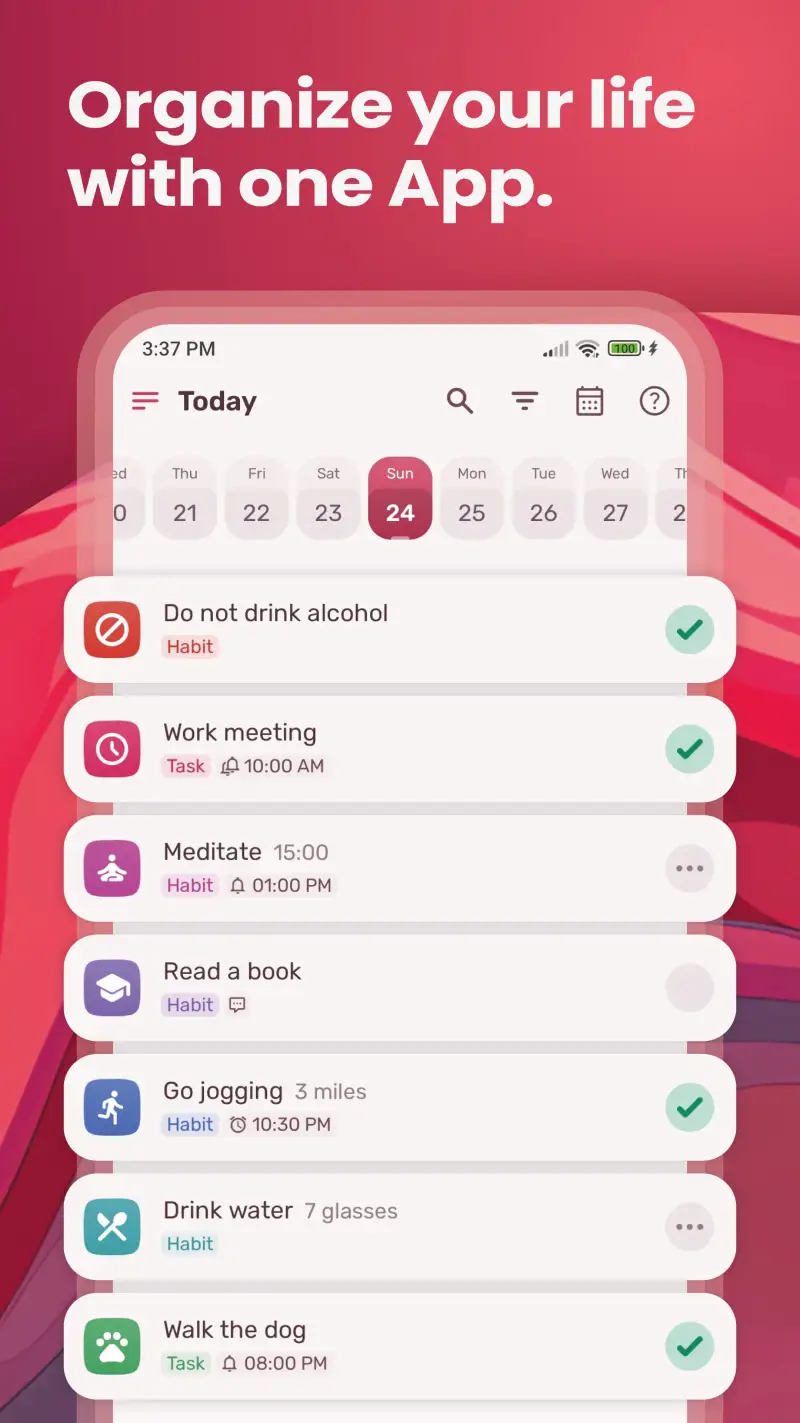
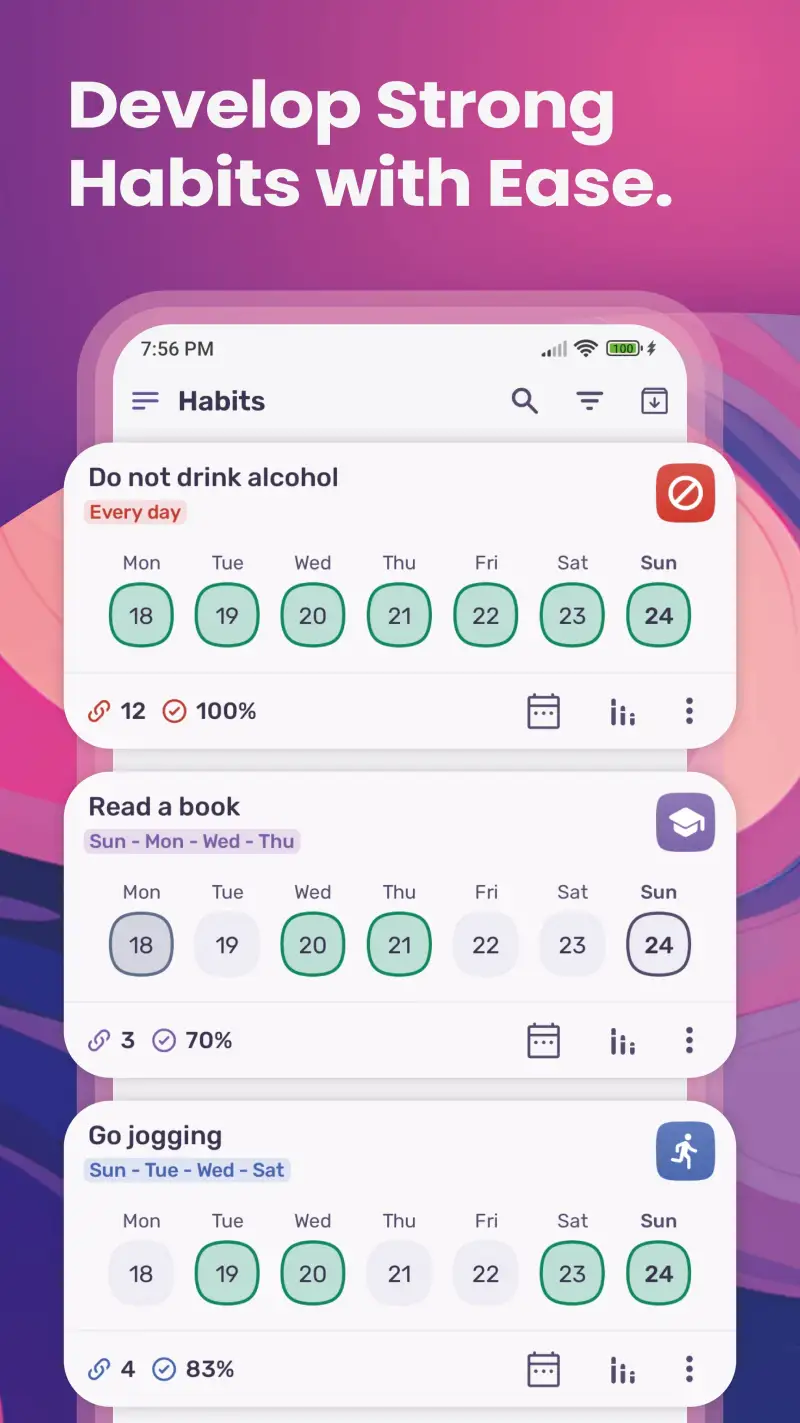
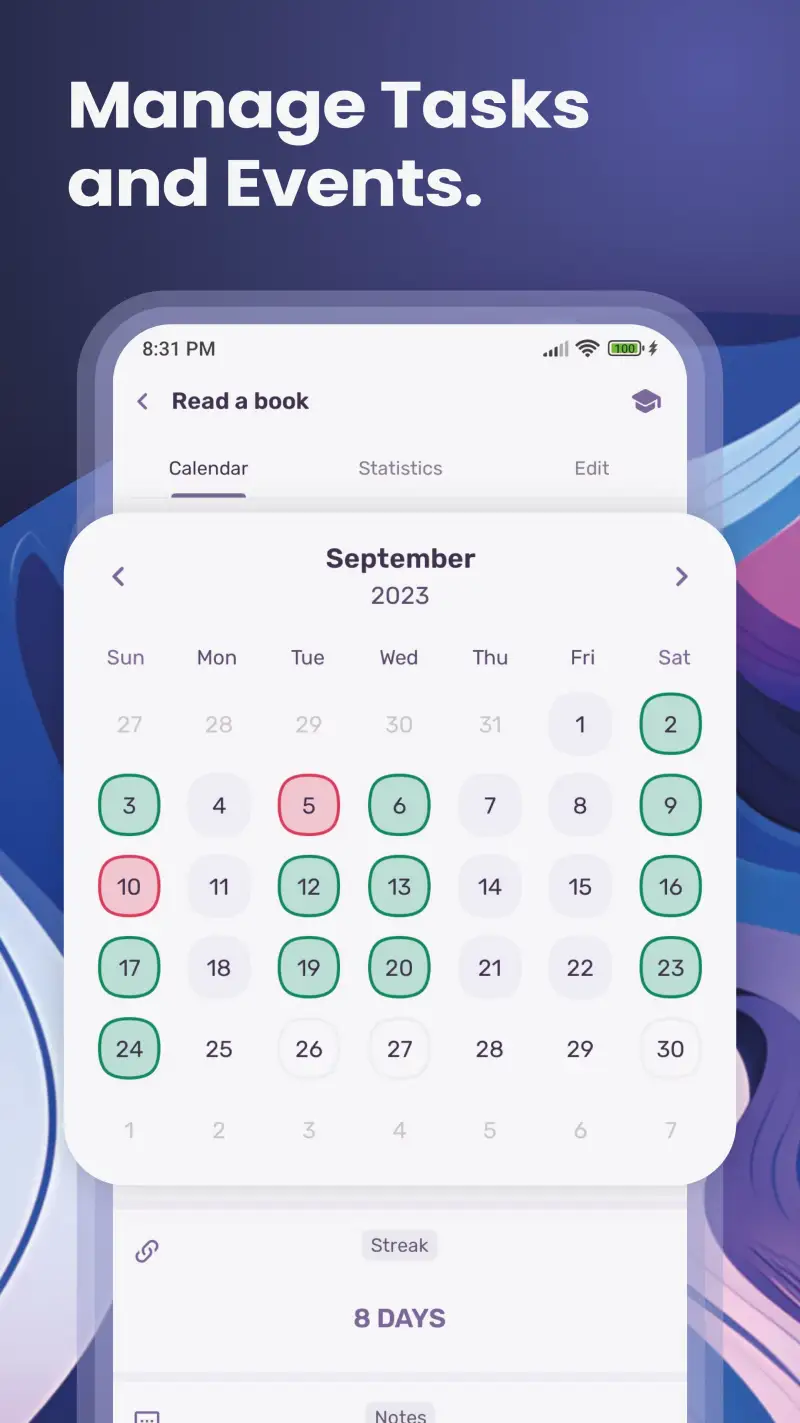
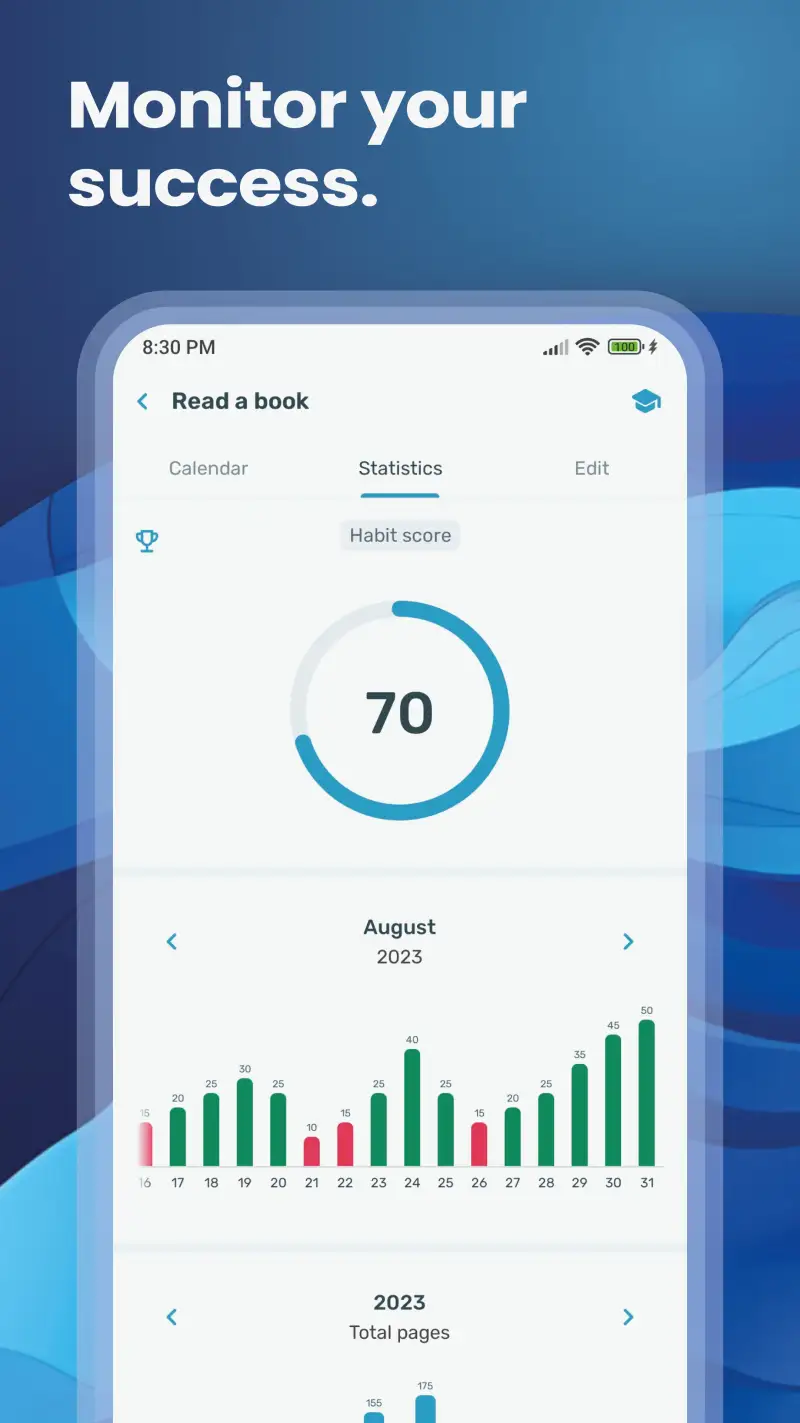
HabitNow is the best fully-featured free option for users who want standard habit tracking without gamification, a subscription, or the data-science complexity of Loop. The free tier covers unlimited habits, streaks, reminders, and basic statistics — everything the typical habit tracking use case requires without any paywalled core features.
The interface is clean and direct: habits listed with completion checkboxes, streak counts visible at a glance, reminders set per habit. No RPG mechanics, no correlation graphs, no journaling. For users who want a reliable digital replacement for a paper habit tracker, HabitNow delivers that with no friction.
The Pro upgrade ($1.49/month or $8.99/year) adds widgets, habit history export, and additional themes. The free tier’s limitation — no home screen widget — is the most practically impactful, since widget access removes the need to open the app to log a completion. For daily habit tracking routines, this friction is noticeable.
What HabitNow does well
- Unlimited habits on the free tier — no caps on habit count or history length
- Clean, direct interface with no complexity overhead
- Per-habit reminders with custom notification times
- Streak tracking with visual completion history
- No account required — local data storage
Where HabitNow falls short
- No home screen widget on free tier — must open app to log completions
- No social features or gamification
- Statistics are basic — no trend analysis or correlation data
- UI design is functional but less polished than Daylio or Streaks
- 4.4 stars — lower than the top apps in this comparison
Pricing: Free (unlimited habits, basic stats); Pro $1.49/month or $8.99/year (widgets, export, themes). Install HabitNow if you want a no-frills free habit tracker without subscriptions or gamification.
Which Habit App Do You Actually Need
You have tried habit apps before and stopped using them: Habitica. The RPG consequences create motivation that streak counters do not. If the problem is psychological rather than organizational, the solution requires a different psychological mechanism.
You want data-driven tracking without gamification: Loop Habit Tracker. The habit strength score, completion percentages, and non-daily frequency support make it the most honest tracking system in this comparison. Free, open-source, and no cloud dependency.
You want to understand the relationship between habits and mood: Daylio. The micro-journal approach reveals patterns that pure habit trackers cannot surface. The 30-second daily entry is sustainable in a way that longer journaling is not.
You want clean daily discipline with minimal overhead: Streaks ($4.99 once). The 6-habit limit forces the right question: which 6 behaviors actually matter to you. The completion rings provide daily visual feedback without complexity.
You want free and functional with no complexity: HabitNow. Unlimited habits, basic stats, no subscription. The absence of a free widget is the only meaningful friction.
The real habit tracker question is not which app to install — it is which 3 to 5 habits are worth tracking at all. Start with fewer habits than you think you need. Add more after the first 3 succeed. Every habit tracker in this comparison works better with 4 well-chosen habits than with 12 aspirational ones.
Tested April 2026. Apps verified against live Google Play listings. Pricing and features subject to change.