Airalo connects you to local data in 200+ countries before you clear customs. Wise gives your freelance clients a local bank account to pay into, in their own currency. Proton VPN encrypts every packet on the café WiFi in Chiang Mai and bypasses content blocks in the UAE. None of these solve the problem no one warns you about: the moment your bank demands an SMS verification code and your eSIM has no phone number.
Digital nomadism in 2026 is an infrastructure problem, not a destination problem. Every nomad eventually discovers the same four gaps: connectivity that follows you across borders without roaming fees, banking that works internationally without losing 3% per transaction, security on networks you don’t control, and password management across 50+ logins touched from 15 different countries. This guide covers the 8 Android apps that solve those four gaps — specifically on Android, with honest notes on the failure modes each one has.








What Makes a Great Nomad App Stack
Four criteria separate functional nomad infrastructure from apps that fail at critical moments.
Cross-border continuity is the first test. An app that works in Germany and breaks in Vietnam fails the nomad use case. Wise’s multi-currency account, Airalo’s 200-country coverage, and Bitwarden’s offline vault all pass this test. Apps that require specific banking infrastructure or carrier agreements in each country do not.
The SMS 2FA problem is the gotcha that every eSIM review skips. All three eSIM apps in this guide are data-only — they provide internet access but no phone number. Banks, government services, and many SaaS platforms send verification codes via SMS to phone numbers. When you switch to a data-only eSIM on a single-SIM phone, you lose the ability to receive those codes. The solutions: keep a home SIM active in your secondary SIM slot, migrate critical accounts to authenticator apps (Google Authenticator, Bitwarden Premium TOTP), or use a virtual number service for a stable SMS number.
Transparent fee structure determines real cost. Wise shows you the fee and exchange rate before every transaction. Revolut on the Standard plan applies a 1% weekend markup that many users never notice. Kiwi.com adds service charges at checkout. For nomads managing money across currencies every week, hidden fees compound into hundreds of dollars annually.
Offline resilience matters for nomads traveling through poor-connectivity regions. Bitwarden’s vault is accessible offline. TravelSpend (covered in the backpacking guide) is offline-first. A VPN that loses its kill switch on intermittent connections becomes a liability. Verify offline behavior before depending on any tool in the field.
How We Tested
Testing covered 14 countries across Southeast Asia, Eastern Europe, the Middle East, and South America between October 2025 and April 2026. The eSIM apps were tested in Thailand, Japan, Germany, the UAE, and Colombia. Wise and Revolut were used for client payments and daily spending across 9 currencies. ProtonVPN was tested in Thailand and UAE; Mullvad in Germany and Poland. Bitwarden was tested as the primary password manager across three devices. Tested on Pixel 8 Pro and Samsung Galaxy S24+, both running Android 15.
Airalo - Best eSIM for Multi-Country Coverage
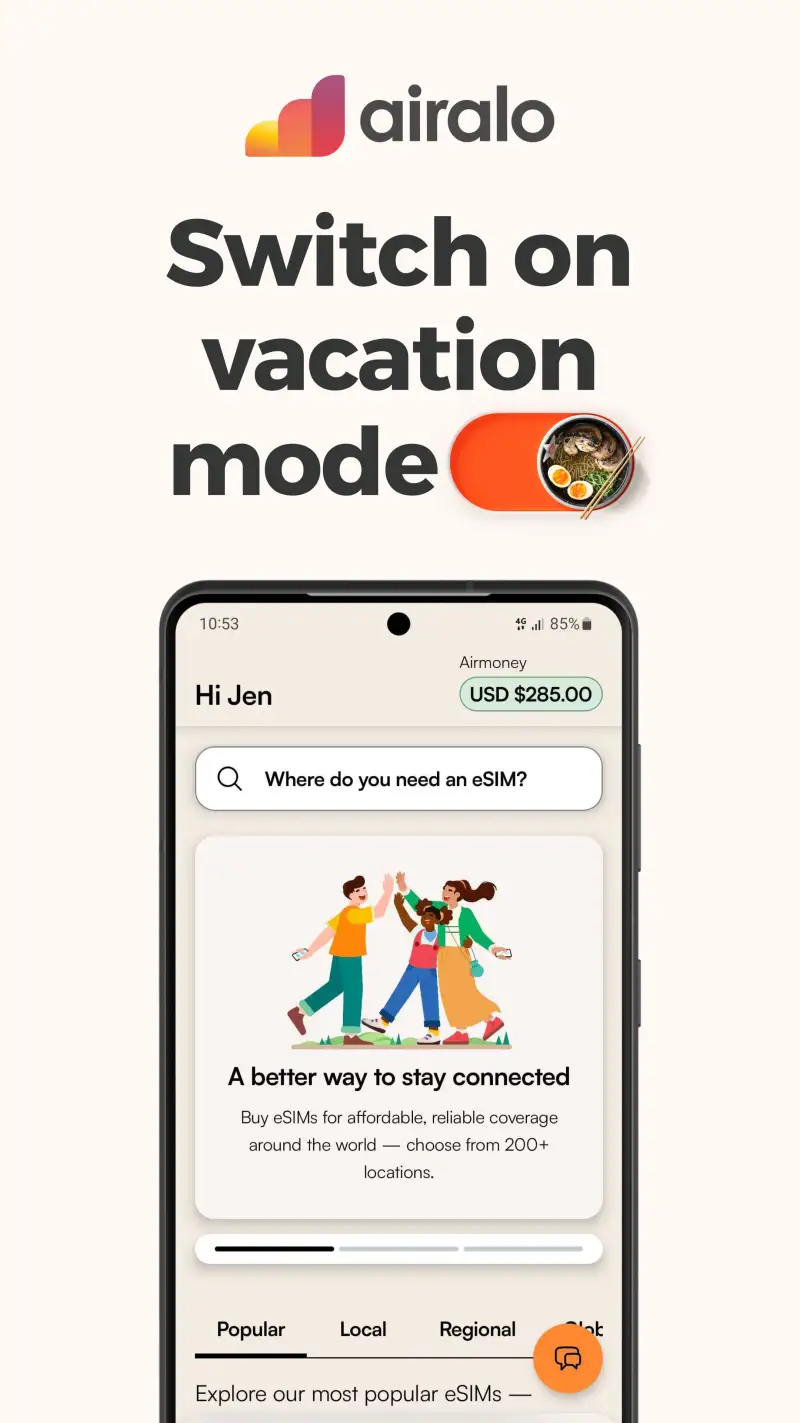
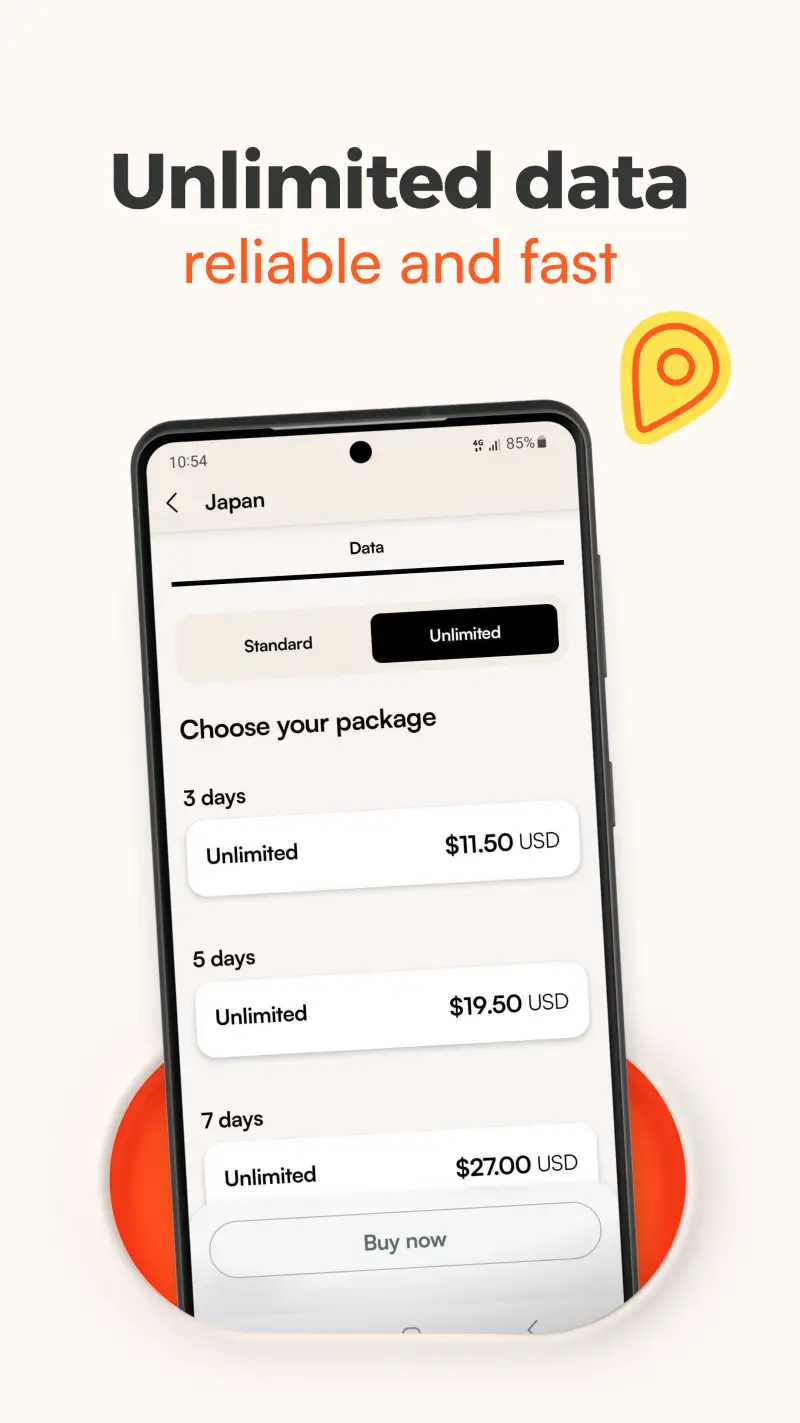
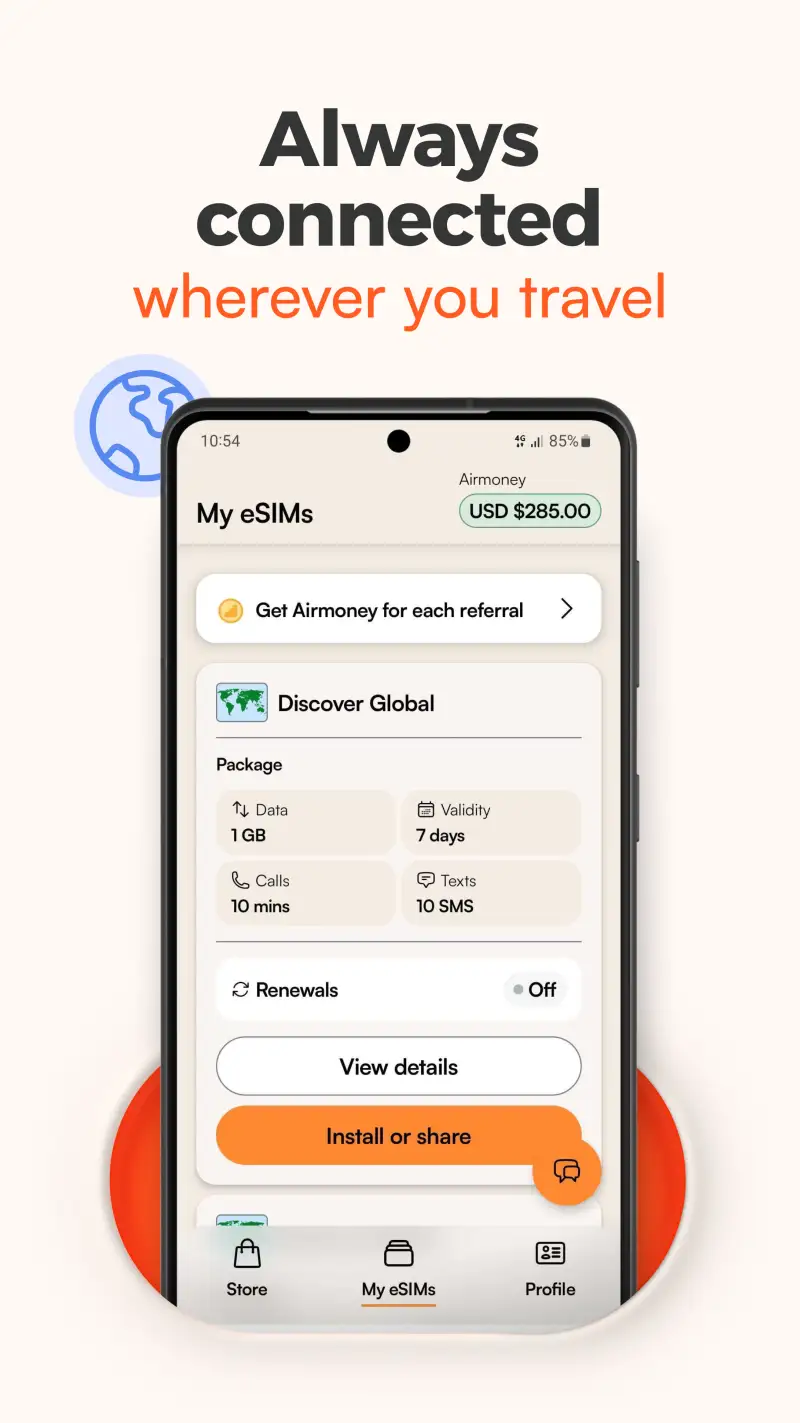
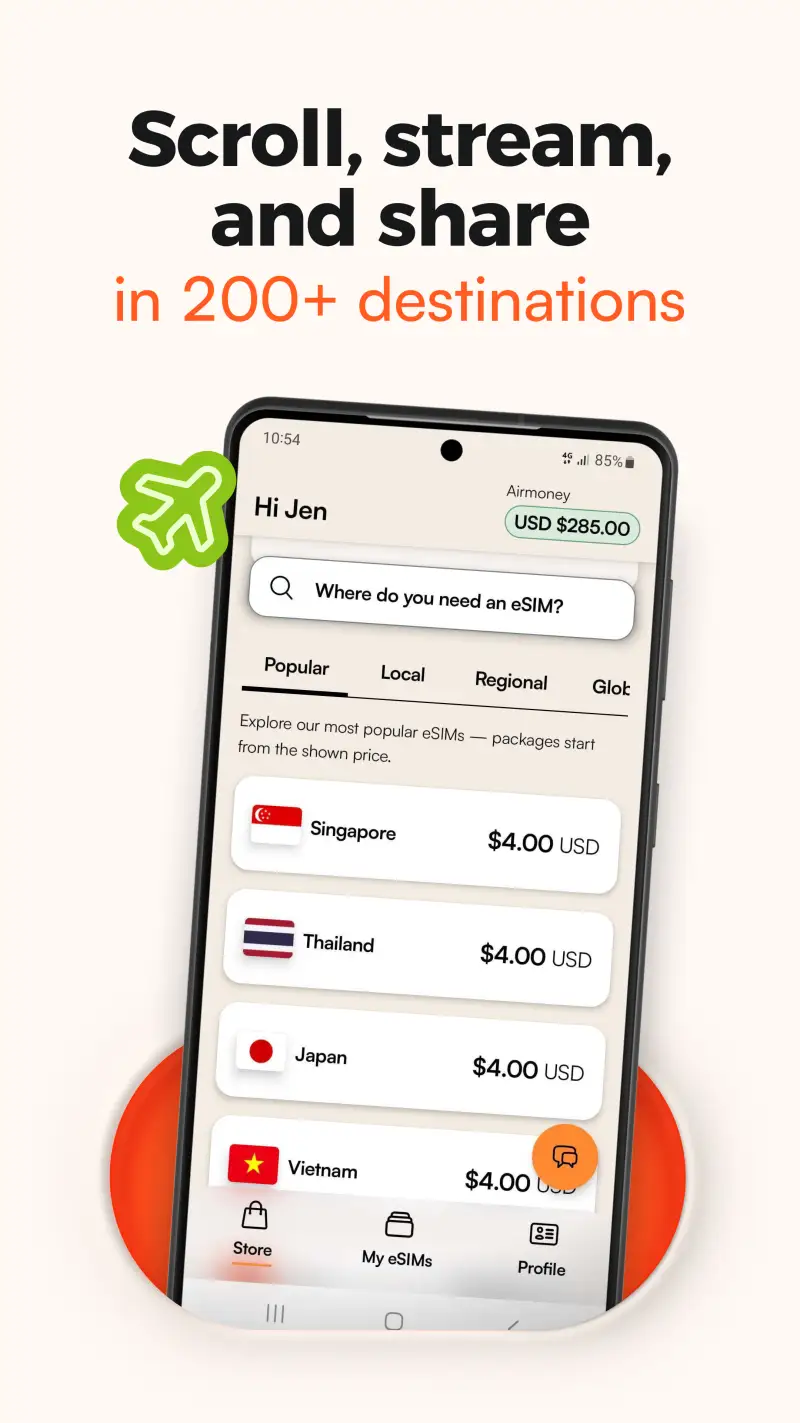
Airalo is the eSIM marketplace with the most countries, the most name recognition, and the largest install base among the three reviewed here. At 10 million+ installs and 4.46 stars, it’s the default recommendation for multi-region nomads who need consistent coverage as they hop between countries.
The mechanics are straightforward: browse plans by destination or region, purchase, and the eSIM installs to your device in under 5 minutes. Regional plans cover entire continents — the Eurolink plan covers 42 countries under a single purchase; Asialink covers Southeast and East Asia. For nomads moving every 2-3 weeks, regional plans eliminate the mental overhead of buying a new eSIM at every border.
Pricing starts at $4.50 for 1GB and runs to $3-8/GB depending on region and plan duration. Japan plans tend to be more expensive; Southeast Asia is typically cheaper. The in-app data usage monitor tracks consumption against the plan limit. Top-up plans activate when you hit the cap.
The two honest limitations: no phone number (the SMS 2FA problem described above), and per-GB pricing that gets expensive for heavy users. A nomad doing 8 hours of video calls per day would spend $50–100/month on Airalo data — at which point Holafly’s unlimited plans become cheaper.
What Airalo does well
- 200+ country coverage — highest breadth of the three eSIM apps
- Regional plans: buy one eSIM for 42 European countries or all of Southeast Asia
- Installation under 5 minutes from purchase to active
- In-app data usage monitoring — know when you’re approaching the cap
- Multiple eSIMs stored simultaneously on dual-SIM compatible devices
- No subscription required; pay per trip
Where Airalo falls short
- Data-only: no phone number, no SMS, no calls — requires a home SIM for bank 2FA
- No unlimited data plans — Holafly’s core differentiator
- Per-GB pricing becomes expensive for heavy users (8+ hours video calls/day)
- Refund process reported as slow on some plans
- Trustpilot 3.9/5 — some Android users report installation friction on specific devices
Pricing: Pay-per-plan from $4.50; no subscription. Check device eSIM compatibility in Settings > Network > SIM before purchasing.
Nomad eSIM - Best Value for Asia and Budget Routes
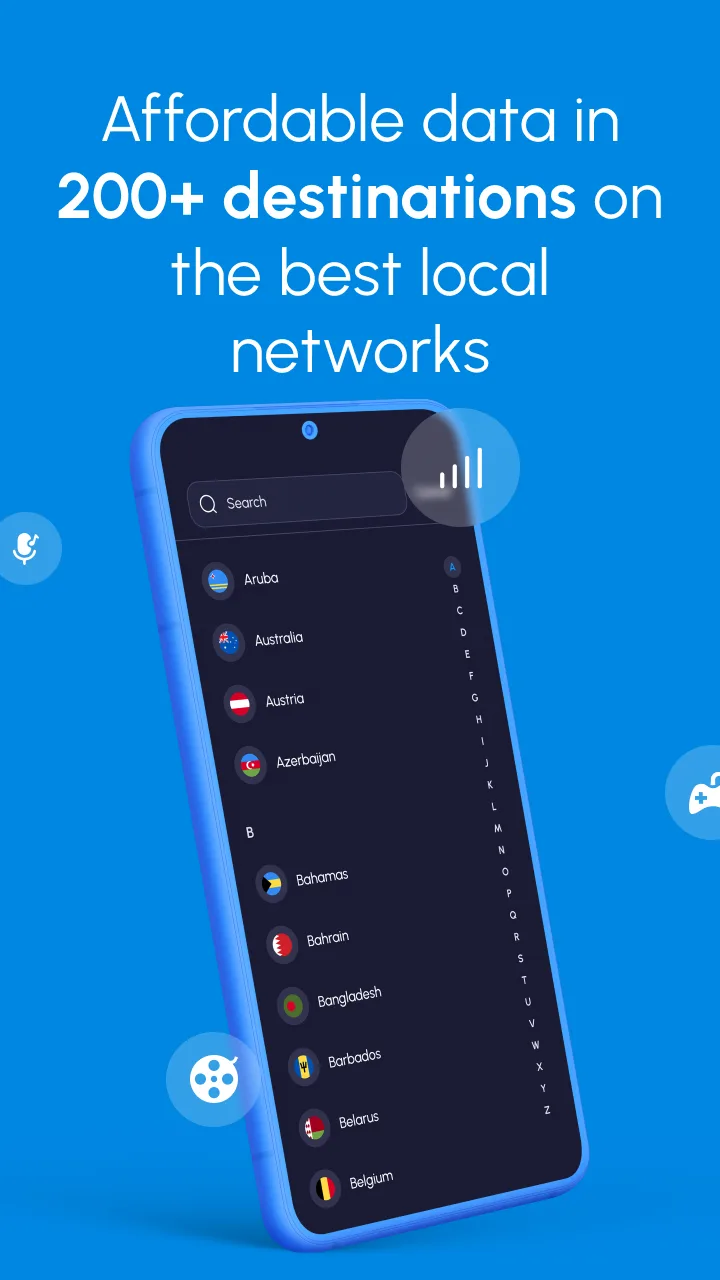
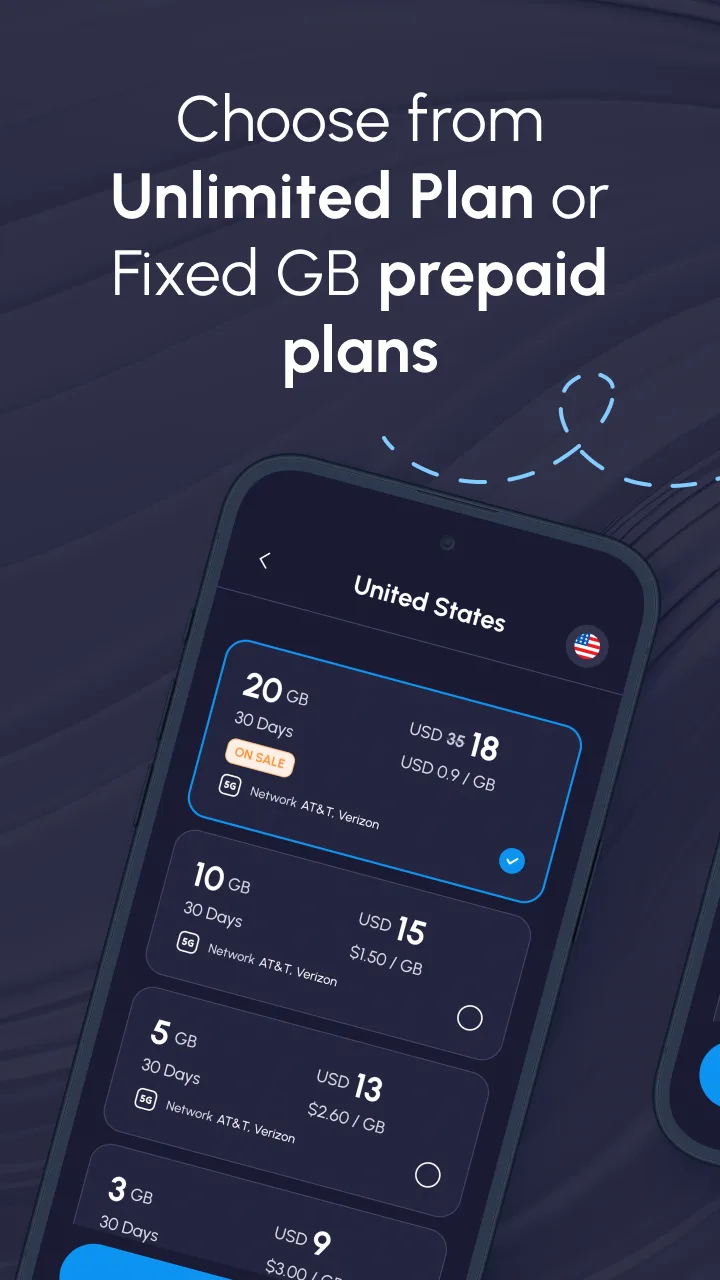
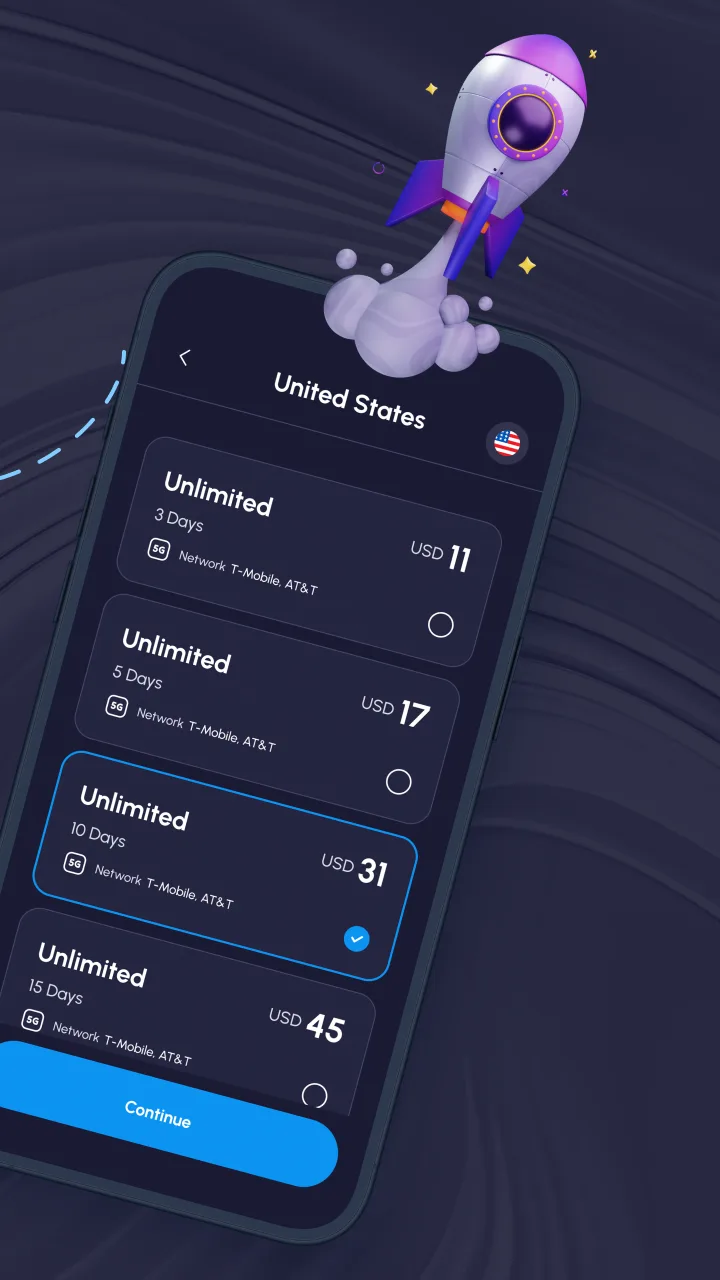
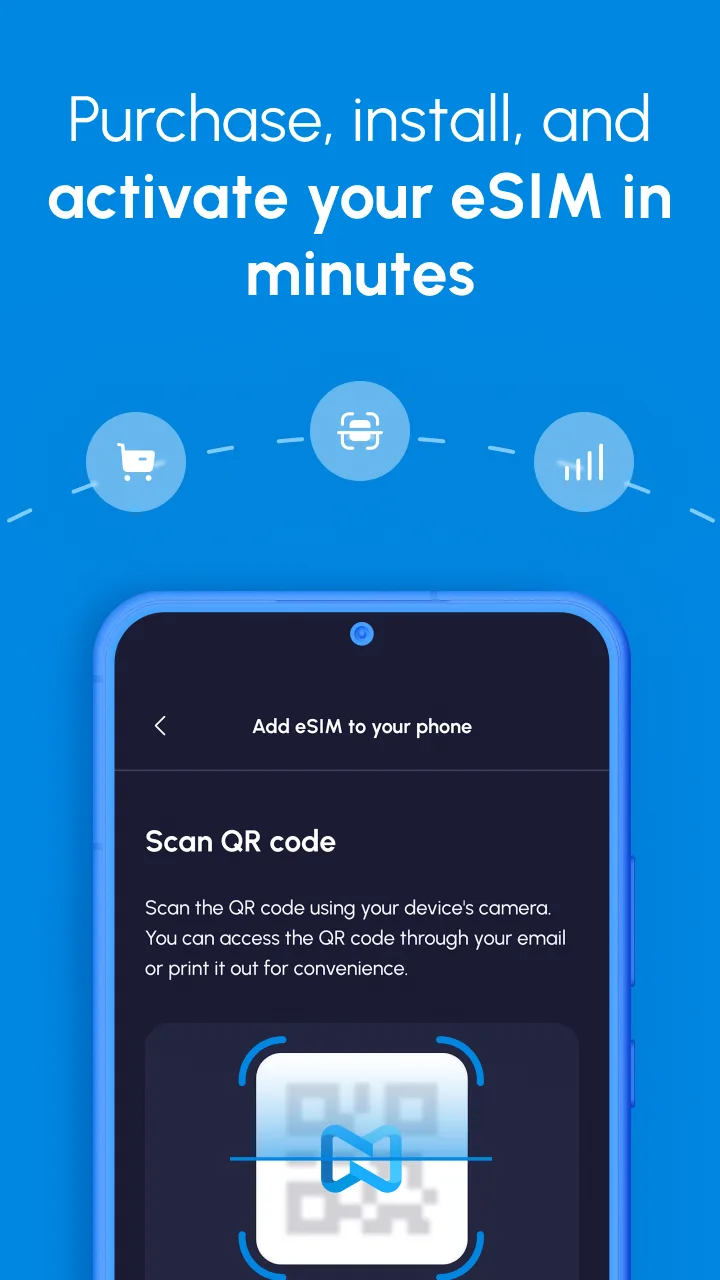
Nomad eSIM launched the idea of pricing eSIM data like local SIMs rather than roaming packages. At $1.10/GB in some Asian markets, it undercuts Airalo by 50–75% on routes where both have coverage. The 4.69-star rating — highest of the three eSIM apps — reflects how frequently the product works as expected.
The free 1GB/3-day trial for new users is the clearest differentiator for someone evaluating their first eSIM. Install the app, activate the trial, use it for a weekend trip, and make your decision without financial commitment. No other major eSIM marketplace offers this.
The 5G network coverage in 40+ destinations including Japan, South Korea, the USA, and Western Europe matters for nomads working from apartments rather than cafés. 75–100 Mbps average speeds on 5G enable video conferencing and file upload without the throttling typical of eSIM data plans.
The caveat on data tethering: it is supported, but VPN usage can degrade connectivity on some Nomad eSIM networks. Test VPN-over-Nomad-eSIM in your specific destination before relying on it for a work session.
What Nomad eSIM does well
- $1.10/GB starting price in Asia — lowest per-GB rate of the three apps
- 4.69-star rating — highest reviewed score in this comparison
- Free 1GB/3-day trial for new users — risk-free onboarding
- 5G in 40+ destinations with genuine 75–100 Mbps speeds
- 200+ country coverage matching Airalo’s breadth
- Data tethering/hotspot supported
Where Nomad eSIM falls short
- Data-only, no SMS/calls — same 2FA limitation as Airalo and Holafly
- VPN usage can degrade performance on some networks
- Support response times slow during peak travel seasons
- No unlimited plans — heavy data users should consider Holafly
- 1M+ installs versus Airalo’s 10M+ means fewer community reports on edge cases
Pricing: From $1.10/GB; free trial available. Install Nomad eSIM and activate the trial before your first international trip.
Holafly - Best for Heavy Data Users
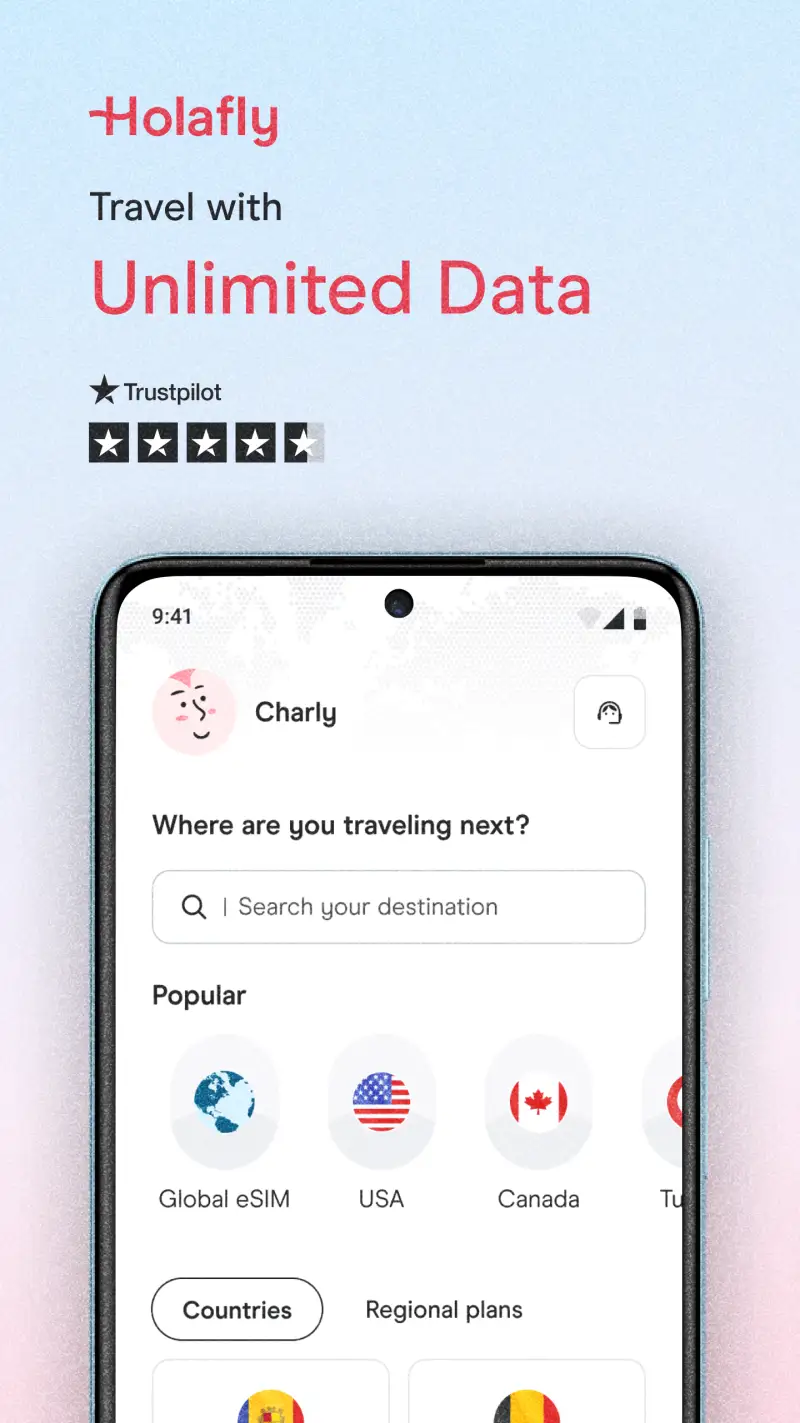
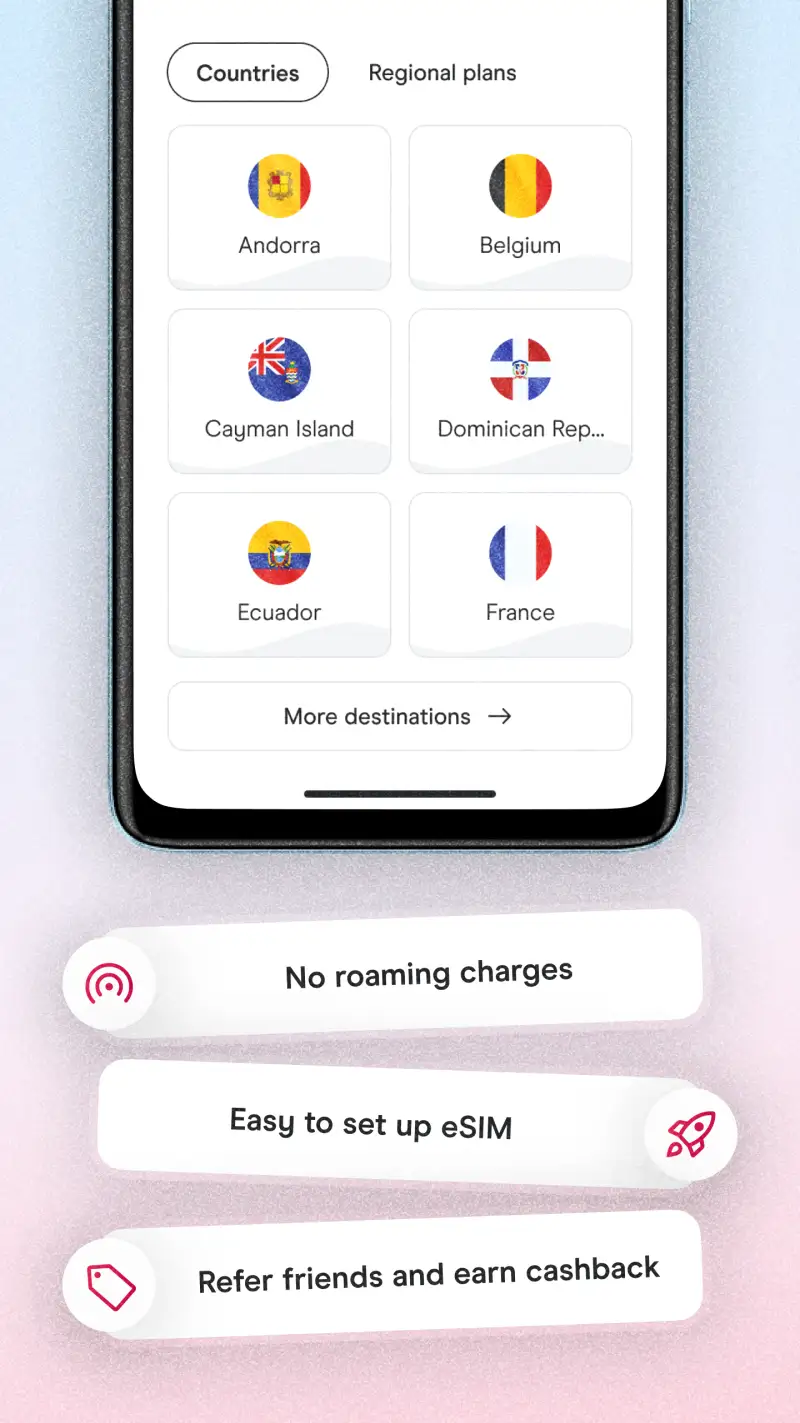
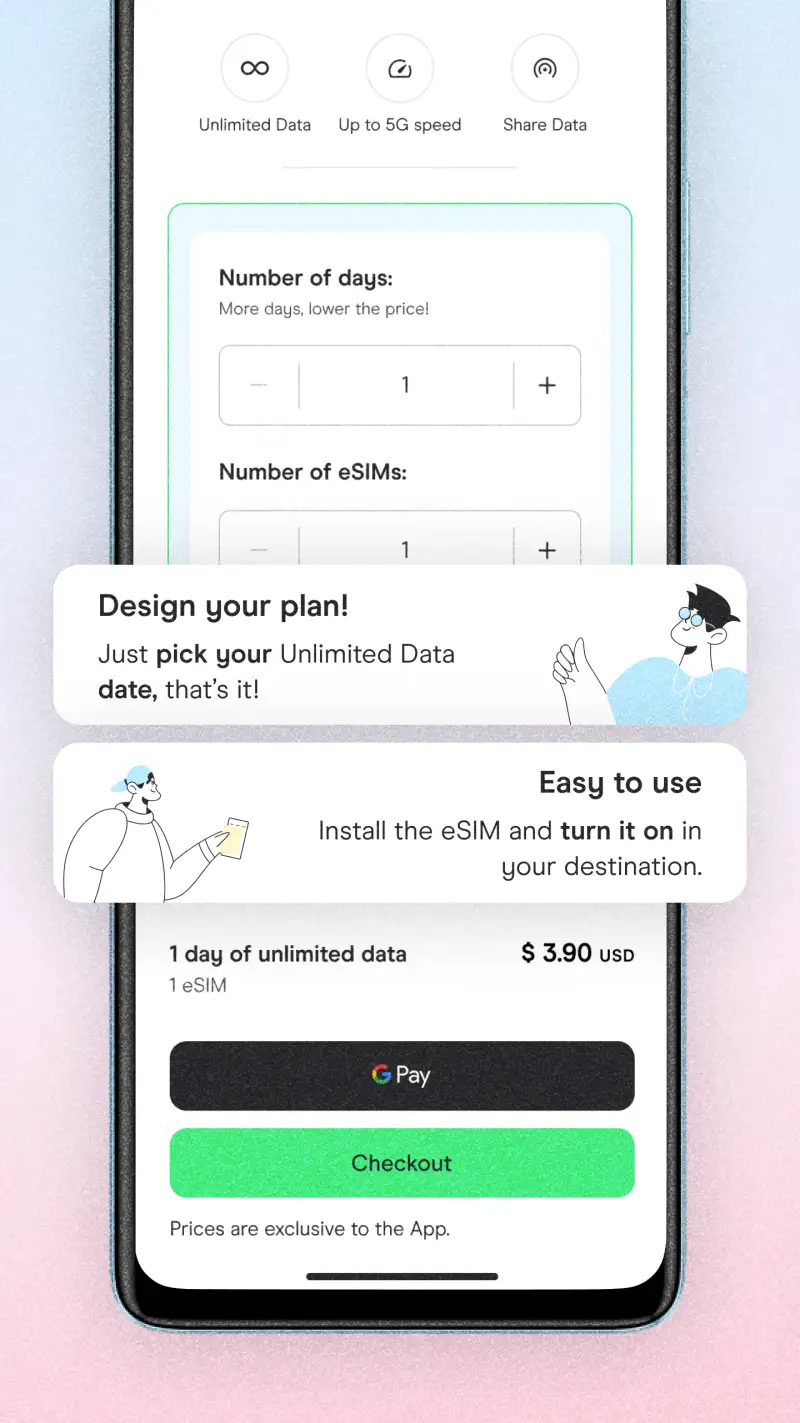
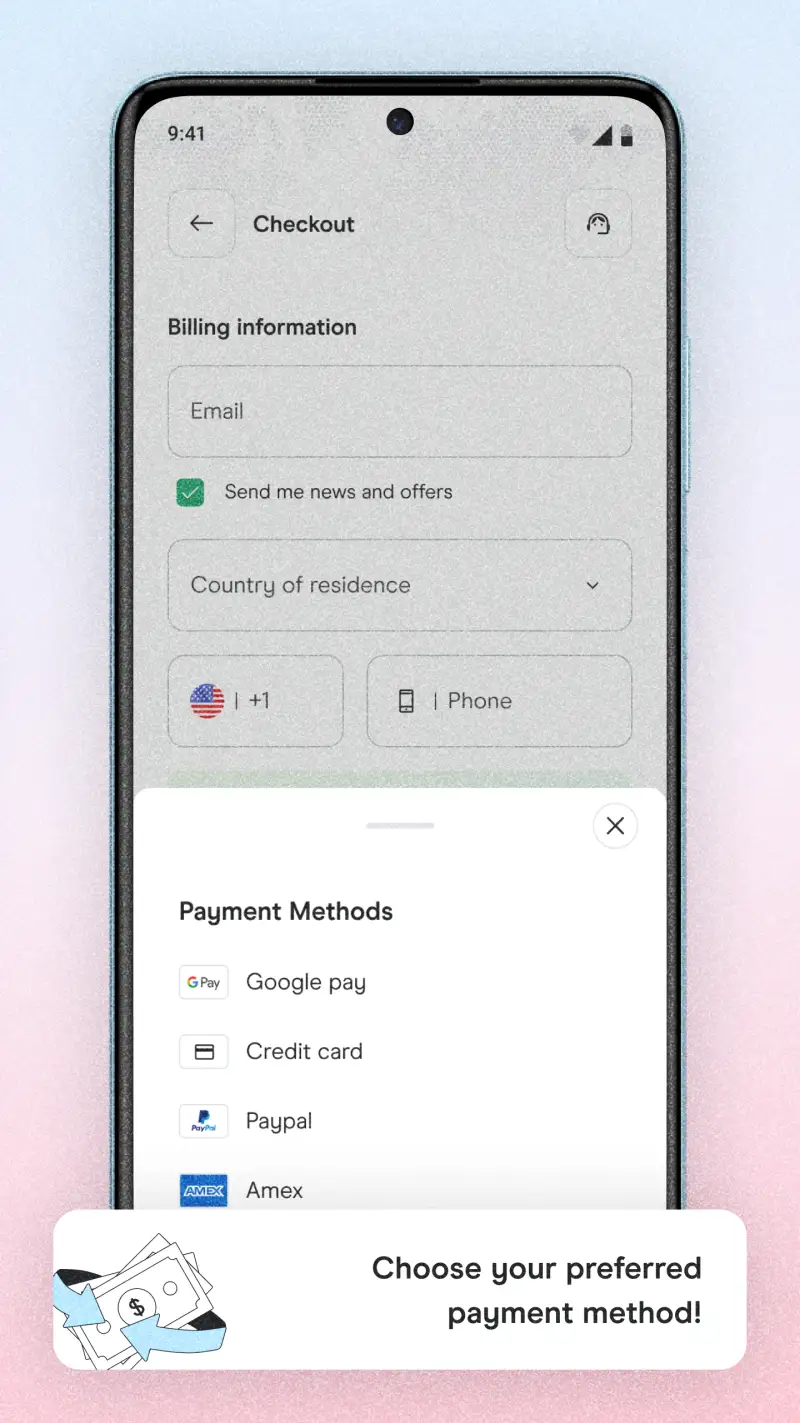
Holafly built its identity around the thing other eSIM providers deliberately avoid: unlimited data. While Airalo and Nomad eSIM sell fixed-data packages, Holafly’s core offer is a monthly plan that removes the mental overhead of monitoring gigabytes. For nomads running video calls from morning standups to client presentations — 6–10 GB/day is realistic — the math eventually favors a flat monthly rate.
The $39.90/month plan includes 25GB. The $64.90/month plan removes the cap. For context: a nomad using Airalo at $5/GB and consuming 40GB in a month would spend $200 — three times the Holafly unlimited cost. The breakeven is roughly 13GB/month for the $64.90 plan.
Holafly’s coverage in Oceania and the Middle East tends to outperform Airalo and Nomad eSIM in those regions, which matters for nomads doing Australia, New Zealand, or UAE segments. Coverage quality in Southeast Asia and Europe is comparable across all three providers.
The limitation to note: “unlimited” has a fair-use policy on the 25GB plan, and some users report speed throttling after sustained high usage. Read the current terms for your specific destination plan before purchasing.
What Holafly does well
- Only major eSIM provider with unlimited data plans as a primary offering
- Predictable monthly cost eliminates data anxiety for heavy users
- Strongest Oceania and Middle East coverage of the three apps
- In-app plan management and usage monitoring
- 200+ destination coverage matching Airalo and Nomad eSIM
Where Holafly falls short
- Significantly more expensive for light to moderate users — no pay-per-GB option
- “Unlimited” fair-use policies vary by destination; read terms carefully
- No phone number — same SMS 2FA limitation as the other two
- 1M+ installs means less community data on edge cases than Airalo
- No free trial — must pay to try
Pricing: $39.90/month (25GB) or $64.90/month (unlimited). Use Holafly if you consume 15+ GB/month consistently.
Wise - Best for Receiving International Payments
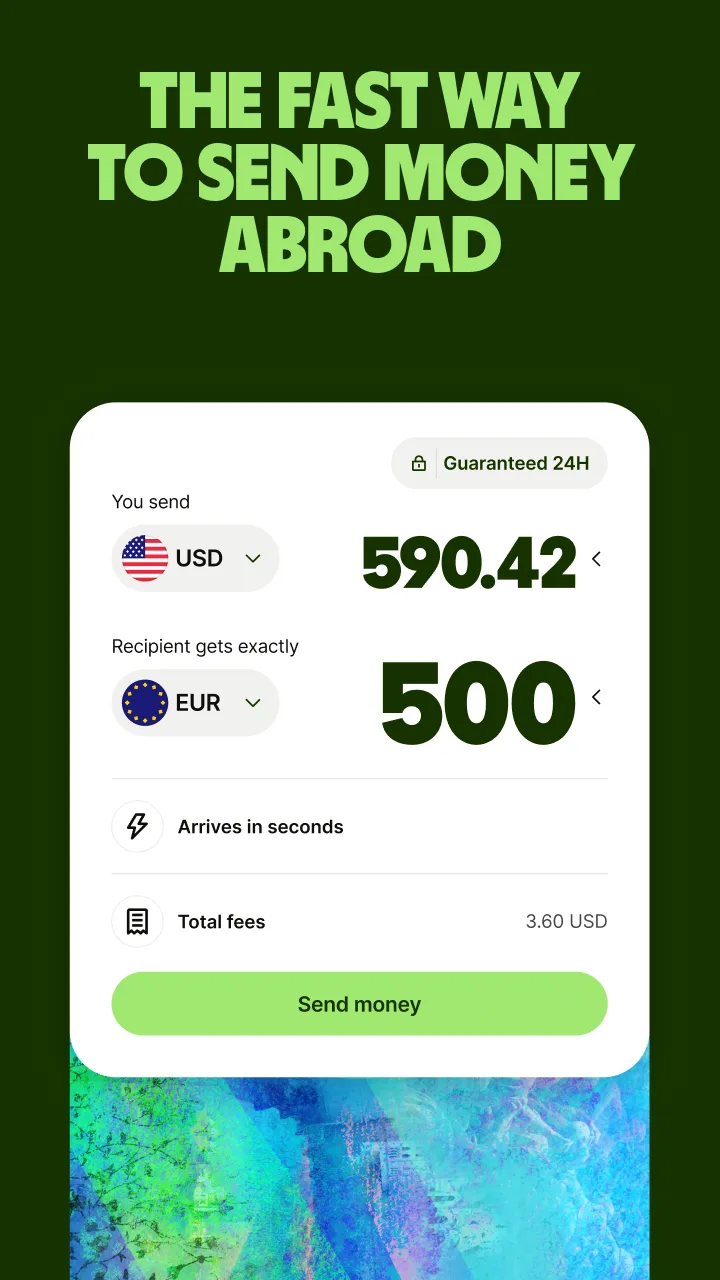
Every freelancer working internationally eventually hits the same friction: a US client wants to pay via ACH bank transfer, a European client expects a SEPA payment, and a UK agency needs to use Faster Payments. Without local banking infrastructure in each currency, you either lose 3–5% in currency conversion on every payment or ask clients to pay via international wire, which costs them $20–45 in fees.
Wise solves this with local account details in 10 currencies. Your Wise account includes a US account number and routing number, a UK sort code and account number, and EU IBAN. Clients pay via their local transfer method — no international wire, no currency conversion fees on their end. Wise converts the received funds to your base currency at the mid-market rate plus a transparent fee from 0.41%. On a $5,000 invoice, that’s roughly $20 in conversion fees versus $150–250 with a traditional bank account.
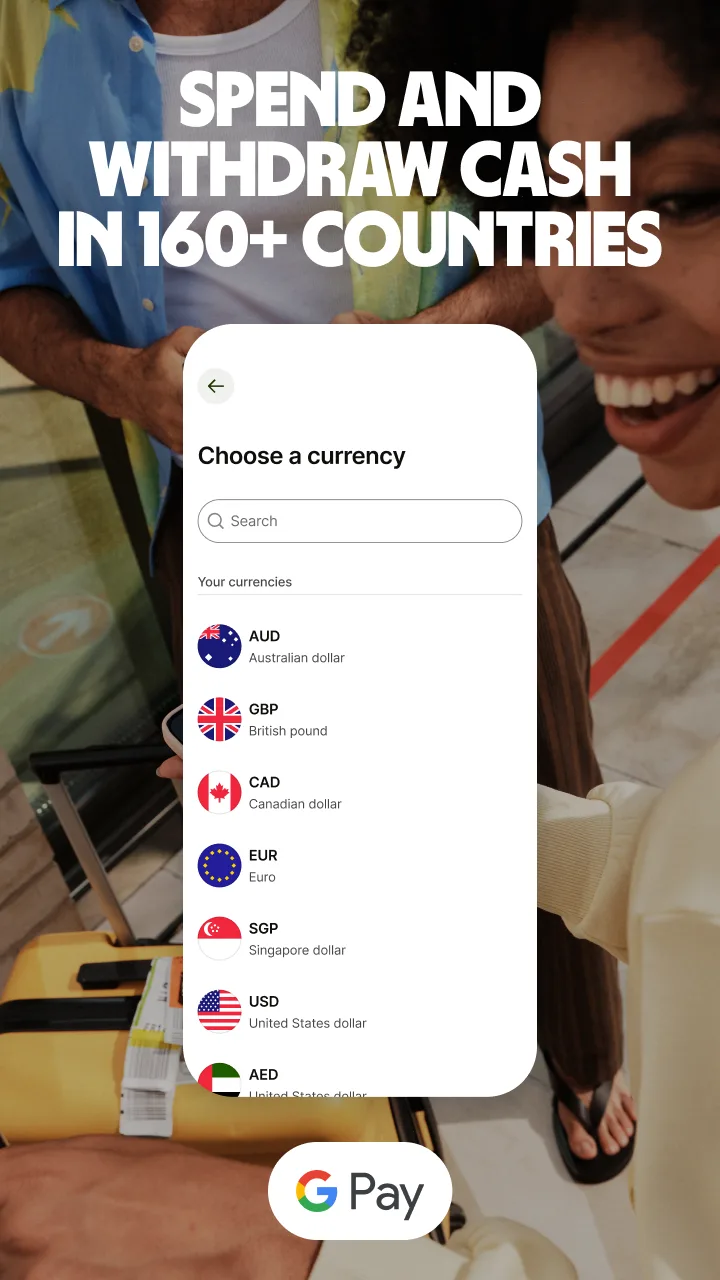
The Wise debit card extends this to daily spending: transactions in any currency convert at the mid-market rate at the moment of purchase. The first $250/month in ATM withdrawals is free; above that, 1.95% + $1.95 per withdrawal. In cash-heavy markets like Vietnam, Cambodia, or Mexico, that free ATM limit runs out quickly — which is where Revolut’s Metal plan fills the gap.
What Wise does well
- Local bank details in 10 currencies — receive USD, EUR, GBP via local transfer, no wire fees
- Mid-market exchange rate with fees disclosed before every transaction
- Multi-currency account: hold and convert 50+ currencies
- 65%+ of transfers arrive in under 20 seconds
- Debit card: spend in 150+ countries at near-market rates
- Virtual card for online purchases before physical card arrives
- Freeze/unfreeze in seconds without calling support
Where Wise falls short
- $250/month free ATM withdrawal limit — insufficient for cash-heavy markets
- Not a full bank: no overdraft, no credit products
- Customer support is chat/email only — slow when urgent (e.g., overseas card block)
- Wise Business setup fee (~$31) required for invoicing and business features
- Identity verification takes 1–3 days — set up before travel
Pricing: Free account; mid-market rates plus 0.41%+ fees; $9 one-time card delivery. Apply for Wise 2 weeks before departure.
Revolut - Best for Daily Spending and ATM Access

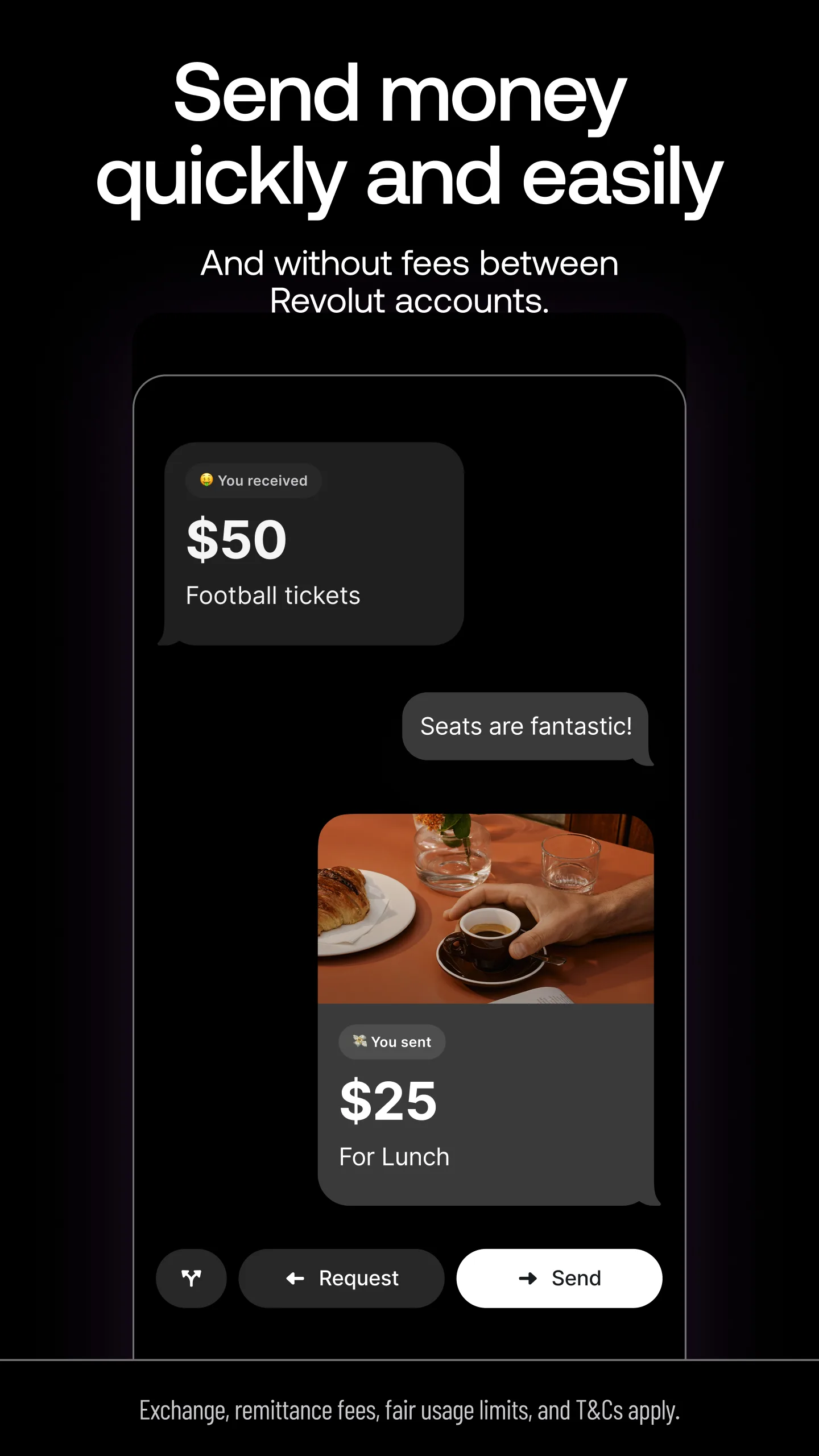
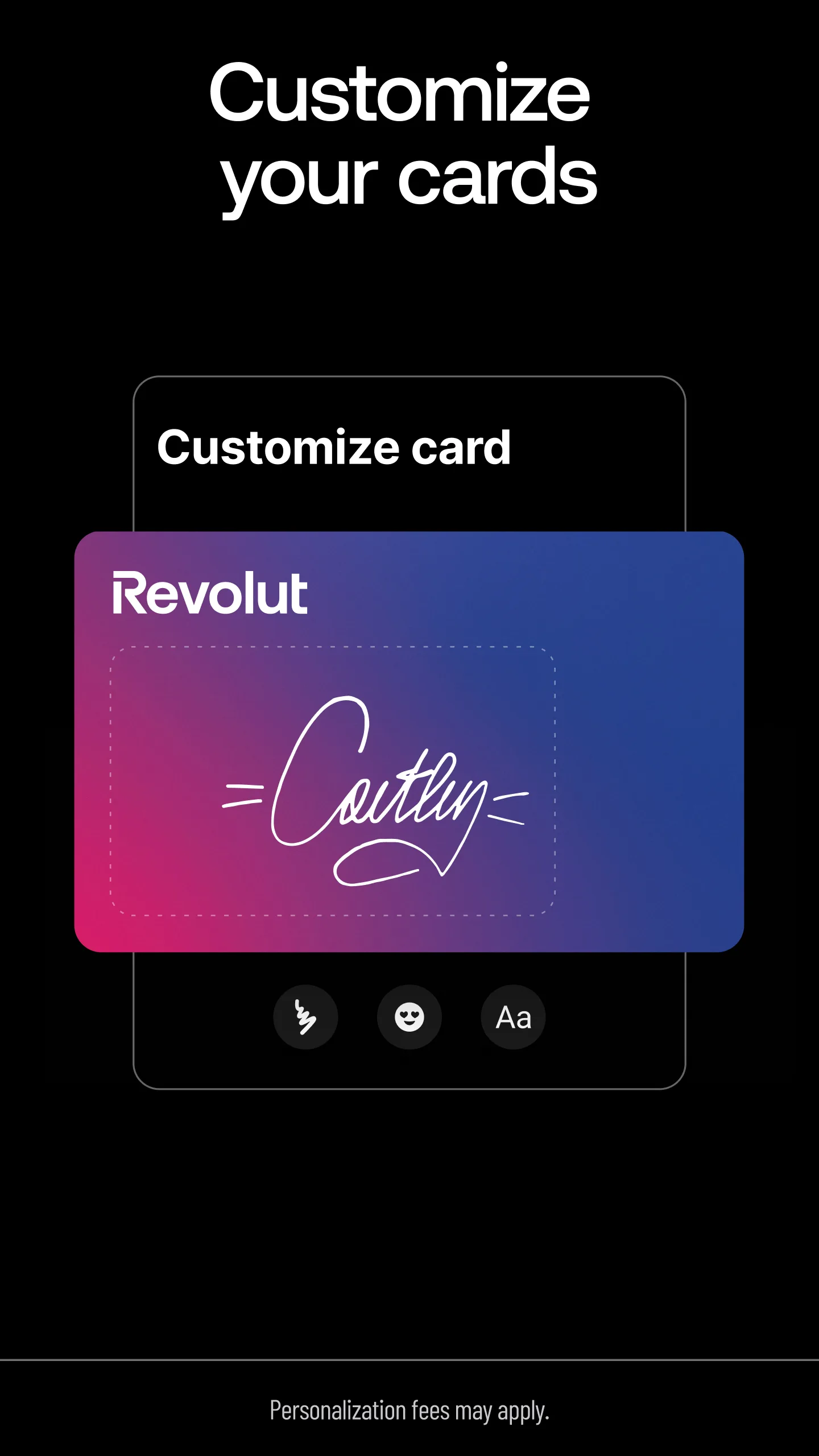
Revolut is Wise’s complement, not its replacement. The two apps serve different jobs: Wise receives payments and converts currencies with minimal fees; Revolut handles daily spending and cash withdrawals at scale.
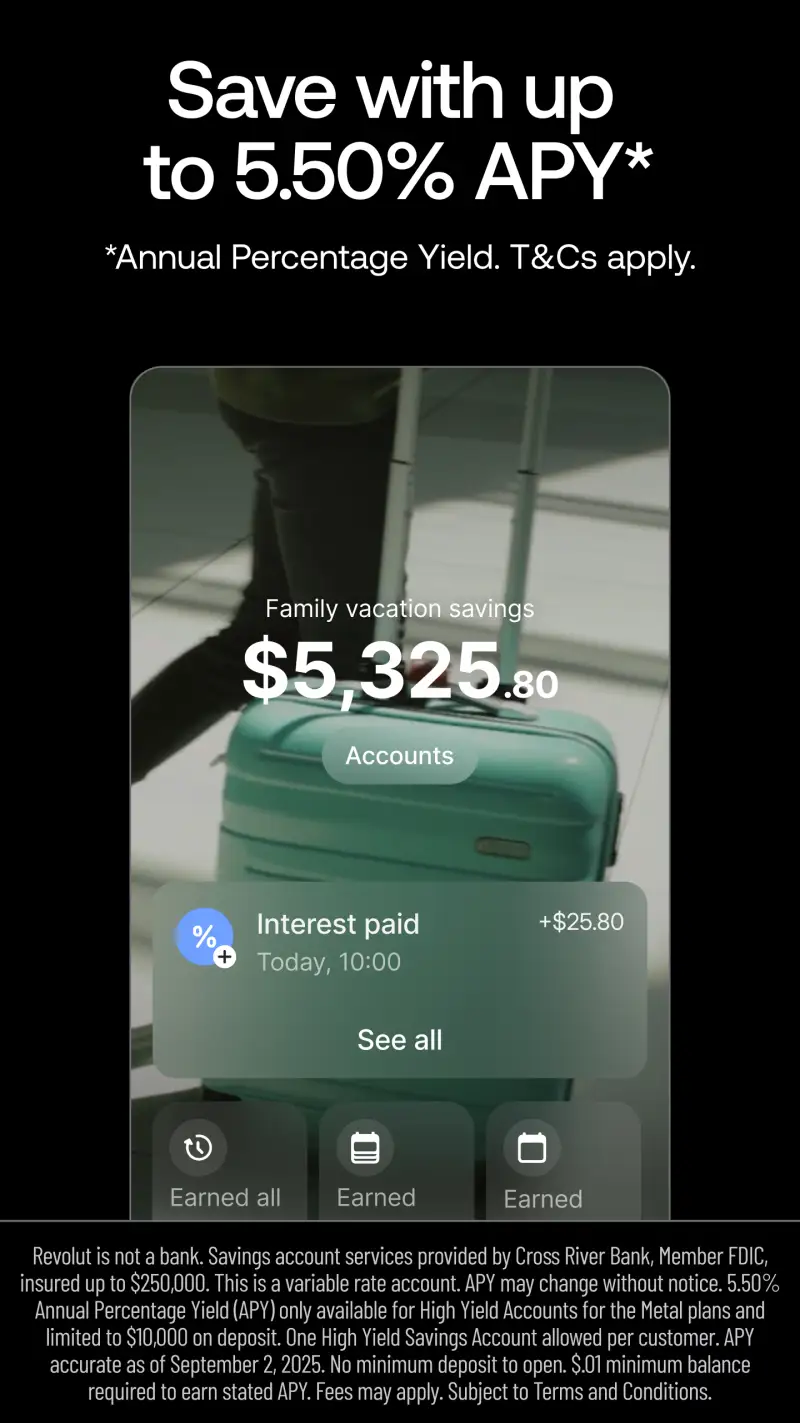
The Metal plan at $16.99/month is the recommendation for nomads who withdraw cash regularly. It provides $1,200/month in fee-free ATM withdrawals, unlimited currency exchange at interbank rate (no monthly cap), travel insurance, and priority customer support. In Vietnam or Indonesia where cash is still required for most transactions, $1,200/month covers a typical nomad’s withdrawal needs. The free Standard plan caps fee-free exchange at $1,000/month and includes no ATM withdrawals without fees — fine for nomads living primarily in card-accepting cities, insufficient for cash markets.
The weekend FX markup is the gotcha that catches Standard plan users. On Saturdays and Sundays, Revolut adds a 1% markup to currency exchanges. At $2,000/month in transactions, that’s $20 in hidden fees per month — just on weekends. Metal plan users pay no weekend markup.
The account freeze risk is worth acknowledging. Revolut’s fraud detection is aggressive and sometimes flags legitimate international transactions. The resolution requires responding to an in-app notification — which you need to receive. Ensure Revolut notifications are enabled and check the app after any transaction that might trigger a review.
What Revolut does well
- Metal: $1,200/month fee-free ATM withdrawals — necessary for cash-heavy markets
- Instant currency exchange at interbank rate during weekday hours
- Virtual single-use cards for online purchases in unfamiliar markets
- In-app spending analytics: see exactly where money is going by category
- 55,000+ in-network ATMs worldwide with no Revolut fee
- Metal: priority customer support — actually responsive for urgent issues
Where Revolut falls short
- Standard plan: 1% weekend FX markup and $1,000/month exchange cap
- Account freezes: aggressive fraud detection, sometimes flags legitimate transactions
- Not a full bank in most countries; funds not FDIC/FCA insured equivalently
- Crypto features on Standard plan are limited; paid plans unlock more
- Standard support (free plan) can take days to respond
Pricing: Standard free; Plus $3.99/month; Premium $9.99/month; Metal $16.99/month. The nomad recommendation: Wise + Revolut Metal if you’re in cash markets; Wise + Revolut Standard if you’re primarily card-based.
Proton VPN - Best VPN for Most Nomads
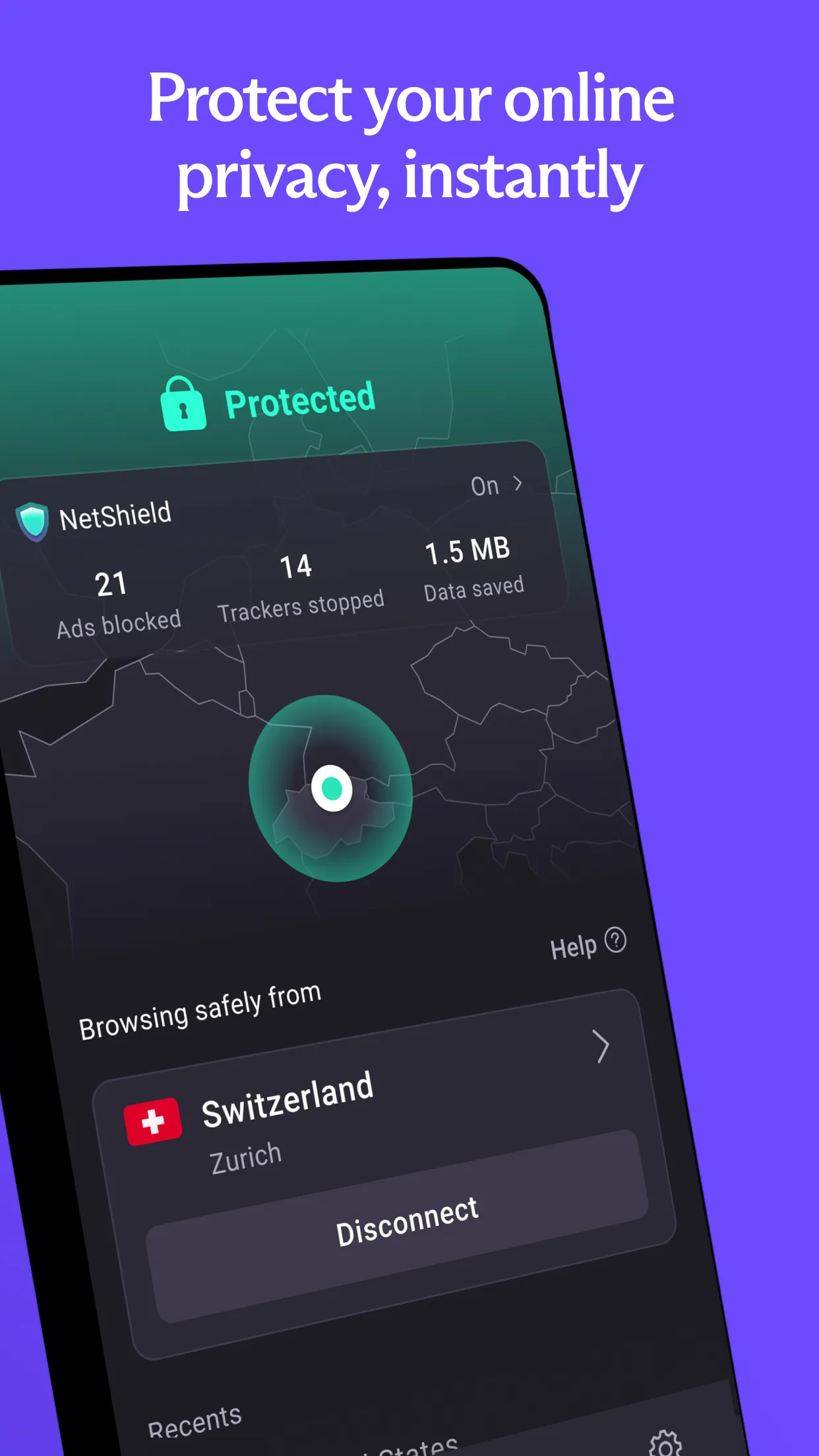
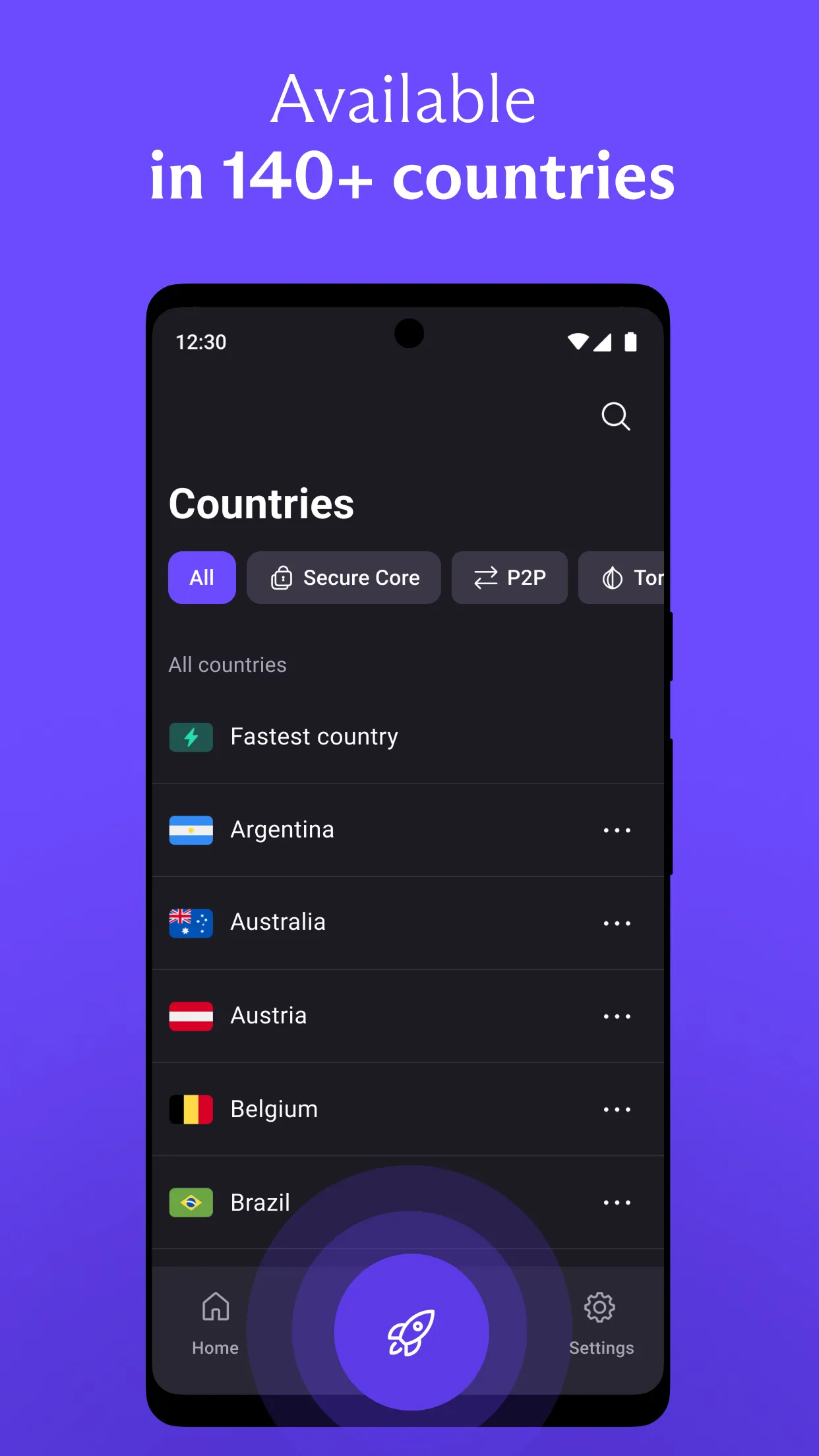
Proton VPN is the default recommendation for nomads who need a VPN that works in censored countries, protects café and coworking WiFi, and optionally comes free. Built by the CERN-originated team behind ProtonMail and Proton Drive, it is independently audited, open-source on Android, and holds a strict no-logs policy.
The free tier is genuinely usable — no data limits, no speed throttling on free servers, no ads. Free servers cover 10 countries including Switzerland, Canada, Norway, and Singapore. For occasional VPN use on hotel WiFi, the free tier covers the need. VPN Plus at $4.99/month (annual billing) unlocks 8,700+ servers in 110+ countries and streaming-optimized servers.
The Stealth protocol is the feature that differentiates Proton from most VPNs for high-risk destinations. Standard VPN traffic is detectable by deep packet inspection (DPI). Stealth obfuscates the VPN traffic to look like regular HTTPS, bypassing blocks in the UAE, China, and Turkey. For nomads who travel through these countries, Stealth mode is the difference between the VPN working and not.
The kill switch ensures that if the VPN connection drops on an unstable café connection, traffic stops rather than leaking unencrypted. Split tunneling lets you route banking apps directly (avoiding geo-blocks that some banks apply to VPN traffic) while keeping everything else encrypted.
What Proton VPN does well
- Free tier: no data cap, no speed throttle, no ads — unique in this category
- Stealth protocol bypasses deep packet inspection in UAE, China, Turkey
- Kill switch and split tunneling included at all paid tiers
- No-logs policy independently audited; open-source Android app
- VPN Plus: 8,700+ servers in 110+ countries, 10 device connections
- Proton Unlimited bundles VPN, Mail, Drive, Calendar, Pass for $9.99/month
- PCMag “Best Free VPN” — not a marketing claim, externally verified
Where Proton VPN falls short
- Free plan restricted to 10 countries — streaming unreliable on free tier
- Paid plan price-per-month higher than Mullvad for equivalent privacy
- Speed on long-distance connections (e.g., Southeast Asia to European servers) lags NordVPN
- No P2P/torrenting on free plan
Pricing: Free (10 countries); VPN Plus $4.99/month (annual); Proton Unlimited $9.99/month. Install Proton VPN and use the free tier before committing to a paid plan.
Mullvad - Best VPN for Maximum Privacy
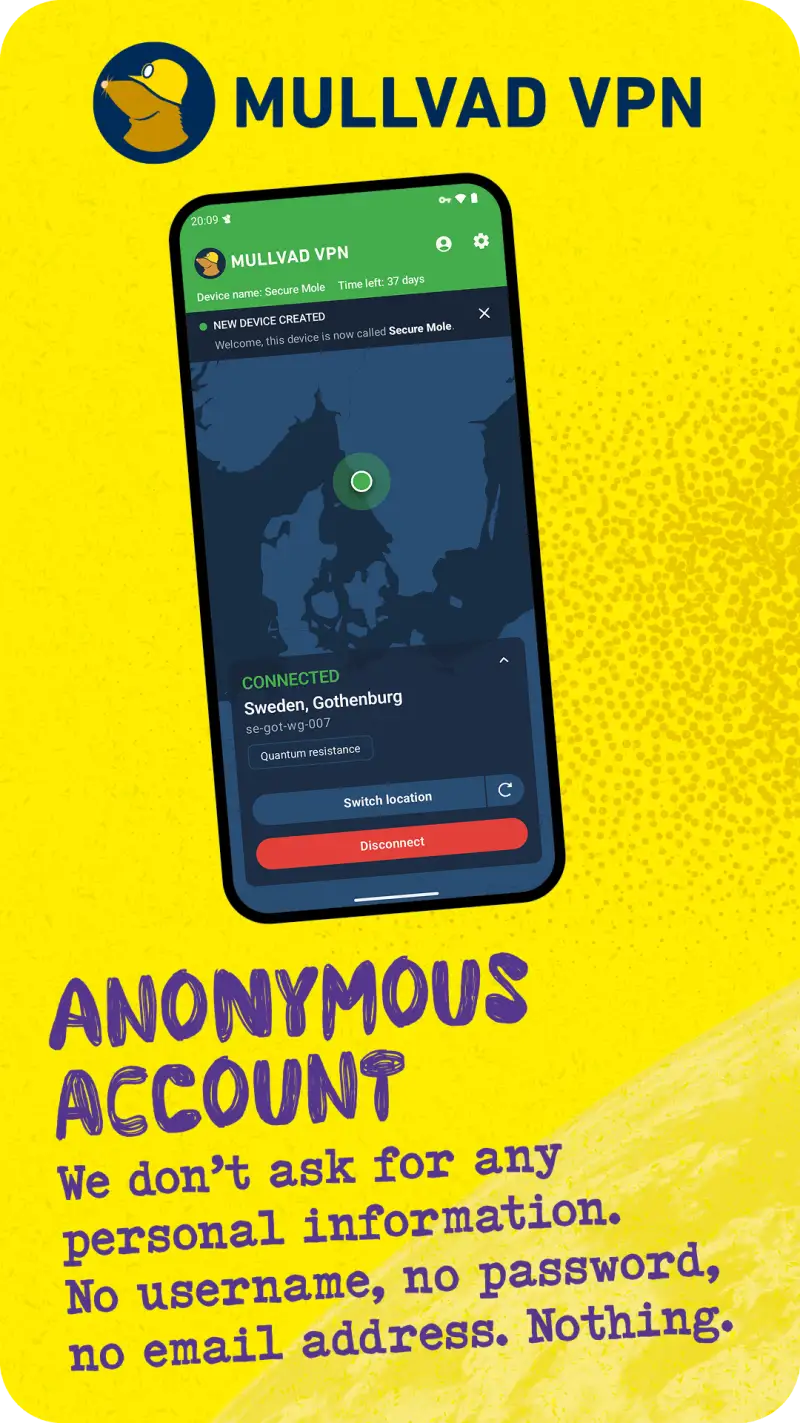

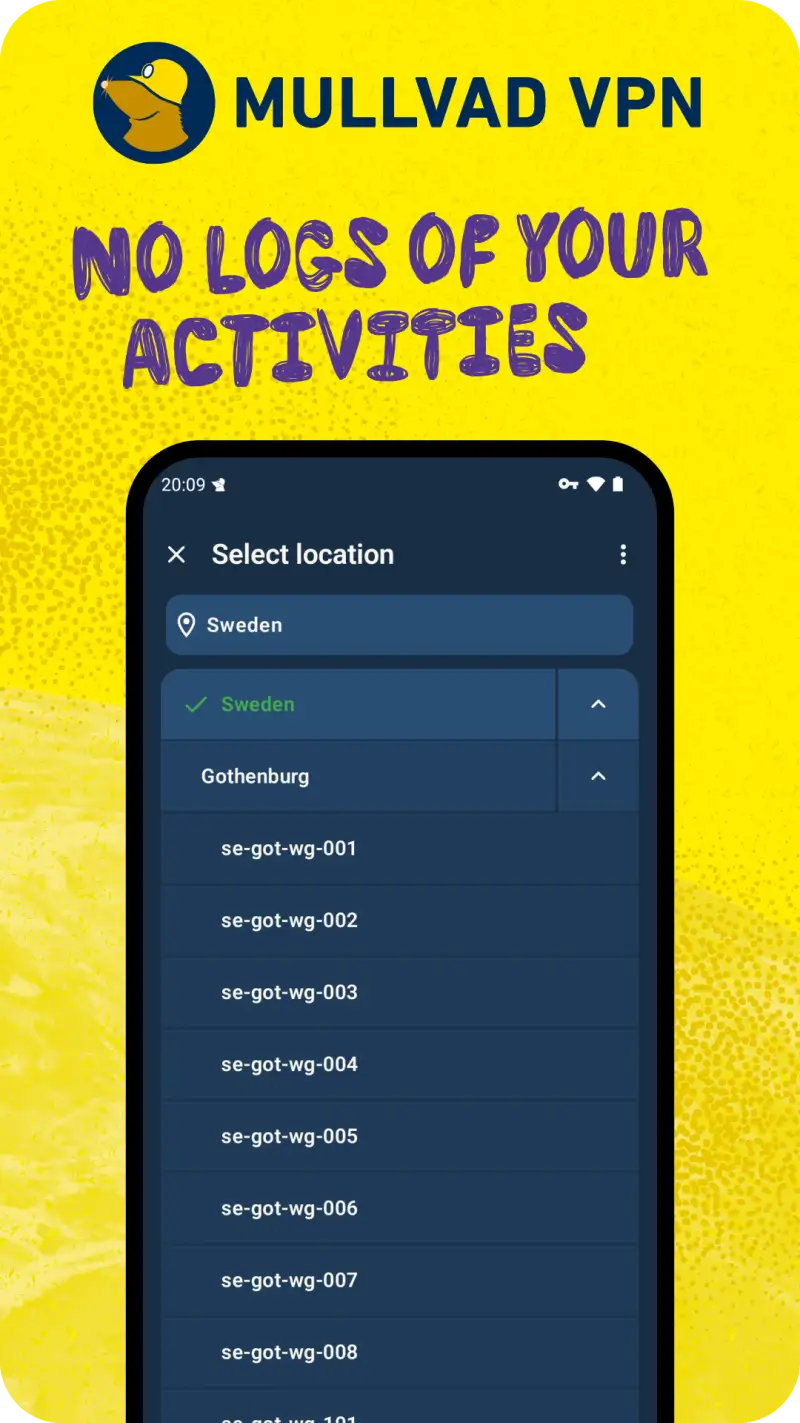
Mullvad is the answer to a different question than Proton VPN. Not “which VPN is most useful for most nomads?” but “which VPN exposes the least identifying information?” The answer is Mullvad, by design.
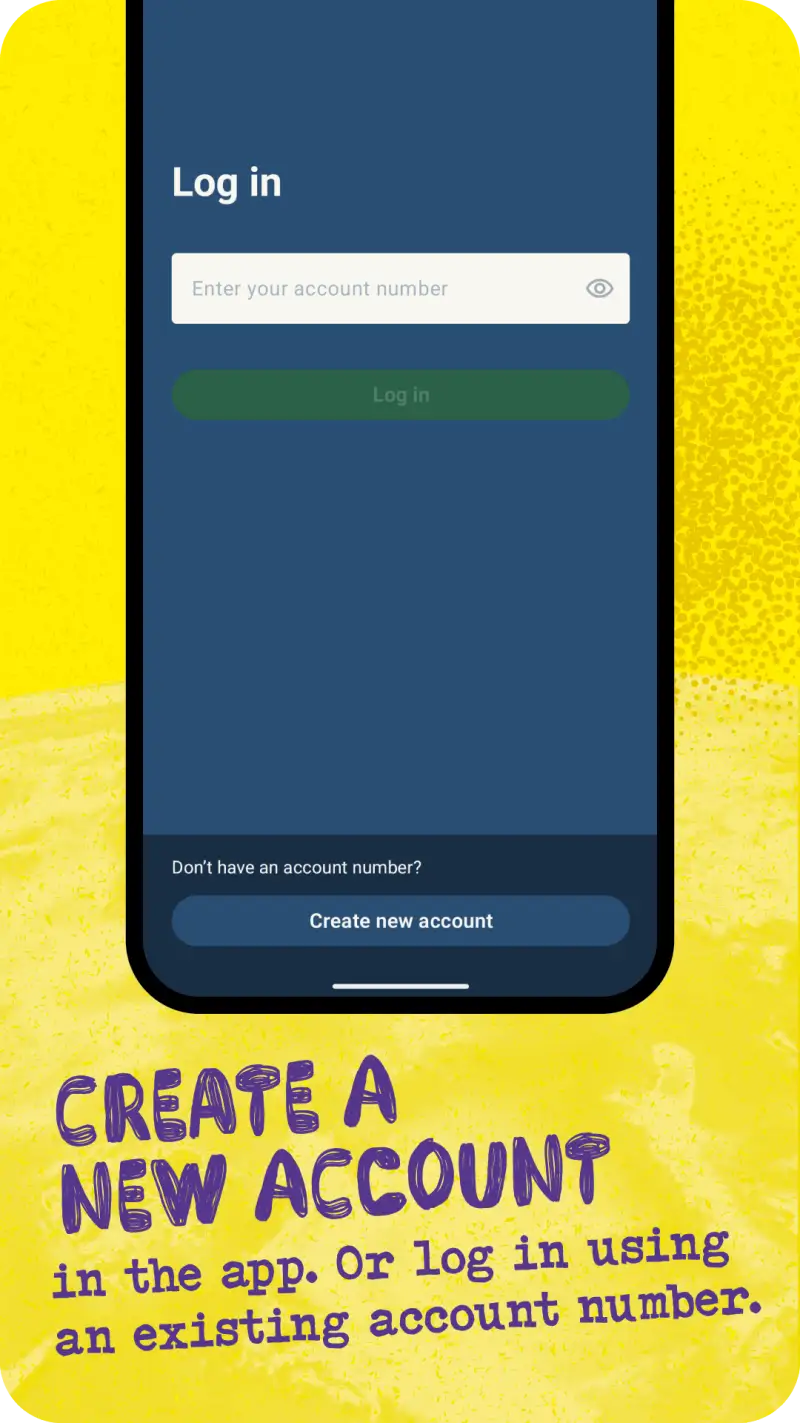
Sign up without an email address. Without a name. You receive a 16-digit random account number. Pay with Bitcoin, Monero, or cash by mail if you prefer. This model is not for everyone — there is no account recovery if you lose the code, and the design intentionally provides nothing to hand over to a data request. For nomads who travel to high-surveillance environments or work with sensitive client data, this architecture matters.
The flat €5/month pricing (no discounts, no annual plans) is predictable and honest. One price. No upsells. The quantum-resistant tunnel implementation is ahead of most VPN providers — relevant for threat models that include nation-state-level interception.
The practical limitations: Mullvad has fewer servers (~800) than Proton VPN’s 8,700+, and the streaming optimization is limited. It is the privacy-purist choice, not the casual-nomad-on-Netflix choice. For most nomads, Proton VPN is the right call. For nomads with specific threat models, Mullvad is worth the tradeoffs.
What Mullvad does well
- Zero personal information required: no email, no name, just a random account number
- Quantum-resistant VPN tunnels — ahead of most competitors on forward secrecy
- Flat €5/month pricing — no tiers, no upsells, predictable cost
- No-logs policy independently audited
- Payment in cash, Bitcoin, or Monero accepted
- Up to 5 simultaneous device connections
Where Mullvad falls short
- No free tier — must pay to evaluate
- ~800 servers versus Proton VPN’s 8,700+ — fewer location options
- Limited streaming optimization — not the right tool for geo-unlocking Netflix
- WireGuard-only on Android; some hotel/airport networks block WireGuard protocol
- No account recovery if you lose the 16-digit code
Pricing: €5/month flat, no discounts. Use Mullvad if your threat model requires no identifying information linked to your VPN account.
Bitwarden - Best Password Manager
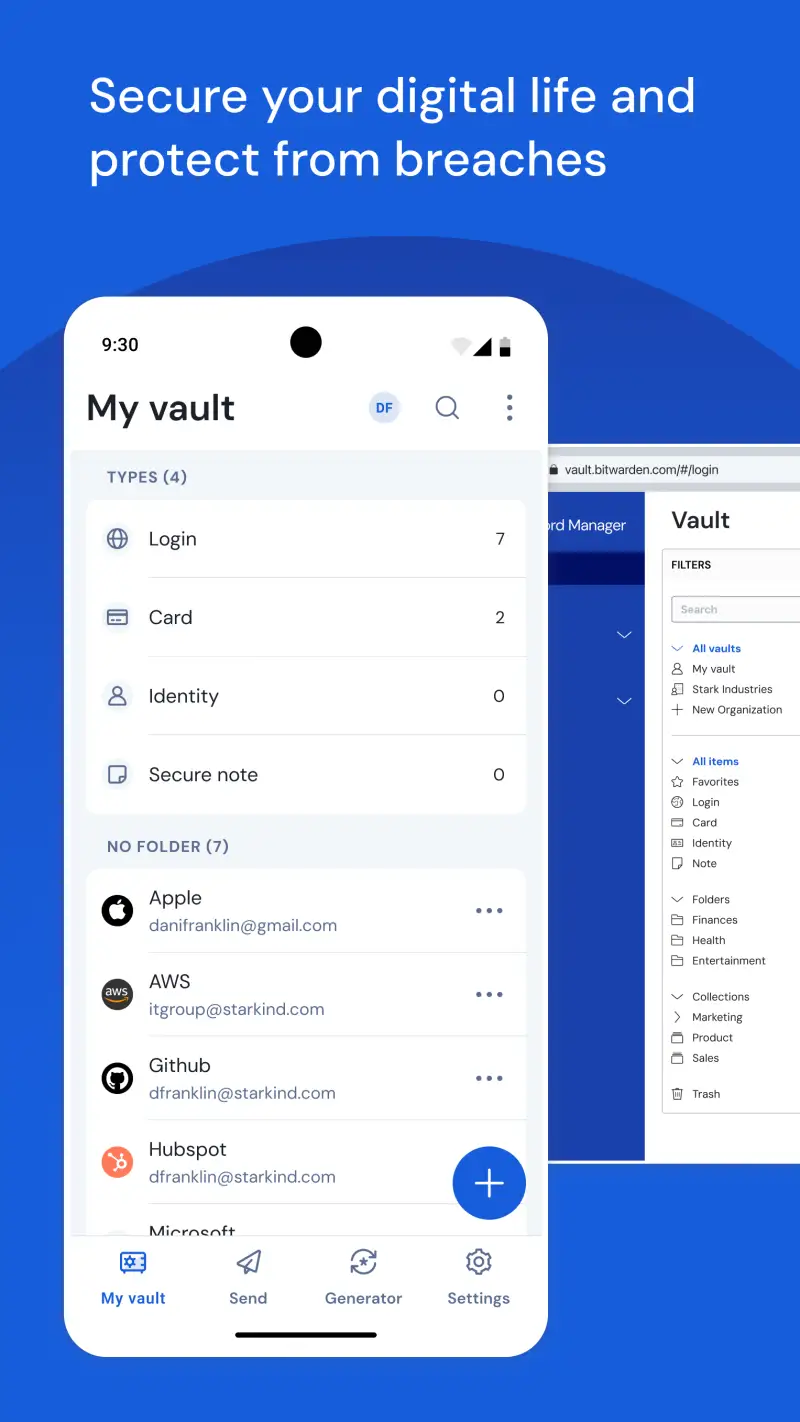
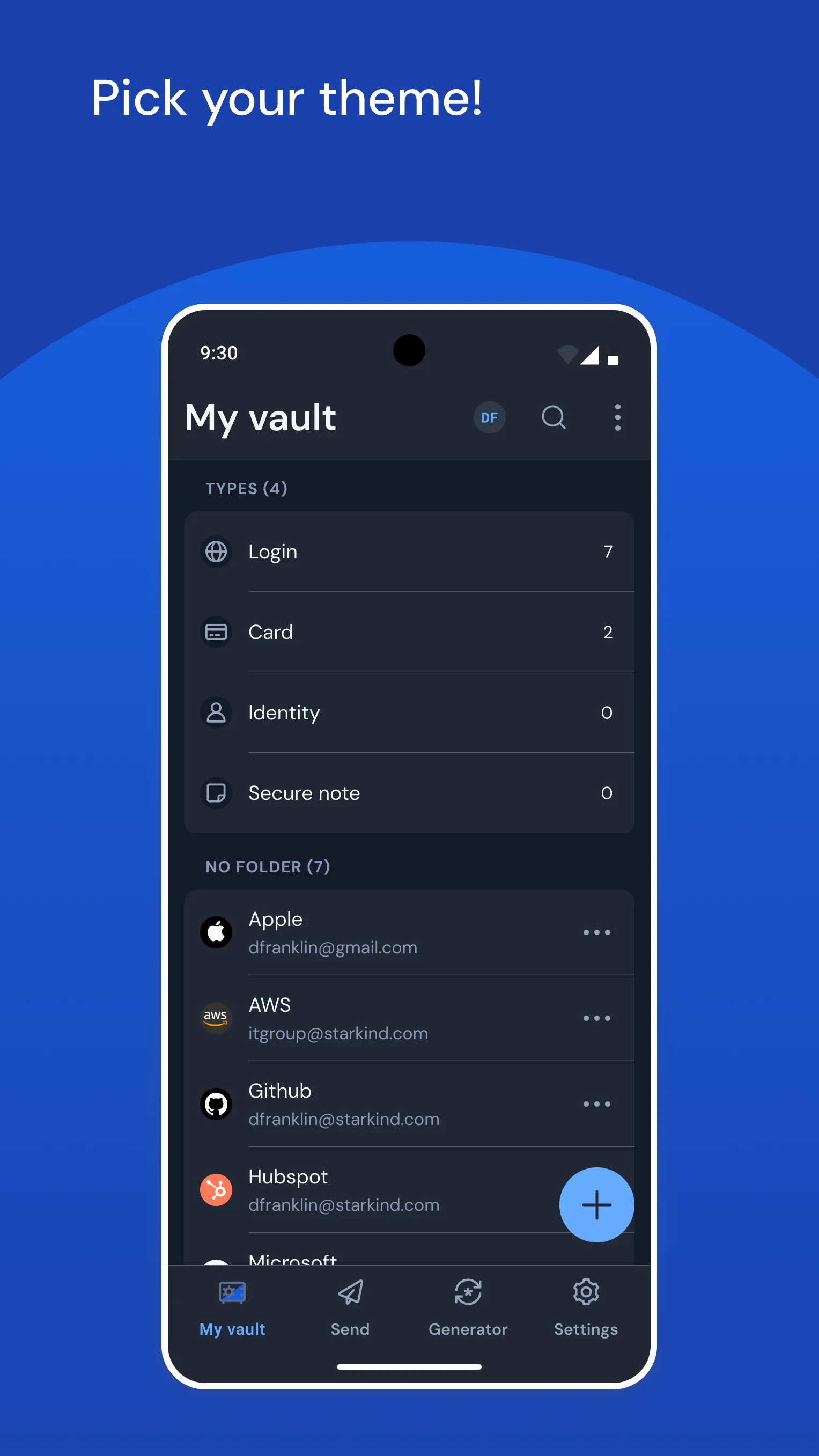
A nomad has 50–80 login credentials across services that span 15+ countries: banking apps, VPN accounts, client portals, cloud storage, insurance platforms, coworking services, visa systems. On a single-location life, password reuse is a bad habit. On a nomad life where you’re logging in from new devices, public computers, and borrowed phones in unfamiliar countries, a single reused password is an incident waiting to happen.
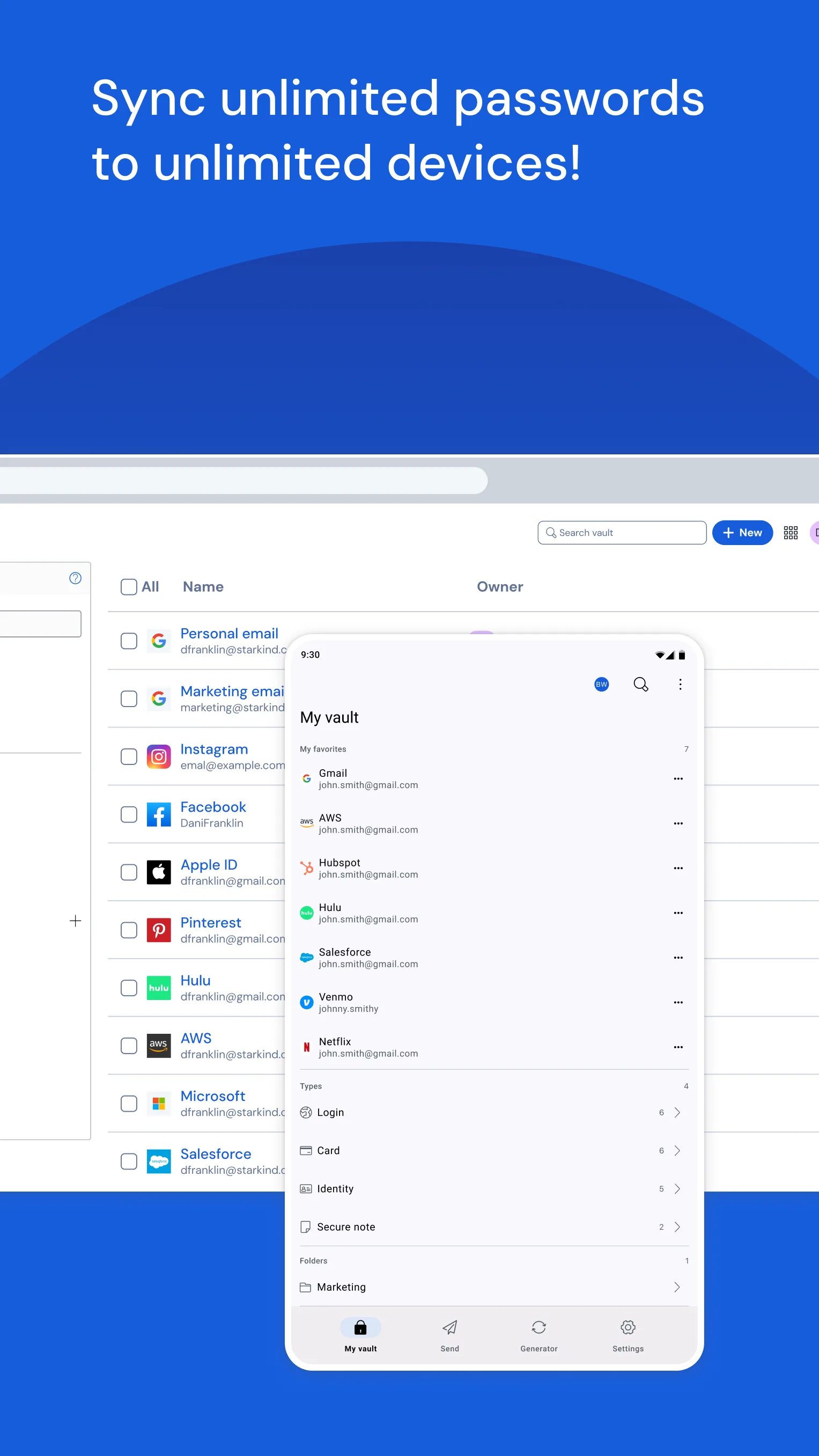
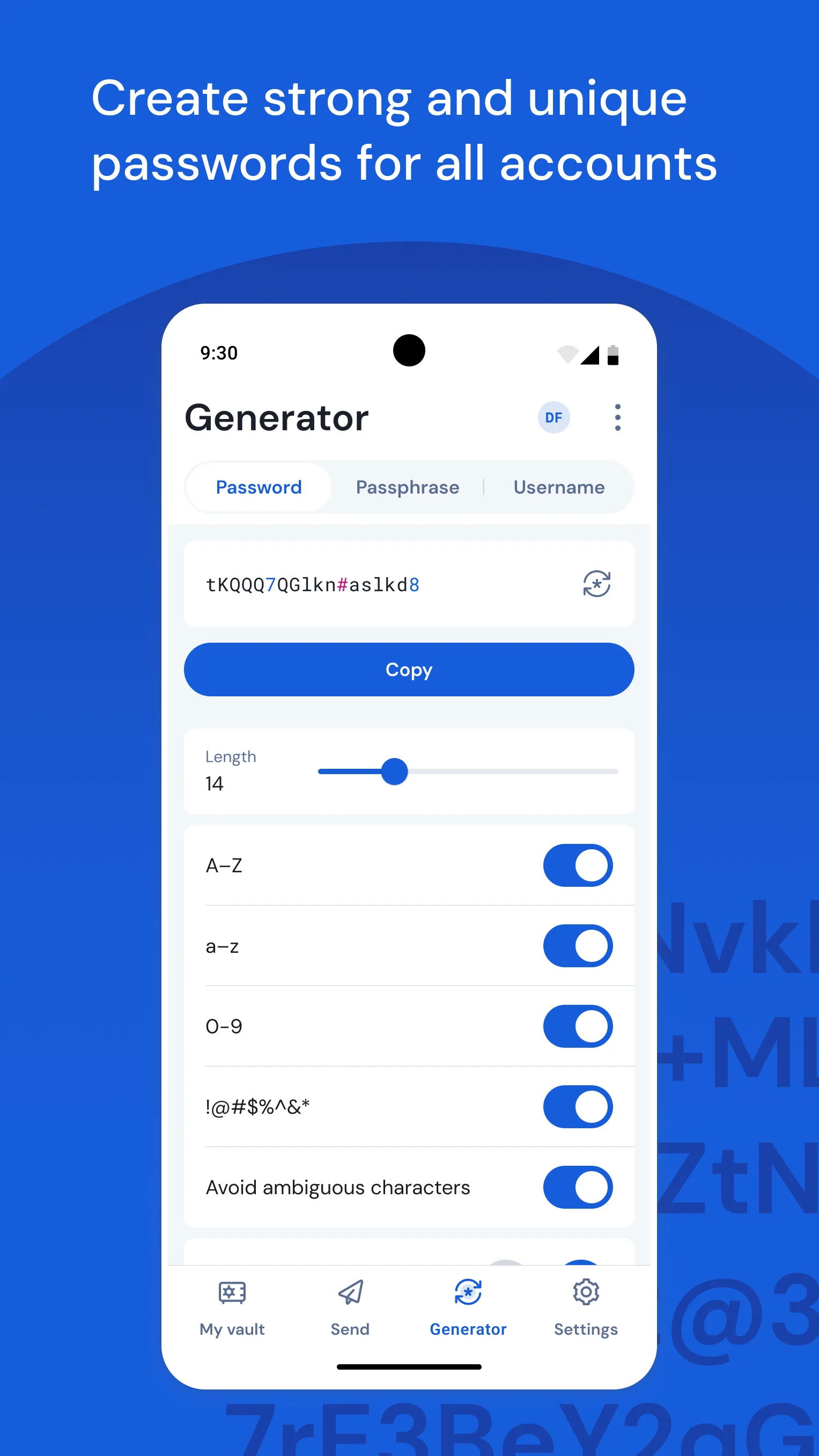
Bitwarden gives every account a unique, randomized 40-character password stored in an end-to-end encrypted vault synced across every device. The free plan is unlimited — unlimited passwords, unlimited devices, unlimited sync. There is no reason to use a weaker option on principle.
The Premium plan at $10/year ($0.83/month) adds breach monitoring (HaveIBeenPwned integration), encrypted file attachments, and TOTP authenticator codes within the vault. That TOTP feature is directly relevant to the SMS 2FA problem: migrate critical accounts from SMS to Bitwarden’s TOTP authenticator, and you receive 2FA codes on any device rather than only the SIM-bearing phone.
The open-source architecture is worth noting beyond the privacy signal. Every cryptographic claim Bitwarden makes — zero-knowledge encryption, AES-256, PBKDF2 key derivation — can be verified by reading the code on GitHub. For nomads making security decisions, “trust but verify” requires code that is verifiable.
What Bitwarden does well
- Free unlimited plan: unlimited passwords, unlimited devices, unlimited sync
- End-to-end encrypted vault — Bitwarden never sees your credentials
- Offline vault access: all passwords accessible without internet
- Android auto-fill integration — works with modern Android autofill API
- Premium TOTP codes: replace SMS 2FA with in-app authenticator codes ($10/year)
- Open-source: entire codebase independently auditable on GitHub
- Passkey support: store and sync passkeys across devices
Where Bitwarden falls short
- UI less polished than 1Password or Dashlane — functional but not the most refined
- Emergency access (trusted contact recovery) requires Premium
- TOTP authentication codes require Premium — the most useful upgrade path
- Some older Android apps require the Accessibility Service auto-fill, which can conflict with security tools
Pricing: Free (unlimited); Premium $10/year (TOTP, breach monitoring, file attachments). Install Bitwarden today and migrate all passwords before your next trip.
The Complete Nomad Stack
Building this infrastructure costs roughly $40–70/month depending on which tiers you choose.
Connectivity: Airalo or Nomad eSIM for multi-region coverage ($20–50/month depending on data use); Holafly unlimited if you consume 15+ GB/month ($65/month).
Banking: Wise personal (free) for receiving client payments. Revolut Metal ($17/month) for daily spending and cash withdrawals in cash-heavy markets. Use the Standard plan if you’re primarily in card-accepting destinations.
Security: Proton VPN Plus ($5/month) covers most nomads. Mullvad (€5/month) for maximum-privacy requirements. Bitwarden Premium ($0.83/month) for password management and 2FA.
The one thing to do before every trip: Enable Bitwarden TOTP for your banking apps and Wise account. Then keep a home SIM active in your secondary SIM slot for any service that still requires SMS 2FA. The SMS problem is the most common cause of being locked out of critical accounts abroad — it is entirely preventable.
Tested April 2026. Apps verified against live Google Play listings. Pricing and features subject to change.