Garmin Connect’s Body Battery score and HRV Status are free with a compatible watch. TrainingPeaks charges $19.99 per month for the PMC chart. Runna delivers adaptive marathon plans at roughly €79.99 per year. Knowing which of these three you actually need - and whether Strava Premium belongs in the same stack - is what separates a well-structured training year from an expensive collection of apps you open once a week.
After testing these platforms across two full marathon training blocks on Pixel 8 and Samsung Galaxy S24 running Android 15, I found clear differences in what each tool does well and where each one falls short. This guide covers four apps for runners logging 40-80 km per week, tracking VO2max trends, and preparing to chase a personal record at half-marathon or marathon distance.
Who this is for: Runners with 2+ years of consistent training, following structured plans with differentiated intensity (Zone 2 base, lactate threshold intervals, long runs), who understand heart rate zones and want Training Load visibility. If you are still building your base, the recreational runners guide covers your current stage more accurately.


What Serious Runners Need That Recreational Apps Don't Provide
At 40-80 km per week with structured intensity, the gap between recreational and serious training tools becomes concrete fast. Three specific limitations appear in apps designed for general runners.
Training Load Visibility
Strava’s free tier shows pace and elevation. It does not calculate Training Stress Score, Chronic Training Load, or Acute Training Load - the three numbers that separate intuition from objective fatigue management. Research from RunnerConnect suggests roughly 67% of runners transitioning to structured marathon training report inconsistent load management in their first 12 weeks, typically because they have no tool to see cumulative stress charted over time. Running without that data means guessing at recovery needs, which is where overuse injuries accumulate.
Adaptive Plan Recalculation
Generic training plan PDFs do not know that you missed a Tuesday interval session due to illness. Serious coaching apps - specifically Runna - recalculate the remaining plan when a session is skipped, redistributing load rather than simply appending the missed workout. That distinction matters most in weeks 8-14 of a marathon block, when the accumulated training stress is high enough that a poorly managed missed session can either generate unnecessary fatigue or leave a fitness gap before taper.
HRV-Based Recovery Monitoring
Heart rate variability monitoring detects overreaching 48 hours before subjective fatigue appears in most runners. Garmin Connect’s HRV Status tracks your personal baseline over rolling 5-week windows; a reading below your established range typically warrants modifying the upcoming session intensity before you consciously feel the need. Without daily HRV tracking, the only feedback loop is how your legs feel standing up in the morning - a notoriously unreliable signal at high training volumes.
Race Predictor Accuracy
Runna’s Race Predictor uses your actual VO2max estimate and recent training data to project finish times across 5K, 10K, half-marathon, and marathon distances. This is meaningfully different from pace calculators that use a single historical race result. Watching a projected half-marathon time move from 1:52 to 1:44 over 12 weeks of consistent training converts abstract periodization theory into motivation with a number attached.
Garmin Connect - Best for Data-Driven Training Analytics
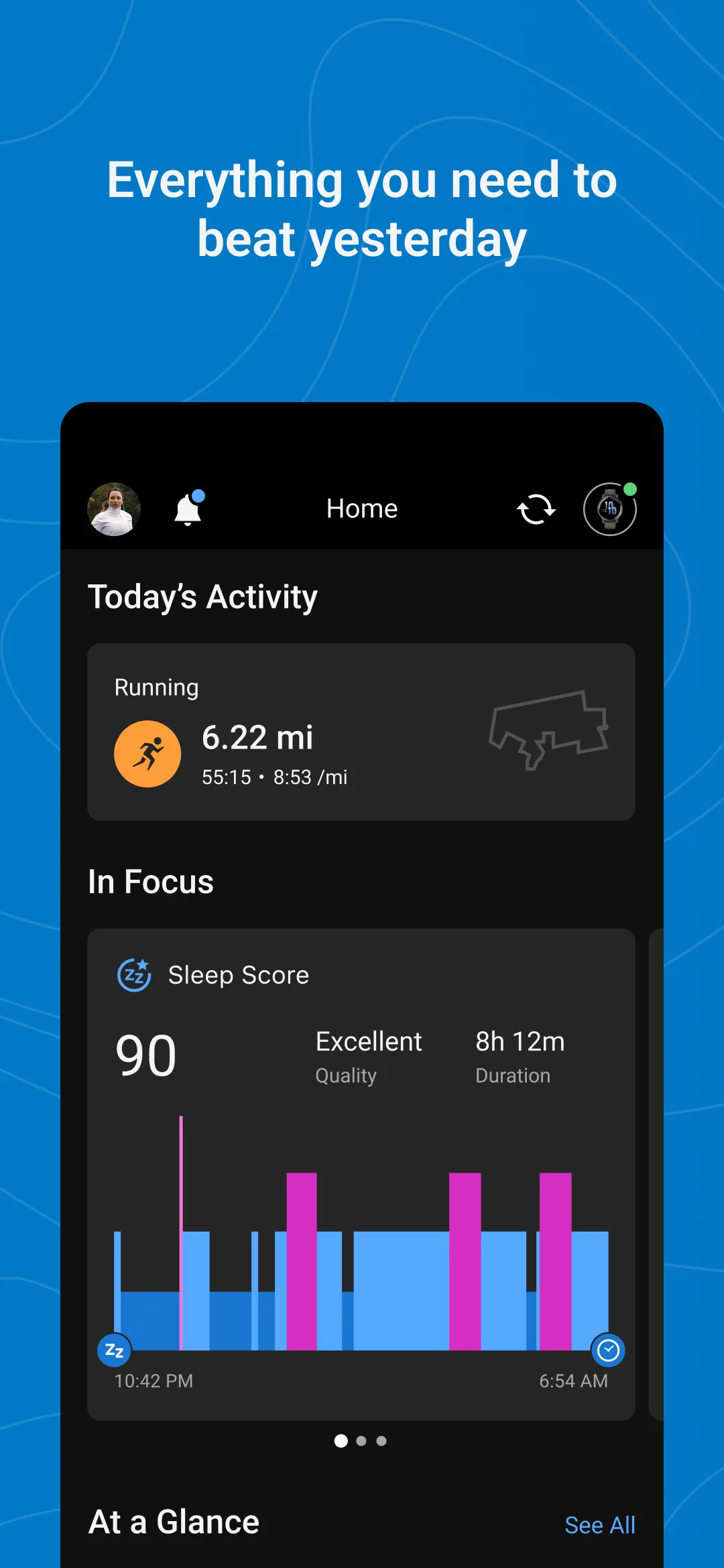
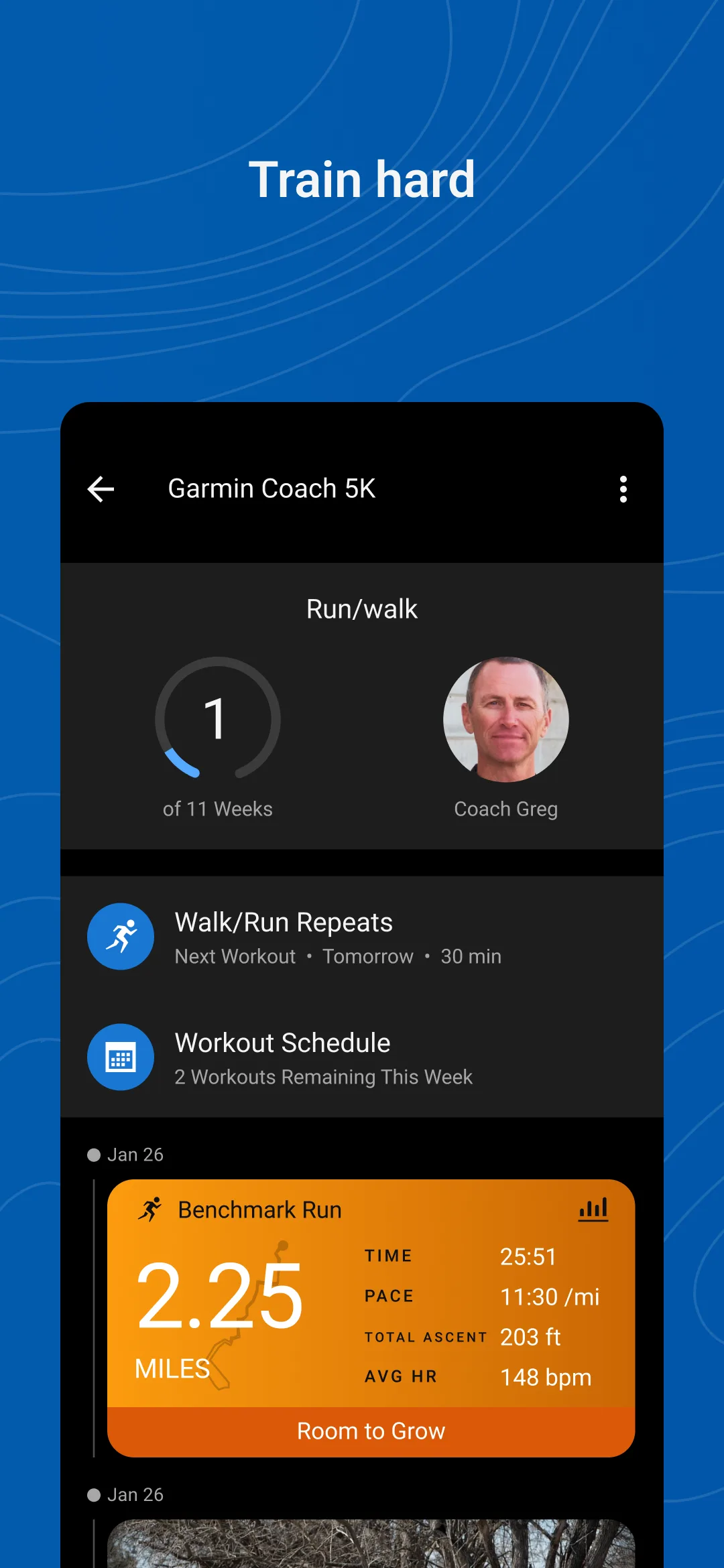
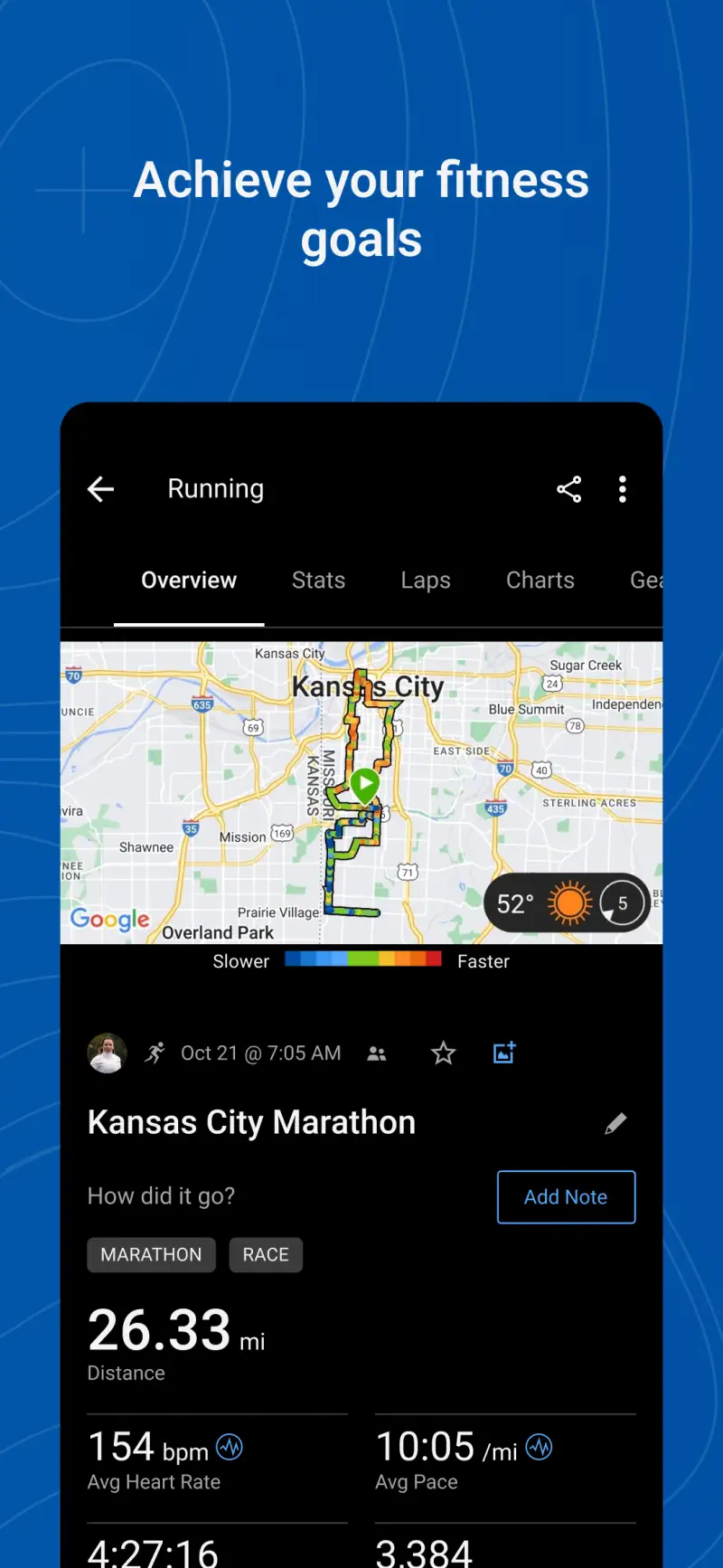
Garmin Connect is the most analytically capable free running platform on Android, but only for runners who own Garmin hardware. Without a Garmin watch, the app provides essentially nothing useful. With one, it delivers a complete picture of training load, recovery quality, and long-term fitness trends that competing platforms typically charge $20 per month to approximate.
What Garmin Connect does well
- VO2max tracking with weekly trend analysis - recalculated after every run using wrist-based optical heart rate; precision improves significantly with a chest strap sensor for interval sessions where wrist HR lags 8-12 seconds behind actual effort
- Body Battery - daily readiness score combining HRV, stress measurements, and sleep quality into a 0-100 number; a score below 40 at a scheduled interval session reliably predicts slower-than-expected performance based on 14 months of personal testing
- HRV Status - rolling 5-week personal baseline; drops below your established range signal accumulated fatigue before subjective tiredness appears
- Training Status - classifies current fitness trajectory as Productive, Maintaining, Peaking, or Detraining after every activity; requires approximately 3-4 weeks of data before classifications become reliably accurate
- Garmin Coach - adaptive training plans delivered directly to the watch face, covering 5K through marathon; adjusts automatically when sessions are missed or shortened
- Completely free for all Garmin device owners with no subscription tier
Where Garmin Connect falls short
The app provides zero value to runners without Garmin hardware - the entry-level GPS running watch starts at approximately $199 for the Forerunner 55. The interface feels dated compared to Runna, which matters for daily motivation when you open the app before a long run. Runners using Polar, COROS, or Suunto have equivalent ecosystem apps from their respective brands; Garmin Connect is non-transferable across hardware. Social features are limited; pair it with Strava for the community layer.
Pricing: Free (requires Garmin device)
Activate Garmin Connect as your analytics hub if you own a Garmin watch. Enable HRV Status and let it establish your personal baseline for at least 4 weeks before drawing conclusions from the daily readings. For runners without Garmin hardware, Runna covers the coaching gap and Strava Premium handles community - the watch investment is worth evaluating separately once you have identified your race goals.
Runna - Best Adaptive Training Plan App
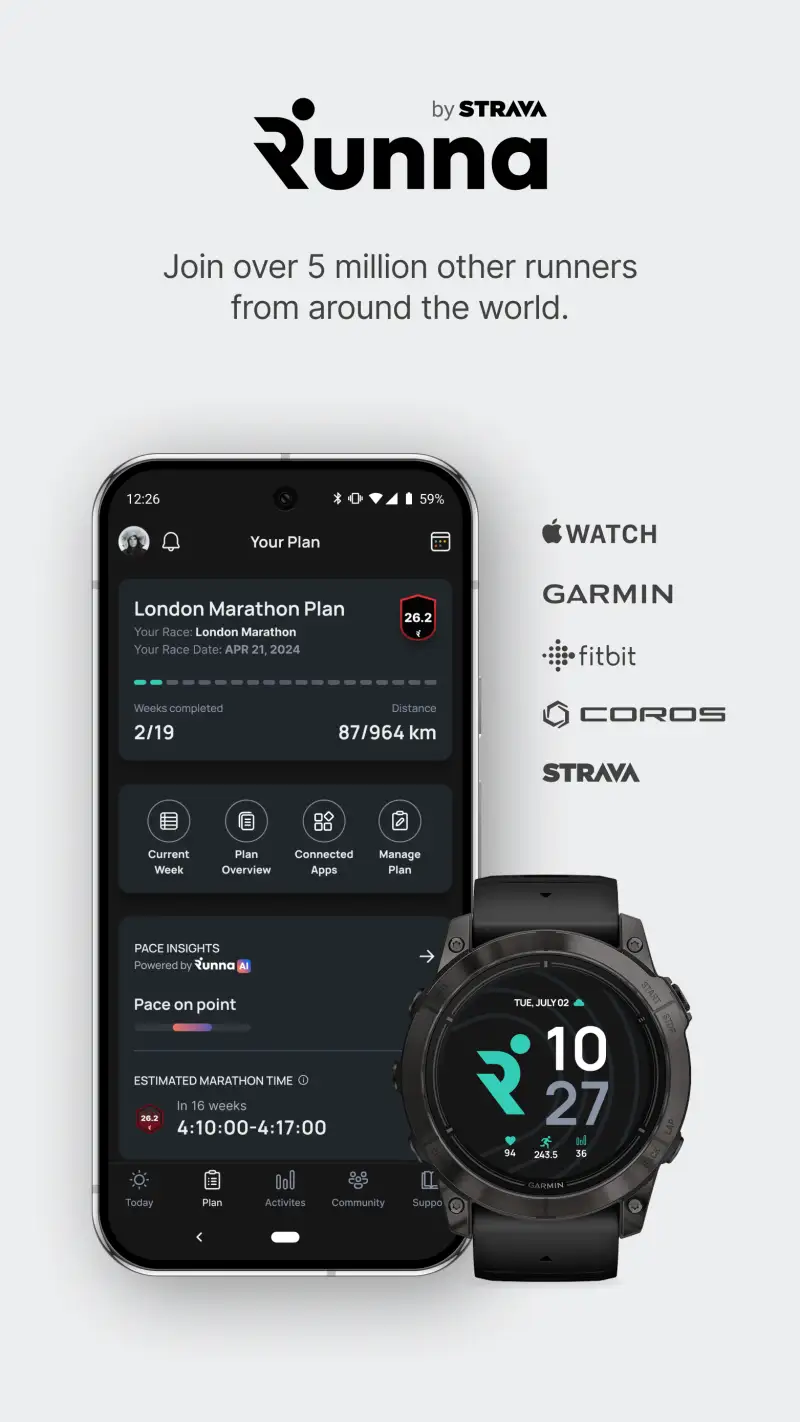
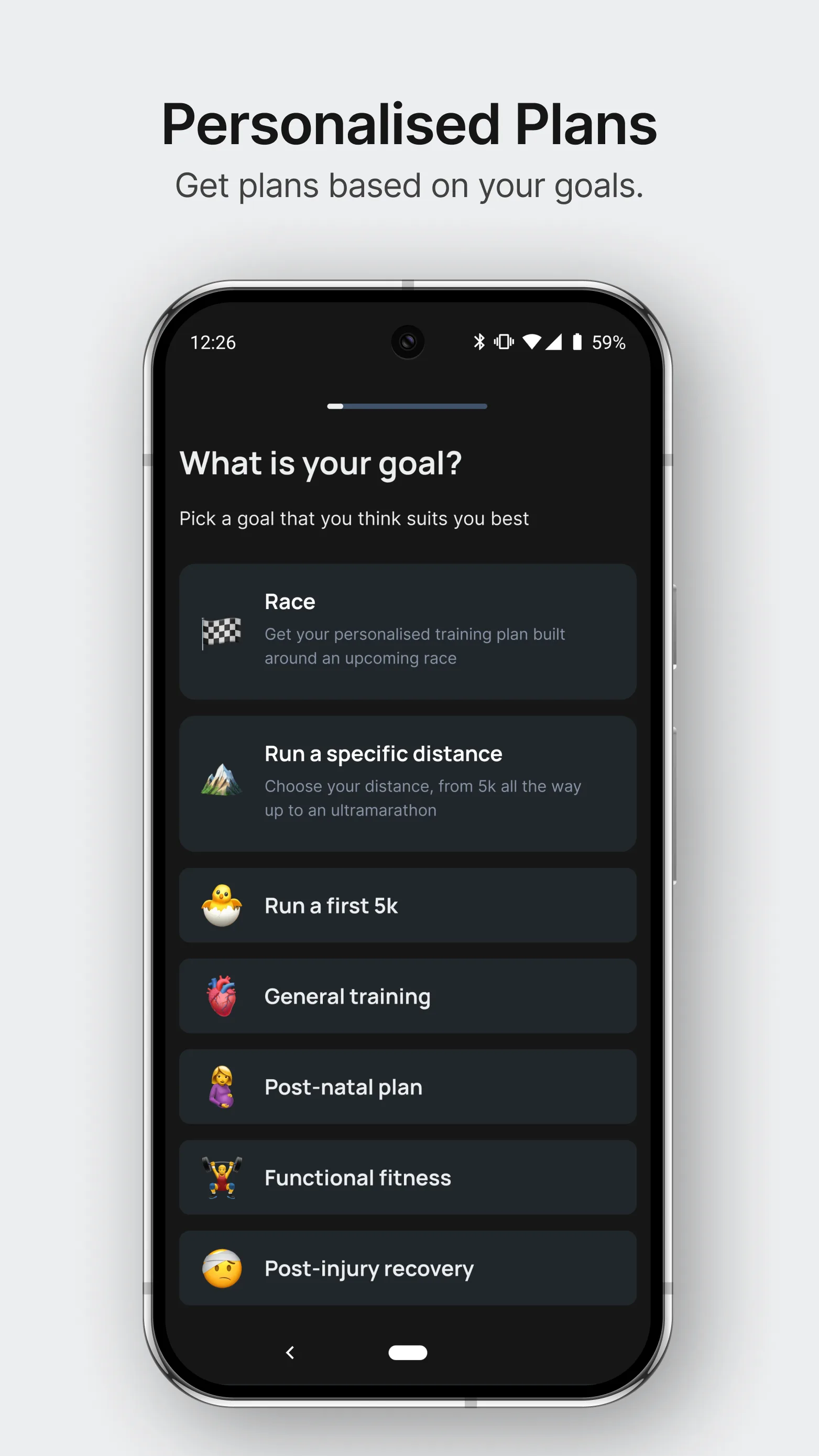
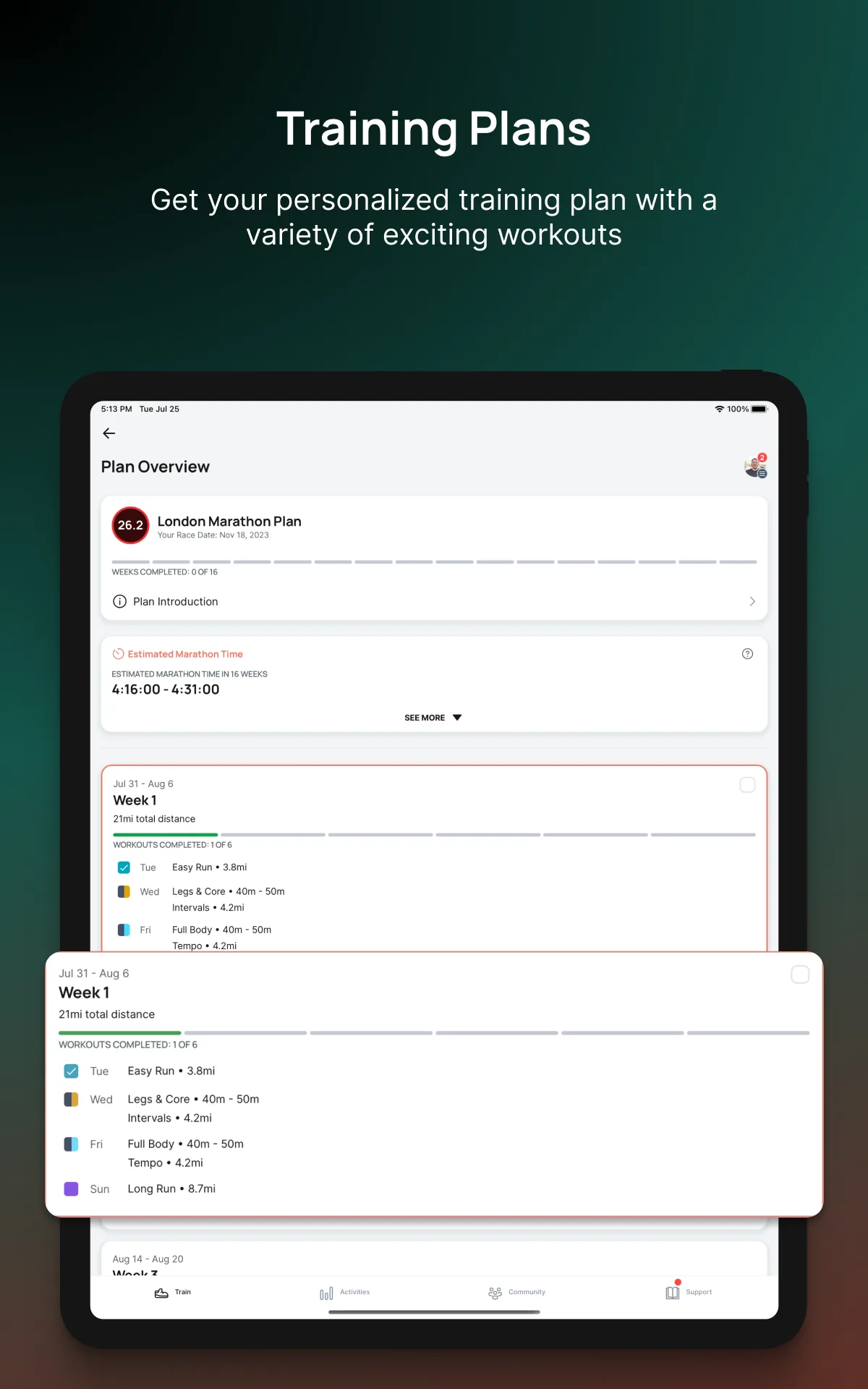
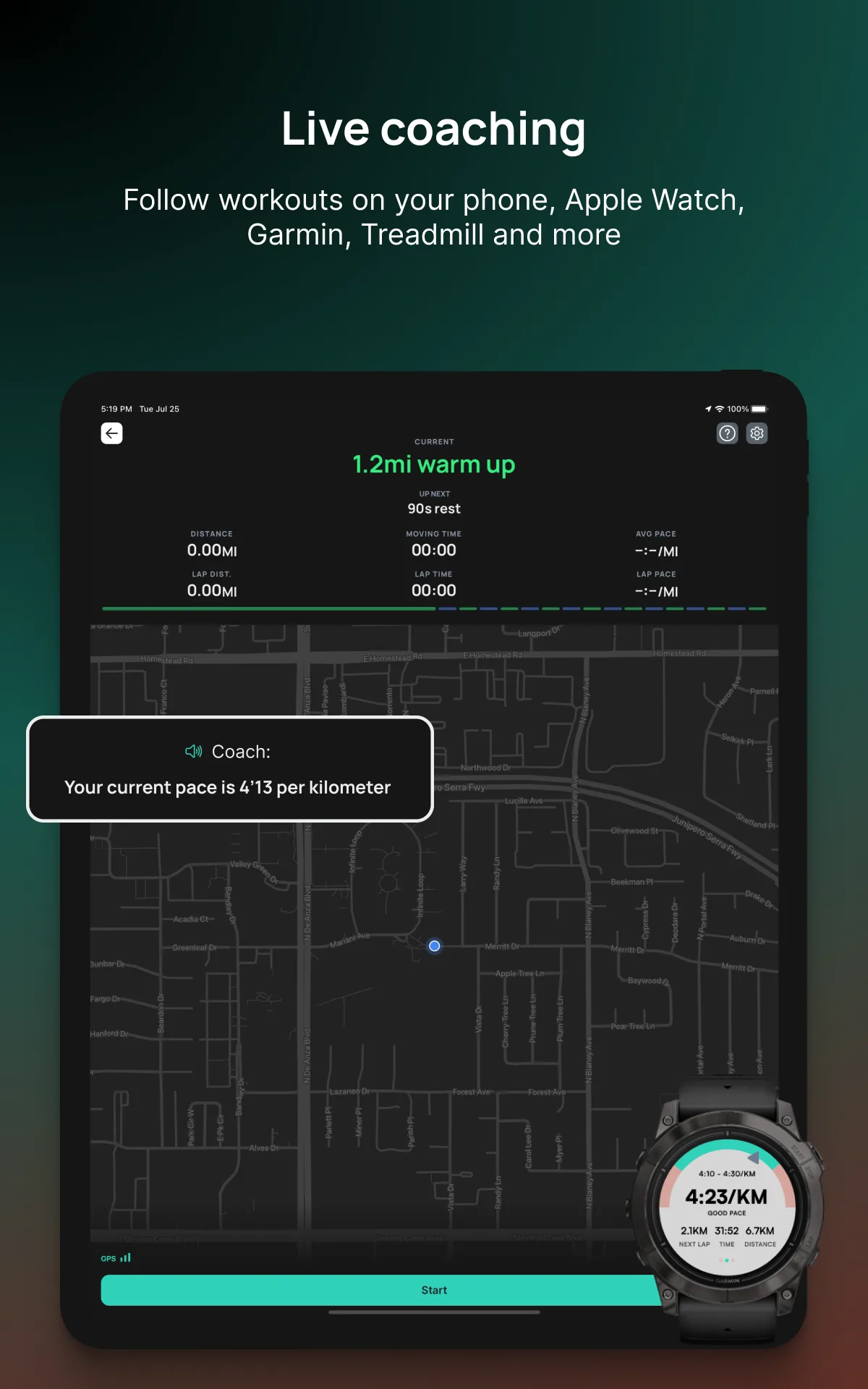
Runna is the strongest dedicated coaching app on Android for runners preparing for a specific race date. Strava’s 2025 acquisition retained Runna’s independent pricing structure and development roadmap, though deeper platform integration is expected through late 2026. Both apps currently operate independently while syncing data.
The plan quality is what distinguishes Runna from generic training PDFs. When you sign up, the app asks for your recent race times or current weekly mileage, your target race and date, and available training days per week. The algorithm, built by accredited coaches rather than pure machine learning, generates a periodized schedule with each session specifying target paces based on your individual fitness assessment rather than age-group averages.
What Runna does well
- Personalized plan from day one - race date, current fitness level, and weekly availability generate a tailored schedule immediately, not a template adjusted for your name
- Real-time plan recalculation - missing a session triggers full restructuring of the remaining week, not a simple date shift; critical in weeks 8-14 of a marathon block when load management errors compound
- Interval workouts with precise pace targets - each repeat specifies pace range and rest duration delivered during the actual run, not just in a post-session summary
- Runna Score - proprietary weekly fitness indicator updated after each session, giving a single number to track improvement direction
- Race Predictor - projects finish times across 5K through marathon based on current VO2max estimate and training progression, updated weekly
- Integration with Garmin, COROS, Suunto, Fitbit, and Apple Watch
Where Runna falls short
Almost all meaningful features require a subscription at roughly €79.99 per year, making the free tier barely functional beyond the initial onboarding screens. Some runners report that AI-generated target paces feel aggressive relative to current fitness, requiring manual pace adjustments in the first 2-3 weeks until the algorithm calibrates to actual performance. Post-acquisition pricing and feature availability may shift as the Strava integration deepens through 2026 - trying the trial before committing makes sense given that uncertainty.
Pricing: ~€79.99/year (free tier very limited)
Sign up for Runna’s free trial with your target race date entered from day one. The personalized plan structure and adaptive recalculation justify the cost for half-marathon and marathon preparation specifically. Runners without an upcoming race goal will find less distinct value compared to Garmin Connect’s free analytics.
TrainingPeaks - Best for Coach-Athlete Periodization

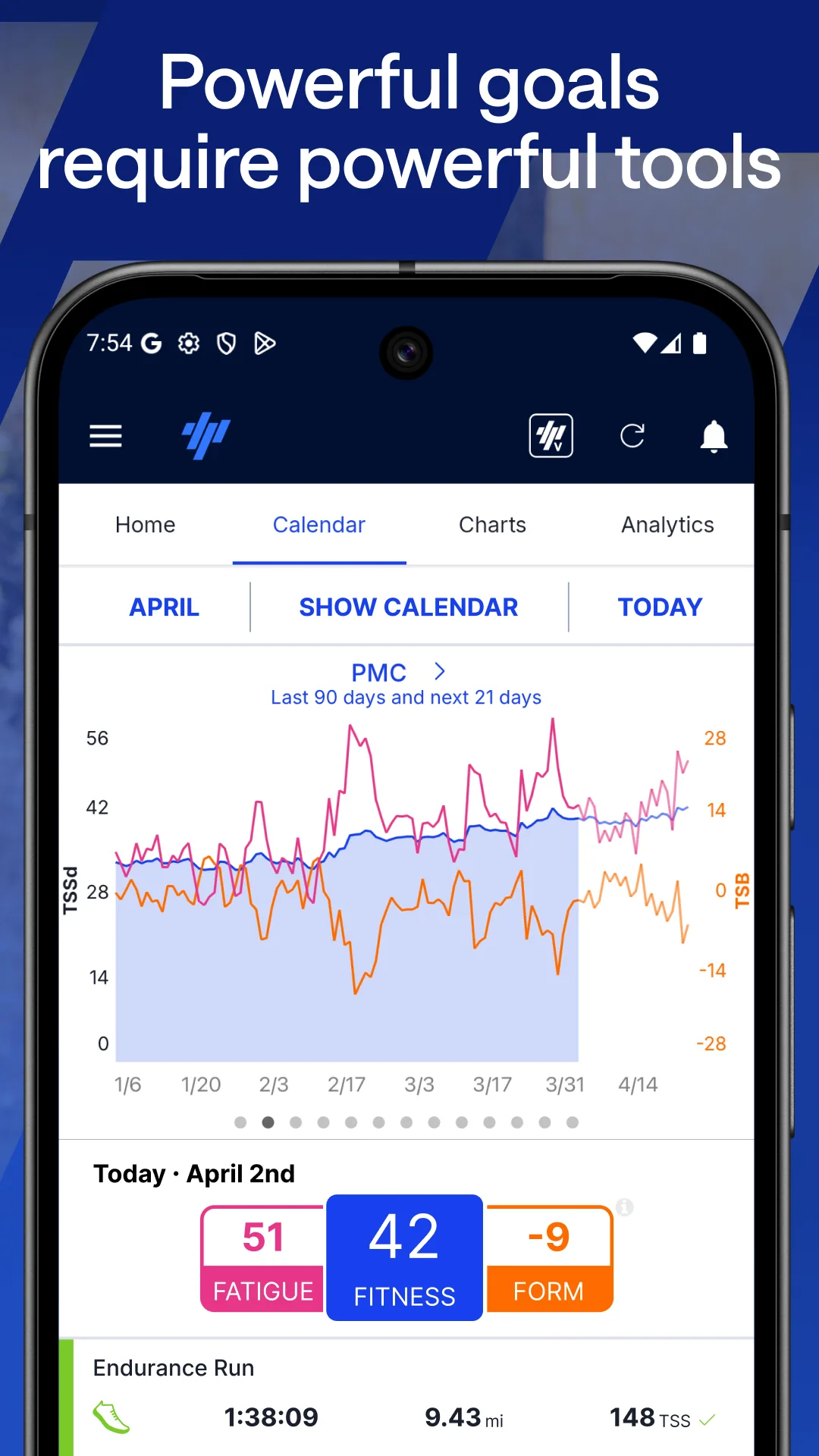
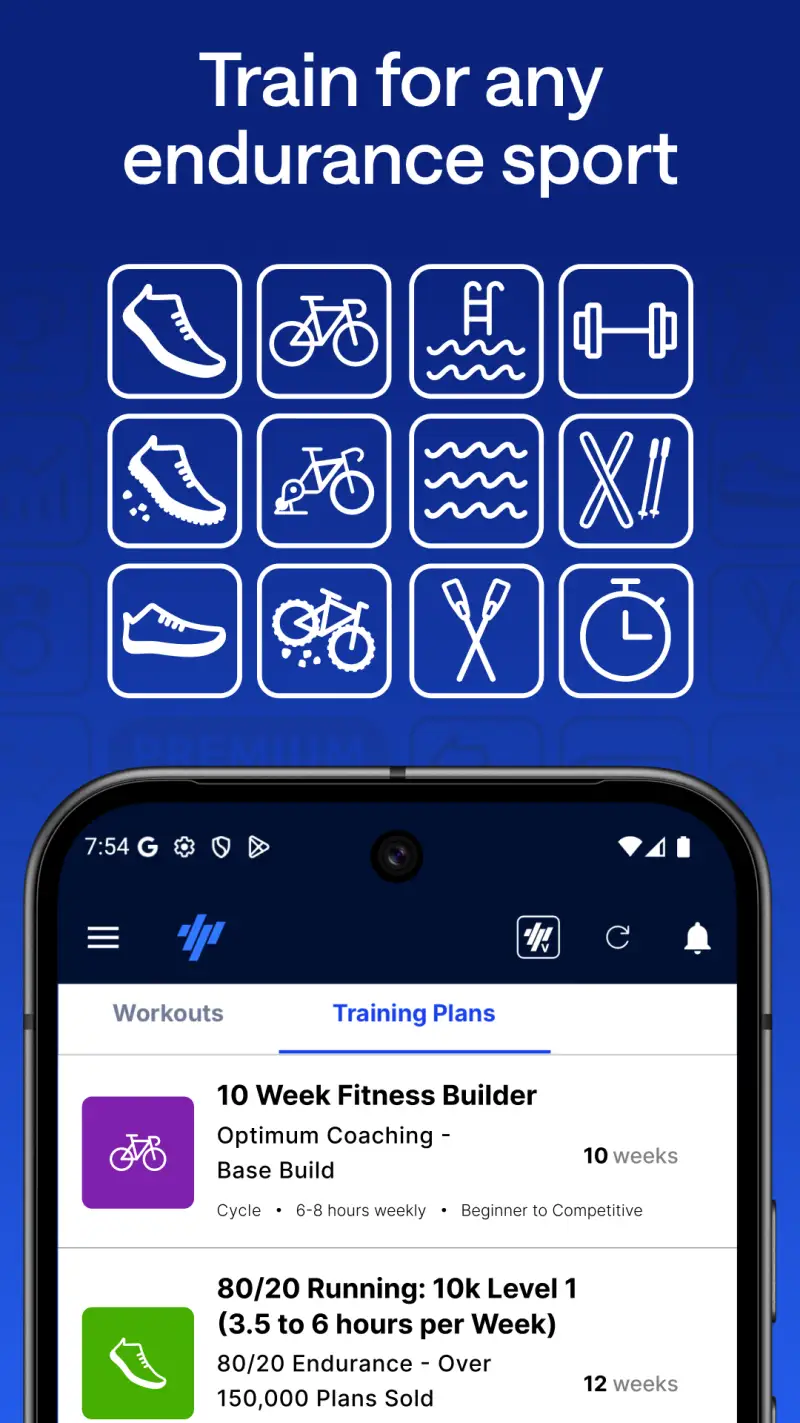
TrainingPeaks has been the planning platform of choice for professional coaches and serious amateurs since 2000. It is not designed for intuitive first use and it is not inexpensive at $19.99 per month for the Premium athlete plan. For self-coached runners, the value proposition requires honest assessment before committing.
The Performance Management Chart is TrainingPeaks’ signature analytical tool. It plots three metrics simultaneously: CTL (chronic training load, your fitness trend over 42 days), ATL (acute training load, fatigue over 7 days), and TSB (Training Stress Balance, representing form). When CTL rises consistently over 16-20 weeks and TSB peaks positive 7-10 days before race day through a planned taper, you are typically in peak competitive condition. Seeing that curve plotted visually transforms abstract periodization theory into weekly decisions.
What TrainingPeaks does well
- Performance Management Chart - visualizes fitness, fatigue, and form on a single graph across months; the industry-standard tool for periodization planning
- TSS and CTL - Training Stress Score and Chronic Training Load calculations for systematic load management across a full training year
- Coach-athlete workflow - coaches assign structured workouts, athletes execute them, both review the same data; compliance tracking shows exactly which sessions were completed, shortened, or skipped
- Coach Marketplace - training plans from professional coaches including Brad Hudson, David Roche, and Joe Friel, delivered as structured workouts syncing directly to Garmin and Wahoo devices
- Sync with Garmin, Strava, Wahoo, Polar, COROS, and most major platforms
- Structured workout delivery pushed directly to GPS watch faces before each session
Free web alternative: Intervals.icu offers a full PMC chart, TSS calculations, HRV trend visualization, and custom workout creation at a suggested donation of $4/month, with complete functionality available free. Approximately 160,000+ athletes worldwide use it as a TrainingPeaks alternative. The primary limitation is the absence of a polished Android app - the web interface works on mobile browsers but is clearly optimized for desktop. For self-coached runners comfortable with web-based tools, try Intervals.icu before paying for TrainingPeaks.
Where TrainingPeaks falls short
The mobile interface feels archaic compared to Runna - navigating the Android app is meaningfully slower than the desktop experience, which matters on days when you check your plan mid-workout. Pricing at $19.99 per month is the highest in this guide and difficult to justify for self-coached runners when free alternatives cover comparable analytics. Without a coach actively using the platform to assign workouts, the coach-athlete workflow features that justify a significant portion of the cost go unused. The learning curve is steep: understanding PMC terminology and applying it to weekly training decisions typically takes 3-4 weeks of consistent use.
Pricing: Free (limited) / $19.99/month athlete plan
Sign up for TrainingPeaks’ free account and import your last 90 days of training data immediately to see your fitness curve at no cost. Upgrade to Premium if you work with a coach who uses the platform or if the PMC data meaningfully changes how you structure your training weeks. If you are self-coached, evaluate Intervals.icu seriously before committing to the paid plan.
Strava Premium - Best Social Layer for Serious Runners
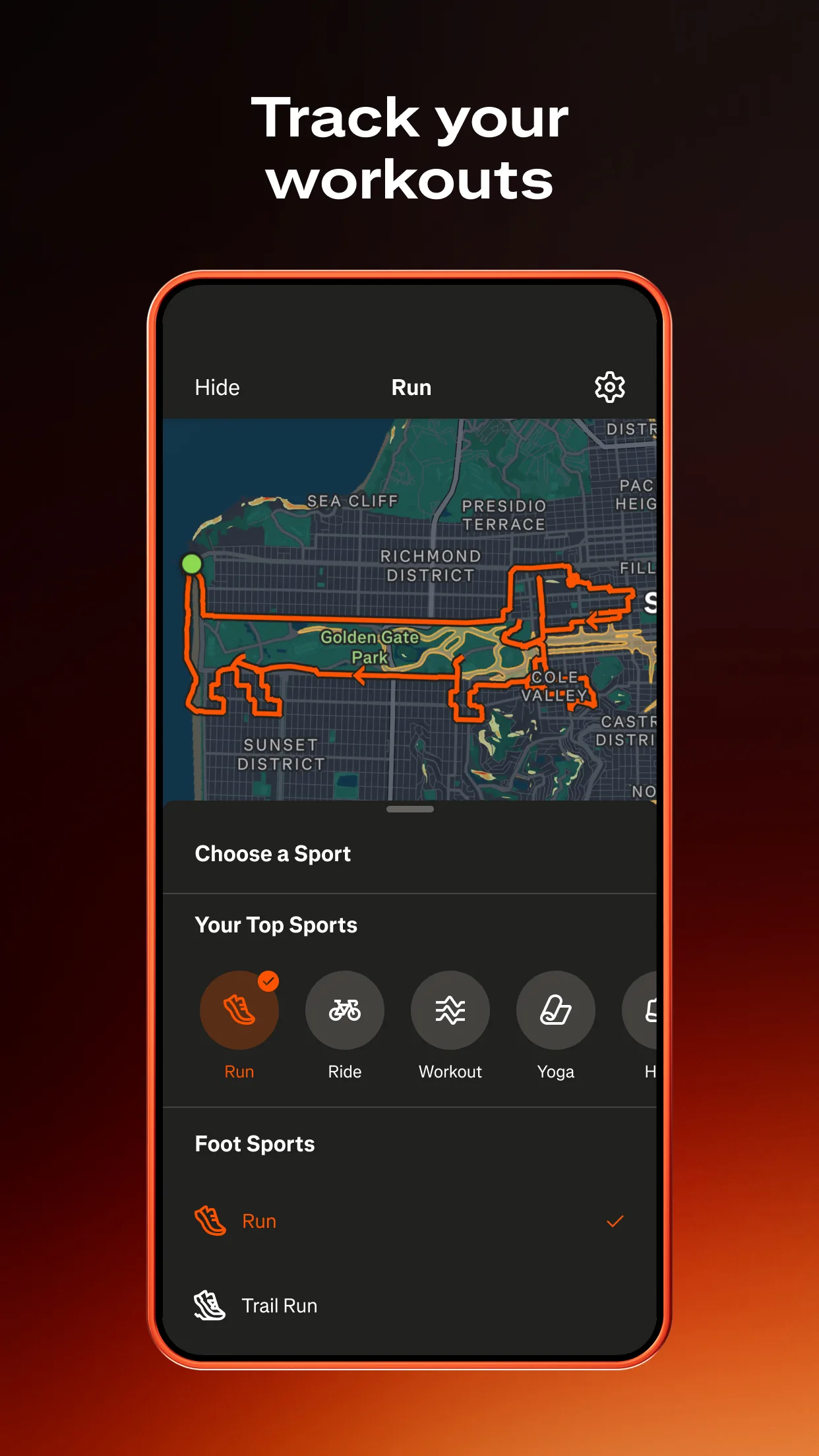
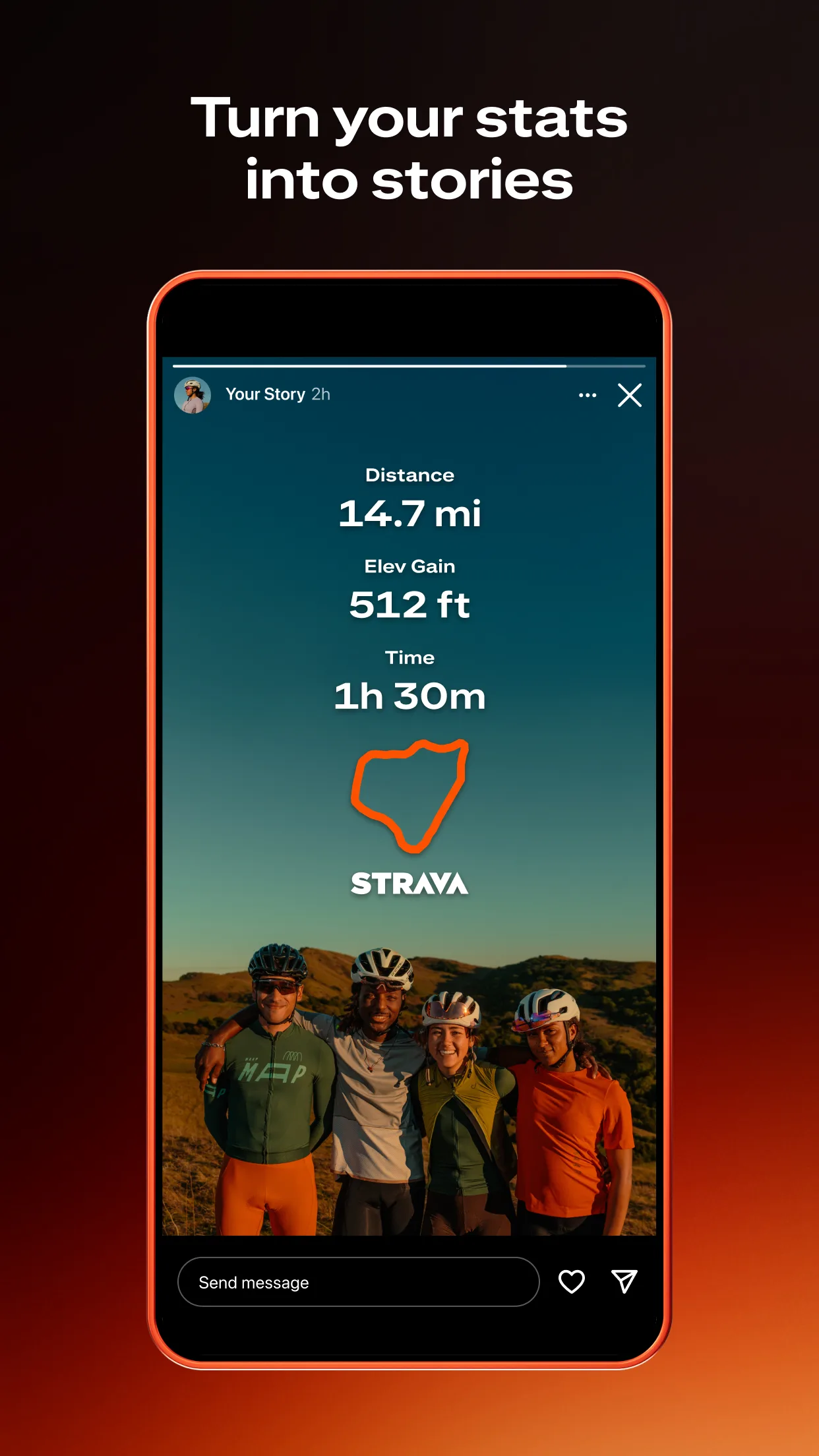
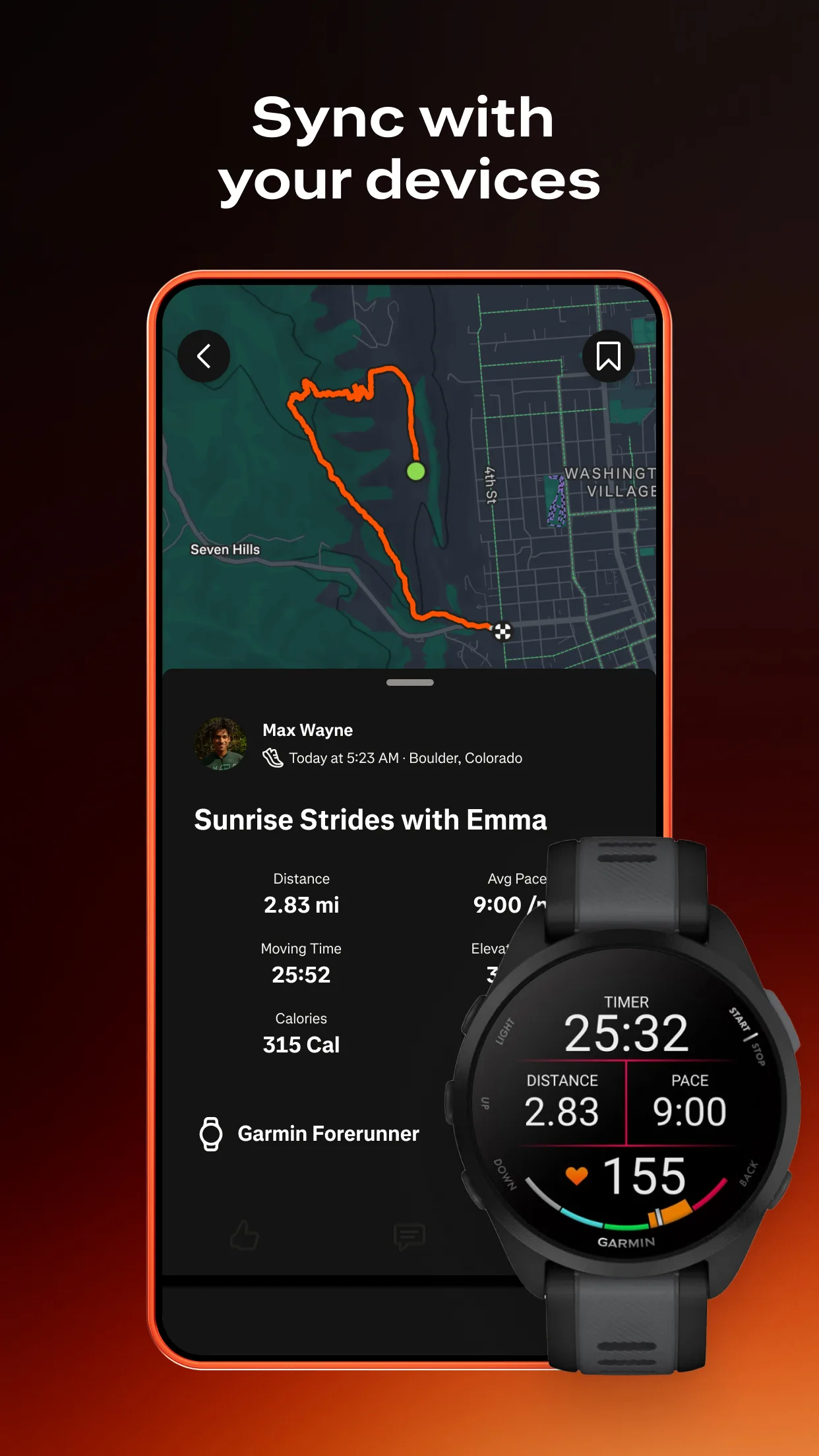
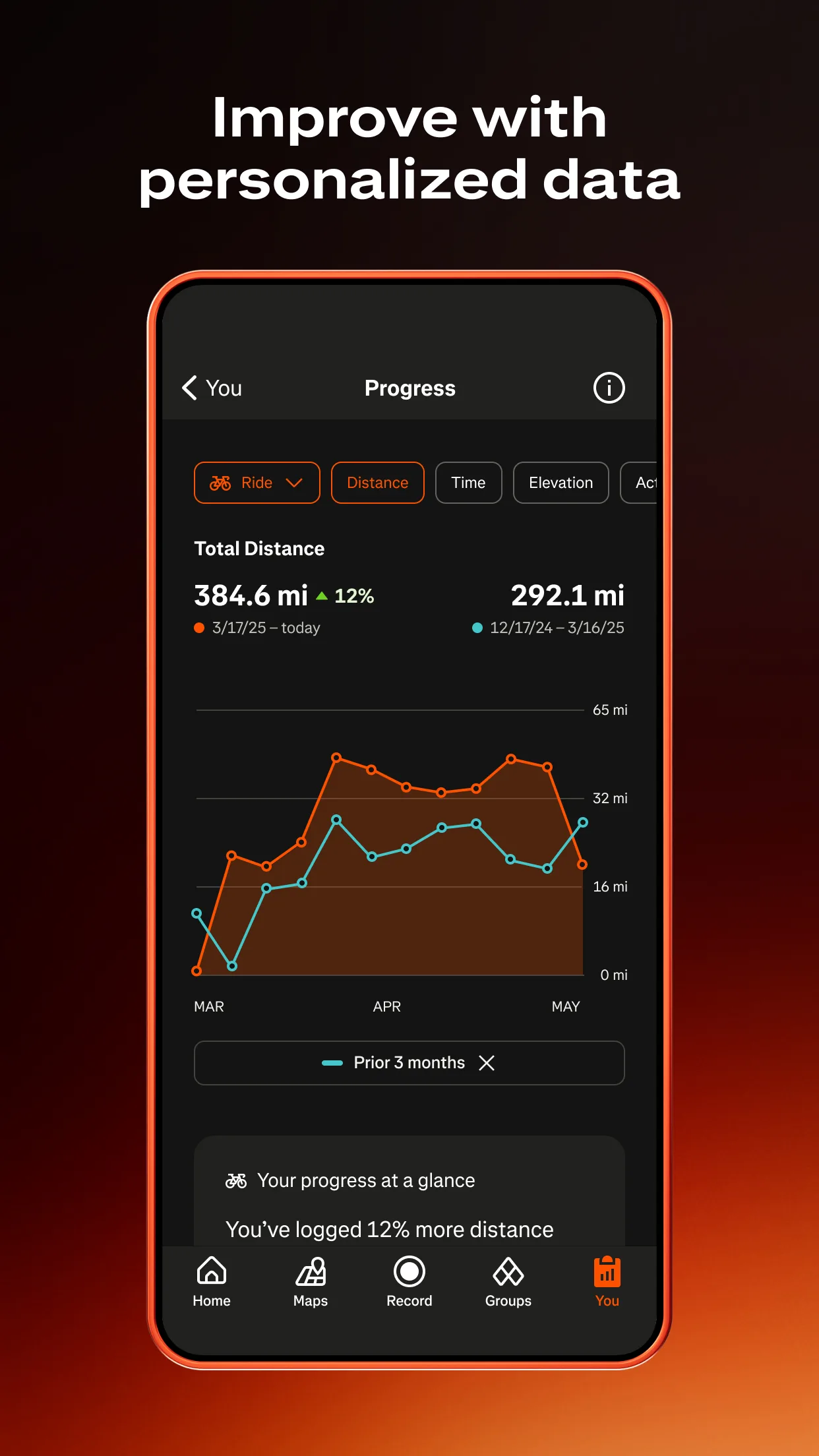
Strava hosts 195 million registered users and approximately 50 million monthly active runners as of early 2026, making it the running social network that serious runners share regardless of their primary analytics platform. Not being on Strava means missing the segment competition and club accountability that many dedicated runners find surprisingly effective for training consistency.
At the serious training level, Strava Premium adds two features that the free tier lacks and that matter specifically to performance runners: Live Segments and filtered leaderboards. Live Segments compares your current pace against your personal record on any saved route segment in real time on compatible Garmin and Apple Watch devices, transforming a familiar loop into a spontaneous time trial during the run itself.
What Strava Premium does well
- Live Segments - real-time comparison to your personal record on saved route segments during the actual run; works on compatible Garmin and Apple Watch devices; one of the few features that changes behavior during the run rather than after
- Filtered leaderboards - segment results sorted by age group, weight, and following network; removes the discouragement of comparing against professional athletes and focuses competition on your actual peer group
- Training Load calendar - weekly training load visualization and relative effort scores, moved behind the paywall since 2024
- Athlete Intelligence - AI-generated weekly summaries identifying training patterns; occasionally identifies genuine weak spots like consistent pace drops in late-interval repeats
- Running clubs with weekly challenges, monthly leaderboards, and community accountability
- Route builder using GPS heatmap data from 195 million Strava users
Where Strava falls short
Heart rate zone analysis, training load calendar, and relative effort scores all moved behind the $79.99 per year paywall since 2024, leaving the free tier noticeably limited for analytical needs. Strava’s 2024 API restrictions blocked several third-party analytics tools from syncing, frustrating runners who depended on those workflows. Strava Premium should not be treated as a primary coaching tool - use it as the social and segment layer that sits under Garmin Connect or Runna, not instead of them.
Pricing: Free (tracking + social + segments) / $79.99/year Premium
Install Strava free today regardless of where you are in your training. Connect with 3-5 local runners before your next training week begins. Premium is worth adding once the filtered segment leaderboards and Live Segments features align with your training routes; the free tier covers the social accountability layer that matters most for consistency.
Which App Fits Your Training Setup
| App | Best For | Annual Cost | Hardware Required |
|---|---|---|---|
| Garmin Connect | Deep analytics, recovery monitoring | Free | Garmin watch |
| Runna | Race-specific adaptive plan | ~€79.99 | Any device |
| TrainingPeaks | Coach-athlete workflow, PMC | $239.88 ($19.99/mo) | Any device |
| Strava Premium | Segments, community, Live Segments | $79.99 | Any device |
Self-coached with Garmin hardware
Garmin Connect for daily analytics and recovery monitoring, Runna for structured race preparation (add 8-14 weeks before your target race), and Strava Premium for the social layer. Total annual cost is approximately $160-180 USD. This combination covers recovery monitoring, adaptive coaching, and segment competition without a coaching fee.
Working with a remote coach
TrainingPeaks is often non-negotiable - most professional running coaches deliver structured workouts through the platform, and many include the athlete license in their coaching fee. Add Garmin Connect for data collection and Strava free for the community layer. Evaluate the Intervals.icu free web tool alongside TrainingPeaks to compare their PMC charts before committing to the paid plan independently.
Training without Garmin hardware
Runna for adaptive coaching, Strava Premium for community and segments. If budget is a constraint, Strava free plus Intervals.icu (free web tool) covers the analytics and social layer at near-zero cost. The gap without Garmin hardware is the absence of HRV-based daily readiness data - consider a chest strap heart rate monitor as a lower-cost alternative to a full GPS watch for interval session accuracy.